US-Iran talks fail to find deal but Gulf truce holds for now

Iran and the United States failed to strike a deal Sunday to end the war in the Middle East, but there was no immediate return to hostilities and the region clung to hope that a fragile truce would hold. US Vice President JD Vance left Pakistan after the talks — the highest-level meeting between the two sides since the 1979 Islamic revolution — and warned that Washington had made Tehran its “final and best offer” for a deal.

“We leave here with a very simple proposal,” he said. “We’ll see if the Iranians accept it.”

Iran’s parliamentary speaker Mohammad Bagher Ghalibaf said his negotiating team “put forward constructive initiatives but ultimately the other side was unable to gain the trust of the Iranian delegation in this round of negotiations.”

The failure of the talks will raise concerns that a return to fighting could drive world energy prices higher and further damage shipping and oil and gas facilities in the Gulf. But Saudi Arabia’s energy ministry said Sunday its key east-west oil pipeline was back in service after it was damaged in earlier strikes, and Qatar’s transport ministry said it was lifting some restrictions on Gulf shipping.

Pakistan, which hosted the talks and whose leadership had ushered the rival sides to the table, said it would keep facilitating dialogue and urged both countries to continue respecting the temporary truce.

“It is imperative that the parties continue to uphold their commitment to ceasefire,” Foreign Minister Ishaq Dar said.

US news website Axios quoted an unnamed source briefed on the negotiations as saying that disagreements included “Iran’s demand to control the Strait of Hormuz and refusal to give up on its enriched uranium stockpile.”

UK health minister Wes Streeting, speaking for the British government, told Sky News that the failure of the talks was disappointing but “that doesn’t mean there isn’t merit in continuing to try.”

The United States and Israel attacked Iran on February 28, sparking retaliation from Tehran that has plunged the Middle East into conflict and shaken the global economy. Iran and the US had entered the talks mediated by Pakistan with maximalist positions, with Washington piling pressure by saying it had sent minesweeping ships through the vital Strait of Hormuz maritime route.

Signs of strain in the negotiations appeared when Iranian media accused the United States of making “excessive demands” over the strait, through which one-fifth of the world’s oil transited before its effective closure by Iran during the war. US President Donald Trump had also insisted several hours into the talks on Saturday that the United States had already triumphed on the battlefield by killing Iranian leaders and destroying key military infrastructure.

“Whether we make a deal or not makes no difference to me. The reason is because we’ve won,” Trump said. The high-stakes 21-hour meeting had unfolded in Islamabad with both sides exhibiting intense mistrust. Iran was in the middle of negotiations in February with Trump’s real-estate friend Steve Witkoff and son-in-law Jared Kushner when the US and Israel attacked.

Both Kushner and Witkoff were part of Vance’s team in Pakistan. The first salvos of the war killed Iran’s supreme leader Ali Khamenei. Iranian demands for any agreement to end the war include unfreezing sanctioned Iranian assets and ending Israel’s war against Hezbollah in Lebanon. The opening of the Strait of Hormuz has also presented a friction point. Iran throughout the war exercised global economic leverage by asserting control of the maritime route, sending oil prices soaring and piling political pressure on Trump as US fuel costs rose.

The US military said Saturday that two Navy warships transited through the strait to begin clearing it of mines and ensure it is a “safe pathway” for tankers. The Iranian military denied that any American warships had entered the waterway and threatened to respond if they do so. The Revolutionary Guards’ Naval Command said Iranian promises of safe passage during a two-week ceasefire applied only to “civilian vessels under specific conditions.”

A complicating factor has been Israel’s assertion that the ceasefire does not affect Lebanon, where the Israeli military has launched strikes and a ground invasion in response to rocket fire from Hezbollah, the Iranian-backed movement. Lebanese authorities said Israeli strikes on the country’s south on Saturday killed 18 people, bringing the death toll from Israel’s operations since the war broke out past 2,000.

Israel and Lebanon will hold their own talks next week in Washington. Israeli Prime Minister Benjamin Netanyahu said on Saturday that he wanted a peace deal with Lebanon that “will last for generations.”

But Israel has ruled out a ceasefire with Hezbollah, signaling it will instead seek to pressure the historically weak central government in Beirut.


UK eyes ground handling role at HISA’s Dhaka terminal

DHAKA – The United Kingdom (UK) today expressed interest in participating in ground handling operations at the third terminal of Hazrat Shahjalal International Airport. The interest was shown when UK Trade Envoy Baroness Rosie Winterton of Doncaster paid a courtesy call on Civil Aviation and Tourism Minister Afroza Khanam Rita and State Minister M Rashiduzzaman Millat at the Pan Pacific Sonargaon Hotel in Dhaka.

During the meeting, discussions focused on prospects for increased investment in Bangladesh’s aviation and tourism sectors under a newly signed Memorandum of Understanding (MoU). Both sides emphasised strengthening bilateral trade relations and enhancing cooperation in key sectors. The UK trade envoy assured continued support for Bangladesh in implementing the electoral manifesto of the current democratic government.

The minister and state minister expressed their commitment to working jointly with the United Kingdom to further develop the country’s aviation and tourism industries.


10 more people die of suspected measles, 1,248 infected

DHAKA – Ten more people have died of suspected measles in the country in the last 24 hours, according to the control center of the Directorate General of Health Services (DGHS). In a press release today, it said that in the last 24 hours, 1,248 new suspected measles patients have been identified across the country and 189 laboratory-confirmed patients have been found.

According to the release, from March 15 to April 8, the total number of confirmed measles patients was 1,599 and the number of suspected measles cases was 11,133. DGHS has so far confirmed a total of 21 deaths as measles-related and 138 people have died of suspected measles during the same period, it added.

During this period, the highest number of suspected measles cases was reported in Dhaka Division, where 4,667 people were infected. Of these, 991 people were confirmed to have measles.

The DGHS is continuously monitoring the situation and is regularly collecting and analyzing information through the Integrated Control Center. In addition to ensuring necessary medical care for patients, the people have been advised to remain vigilant.


Health sector crisis deepens in Bangladesh: Who will step in?

For many in Bangladesh, the country’s strained health system is not an abstract policy issue but a daily reality measured in long waits, rising bills, and difficult choices between treatment and survival. The COVID-19 pandemic exposed these weaknesses sharply, yet little has changed since. Shortages of doctors and nurses, low budget allocation, mismanagement, and soaring treatment and medicine costs continue to weigh heavily on patients and families.

Experts say the system lacks a comprehensive master plan and remains overly centralized, leaving rural and district-level facilities under-resourced and overcrowded. Decentralization, they argue, is key to making healthcare accessible to ordinary people.

In Bangladesh, health sector allocation remains below 1% of GDP, with most of it spent on salaries and allowances. Although the World Health Organization recommends at least 5%, that benchmark has not been achieved. During the interim government period, the sector saw little visible progress. The BNP’s election manifesto included a pledge to allocate 5% of GDP to health, though experts say implementation will be difficult.

Health Secretary Kamruzzaman Chowdhury said the government plans to spend 5% of GDP on the sector, focusing on infrastructure development and modernization to improve services and build a healthier nation. The Health Sector Reform Commission has recommended allocating at least 15% of the national budget to health. However, only 5.3% has been allocated in the 2025–26 fiscal year.

Public health expert Dr. Lelin Chowdhury said that although the allocation is low, even the existing resources are not being effectively utilized. He said the health ministry and its directorates lack the capacity to manage funds efficiently and need restructuring, though no initiative is visible.

For patients, the imbalance between demand and available healthcare providers is most visible at hospitals and clinics. Bangladesh has only 0.83 doctors per 1,000 people, with around 90,000 practicing physicians. Nursing shortages are even more severe: against a need of 310,500 nurses, only 56,734 are currently employed—just 28% of the requirement.

This shortage means longer waiting times, hurried consultations, and overworked medical staff. In many rural and upazila-level facilities, patients often find no choice but to travel to private hospitals or delay treatment altogether.

Each doctor ends up seeing far more patients than recommended, while limited nursing support affects patient care and recovery. The situation contributes to declining service quality and growing frustration among patients. The government has announced plans to recruit doctors, nurses, and technicians in phases. Health Minister Sardar Md. Sakhawat Hossain said the shortages will be addressed gradually through large-scale hiring.

Dr Lelin Chowdhury noted that the country has about 172,000 hospital beds, with roughly 100,000 in the private sector and 72,000 in the public sector. He said oversight capacity is limited, particularly in monitoring private facilities, and there is no dedicated system to ensure quality standards. He added that serving a population of 180 million requires a comprehensive plan and better distribution of services.

For many families, the biggest burden is not just access to care but the cost of it. A study by the Health Economics Unit shows that individuals bear the majority of healthcare expenses. In 2018, 2019, and 2020, out-of-pocket spending accounted for 64%, 66%, and 69% of total health expenditure, respectively, while government spending remained much lower.

More than 8.6 million people fall below the poverty line each year due to medical expenses, with medicines alone accounting for 64.6% of total spending.

A 2020 study found that individuals bear 68.5% of total healthcare costs themselves. A Bangladesh Institute of Development Studies (BIDS) report published in July 2024 showed that out of every Tk100 spent on healthcare, patients pay Tk73—54.40% on medicines, 27.52% on diagnostics, 10.31% on doctors, and 7.77% on transportation.

Latest estimates from the World Health Organization and the World Bank indicate that 44% of households face financial hardship due to healthcare costs. Public health expert Professor Dr Be-Nazir Ahmed said many people are forced to forgo treatment, deplete savings, take on debt, or sell assets to afford care. “The burden falls most heavily on the poor,” he noted.

Lelin Chowdhury said tertiary care services remain concentrated in Dhaka and major cities, leaving district-level populations underserved. He stressed that decentralization is necessary to reduce pressure on urban hospitals and improve access to advanced care closer to home.

The Health Sector Reform Commission, formed by the 2024-2026 interim government, submitted 32 recommendations aimed at short- and medium-term improvements, including structural reforms, digital health systems, increased funding, universal health coverage, protection of healthcare workers, and better medicine management.

Commission chief Dr. A.K. Azad Khan said the responsibility of the commission was to recommend reforms, while implementation lies with the government. Public health expert Dr. Mushtaq Hossain said the recommendations have largely not been acted upon. He added that even a monitoring committee was not formed to oversee reforms, and little attention has been given by the current government as well.

For patients and families navigating this system, the gap between policy discussions and everyday realities remains stark—reflected in overcrowded wards, rising bills, and the ongoing question of who will truly take responsibility for a health sector under strain.


Retd army officer Masud placed on 4-day remand in Mirpur murder case

A Dhaka court has placed retired Lieutenant General Masud Uddin Chowdhury on a four-day remand in connection with the Delwar Hossain murder case filed with Mirpur Model Police Station. Dhaka Metropolitan Magistrate Md Monirul Islam passed the order on Tuesday afternoon following a hearing. Earlier, the investigation officer of the case, DB Police Sub-Inspector Kafil Uddin, produced the accused before the court and sought a seven-day remand. The court granted four days. Dhaka Metropolitan Public Prosecutor Omar Faruk Farooqui confirmed the matter.

According to the remand petition, the preliminary investigation found sufficient information and evidence regarding the accused’s involvement in the incident. It said remand was necessary for proper interrogation and to ensure a fair investigation. No lawyer appeared on behalf of the accused during the hearing.

Earlier, Chowdhury had been taken into remand for a total of 14 days in three phases in a separate case filed with the Paltan Model Police Station over alleged embezzlement and human trafficking involving Tk24,000 crore.

According to the case statement, an attack took place in the Falpatti area of Mirpur-10 on July 19, 2024, during an anti-discrimination student movement. The complaint states that the accused opened fire from different directions, leaving Delwar Hossain seriously injured.

He was first taken to the National Heart Institute and later shifted to a private hospital in Shyamoli, where he died at 7:40am on July 21 while undergoing treatment. In connection with the incident, the victim’s wife, Mosha Liza, filed a murder case with Mirpur Model Police Station on July 6, 2025.

Chowdhury was arrested from the Baridhara area of the capital on the night of March 23. The following day, the court placed him on a five-day remand. On March 24, he was shown arrested in the Paltan case and remanded again. Subsequently, the court granted him a second six-day remand on March 29 and a third three-day remand on April 4.


EU delegation calls on PM

DHAKA – A European Union (EU) delegation led by its Ambassador to Bangladesh Michael Miller today met Prime Minister Tarique Rahman. The meeting was held at the Prime Minister’s Cabinet Division office in the Bangladesh Secretariat here, said premier’s Deputy Press Secretary Jahidul Islam Rony.


Rally Held in New York Protesting Alleged Plot to Ban Awami League

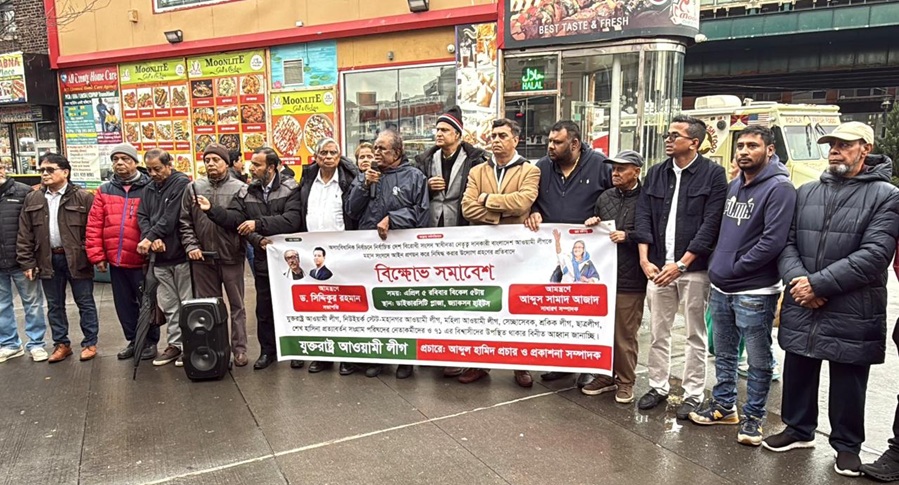
Staff Reporter: Leaders and activists of the United States Awami League have strongly protested what they described as a conspiracy to ban the Bangladesh Awami League. They warned that if such activities are not stopped, a widespread movement will be launched across the United States. The remarks were made at a protest rally held on April 5 in Jackson Heights, New York City. Speakers at the event alleged that BNP and Jamaat are involved in efforts to push for a ban on the Awami League.

Addressing the rally, speakers said that the Awami League is not just a political party, but a historic organization that led the birth of Bangladesh. They argued that those who do not believe in the country’s red and green flag are capable of such actions. They further stated that in the past, Pakistani military rulers had also attempted to ban the Awami League, drawing parallels with the current situation.

Speaking at the rally, Dr. Siddiqur Rahman, President of the US Awami League, said, “Those in power through what we consider a staged and illegitimate election should not forget that an election excluding a large portion of Awami League supporters lacks credibility. This issue will soon resonate across New York and the wider United States.”

The rally began with an opening speech by Dr. Siddiqur Rahman and was conducted by General Secretary Abdus Samad Azad.

Among those present were Sajjad Hossain Sabuj, Press Minister at the Bangladesh Embassy in Washington, DC; Imdad Chowdhury, General Secretary of New York City Awami League; Vice President Sakhawat Hossain Chanchal; Dr. Masudul Hasan, Vice President of US Awami League; freedom fighter Sharaf Sarkar; Solaiman Ali; Zainal Abedin; John Sikder; Organizing Secretary Mohiuddin Dewan; Sharif Kamrul Hira; M A Malek; Professor Shahnaz Momtaz, President of US Mahila Awami League; Sheikh Atik, Vice President of New York State Awami League; Shahin Azmal, General Secretary; Ashrafulddin, Vice President of US Swechchhasebak League; Bronx Awami League leader Md. Muhit; US Awami League leader Md. Tulon; Jubo League leader Sebul Mia; Chhatra League leaders Hriday Mia and Zahid Hasan, among others. Also present were journalist union leader Saban Mahmud, Organizing Secretary Abul Hasib Mamun, and Executive Member Shahanara Rahman.


Govt cancels gazette of 481 fake freedom fighters: minister

SANGSAD BHABAN – Liberation War Affairs Minister Ahmed Azam Khan today said the government has so far cancelled gazette of 481 fake freedom fighters as part of its initiative to update the list of genuine freedom fighters. “The Liberation War Affairs Ministry is working to find out fake freedom fighters who have enrolled themselves as freedom fighters and taken financial facilities during the immediate past fascist regime,” he said.

The minister said this while giving a statement responding to an emergency important public notice raised by treasury bench lawmaker Mohammad Abdul Malique of Sylhet-3 under rules 71 and earlier adopted in the House with Speaker Hafiz Uddin Ahmed in the chair.

The government has cancelled the gazette of 481 fake freedom fighters during the period between August 2024 and March, this year, he said, adding that concerned ministry is working to cancel the enrollment of the fake freedom fighter after concluding necessary verification.

The enrollment of the fake freedom fighters took place enormously during the fascist regime. The National Freedom Fighters Council (Jatiya Muktijoddha Council – JAMUKA), an autonomous Bangladesh government body under the Ministry of Liberation War Affairs, responsible for identifying, listing, and ensuring the welfare of the freedom fighters.

Although it is a routine work and ongoing process of the council to carry out probe and hearing based on the complaint of the enrollment of ‘fake freedom fighters’, Azam told the parliament.

If the concerned ministry and the council get any complaint on fake freedom fighters then a sub-committee formed comprising with the members of the National Freedom Fighters will give recommendation to cancel the gazette of the fake freedom fighters following carrying out necessary investigation and hearing, said the minister.

Based on the recommendation of JAMUKA sub-committee, the government will cancel the gazette of the fake freedom fighters. Replying to another part of the notice, the minister said that the government will provide digital certificate and smart card to the expatriate freedom fighters, adding that the expatriate freedom fighters will get the recognition after receiving their application.


US ambassador calls on PM

DHAKA – US Ambassador to Bangladesh Brent T. Christensen today paid a courtesy call on Prime Minister Tarique Rahman. The US envoy met the premier at his Cabinet Division office in the Bangladesh Secretariat here this noon, said Prime Minister’s Additional Press Secretary Atikur Rahman Ruman.

During the meeting, the US ambassador handed over two photographs and a replica of the White House to the Prime Minister. One photograph features Shaheed President Ziaur Rahman and former US President Jimmy Carter, while the other shows former Prime Minister Begum Khaleda Zia and former US President George Bush Sr.

Foreign Minister Dr Khalilur Rahman and Prime Minister’s Adviser for Foreign Affairs Humaiun Kobir were present at the meeting. During the meeting, they discussed various issues of mutual interest.


Bangladesh Day Parade 2026 to Be Held in New York on May 17

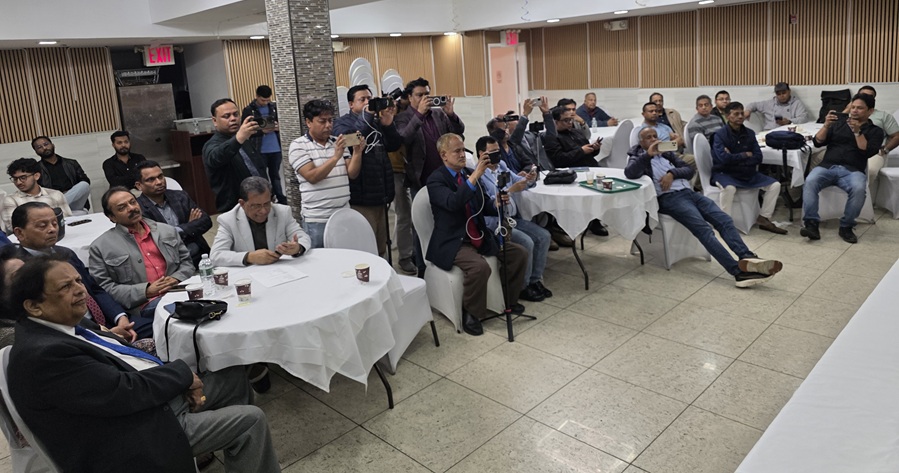
New York: The “Bangladesh Day Parade 2026” will take place in New York City on May 17, promising a vibrant celebration of culture and community. The announcement was made during a press conference held on Wednesday (April 1) at the Nabanno Restaurant Party Hall in Jackson Heights. This year’s parade will be led by Grand Marshals M. M. Shaheen, Chairman of the Weekly Thikana, and M. Aziz, CEO of NY Homecare and former Chairman of the Trustee Board of the Bangladesh Society.

Organizers have invited all members of the Bangladeshi community to participate in the event. The parade is scheduled to run from 8:00 AM to 2:00 PM along 37th Avenue in Jackson Heights.

Key figures present at the press conference included Parade Committee Chair Attorney Moeen Chowdhury, Convener Gias Ahmed, Member Secretary Fahad Solaiman, Co-Chair Captain Prince Alam, Event Coordinator Famed Rocky, and Faisal Aziz, Director of NY Homecare and Grand Sponsor of the event. Speakers emphasized that the parade aims to strengthen unity and patriotism among the Bangladeshi diaspora, while also introducing the history and culture of Bangladesh to younger generations.

Organizations can register to participate in the parade free of charge this year. The event is jointly organized by the Jackson Heights Bangladeshi Business Association, Humanity Empowerment Rights, and Immigrants International. Organizers stated that extensive preparations are already underway, and a convening committee has been formed to ensure the success of the event. They expressed optimism that this year’s celebration will be even more colorful and engaging than previous editions.