Bangladesh reaffirms multilateral commitment during U.S. Army War College visit

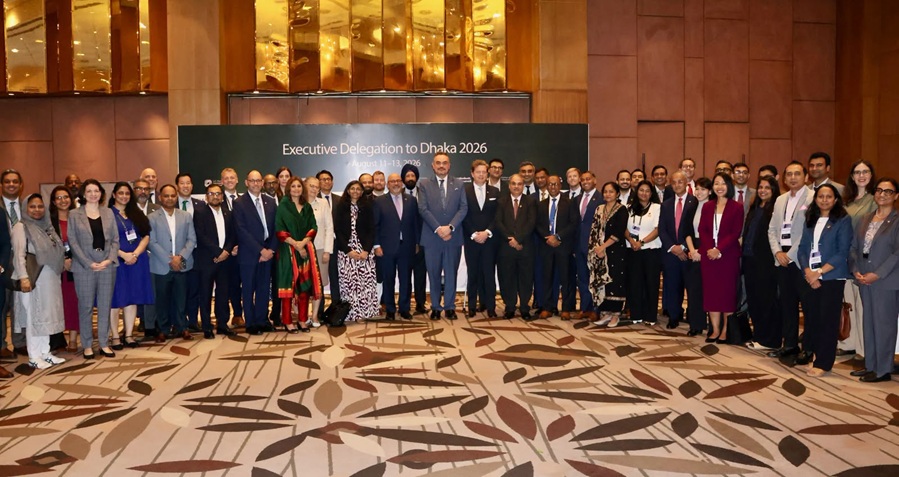
Shibbir Ahmed, UN, New York: Bangladesh has reaffirmed its commitment to multilateralism, UN peacekeeping and international cooperation during a visit by a delegation from the United States Army War College to the Permanent Mission of Bangladesh to the United Nations today.

Welcoming the delegation Bangladesh’s Permanent Representative to the United Nations Ambassador Salahuddin Noman Chowdhury underscored the country’s longstanding engagement with the UN, rooted in its constitutional commitment to international peace and security. He noted that Bangladesh remains one of the largest contributors to UN Peacekeeping Operations, with Bangladeshi peacekeepers serving with distinction in some of the world’s most challenging conflict zones.

The Ambassador briefed the delegation on the activities of Bangladesh’s Permanent Mission including its engagement to build on its legacies in peacekeeping, sustainable development, women empowerment and climate justice. Reaffirming Bangladesh’s strong support for the United Nations, Ambassador Chowdhury stressed that dialogue, compromise and consensus-building remain essential to addressing contemporary global challenges and strengthening international cooperation.


Bangladesh calls for stronger global cooperation on safe migration at UN forum

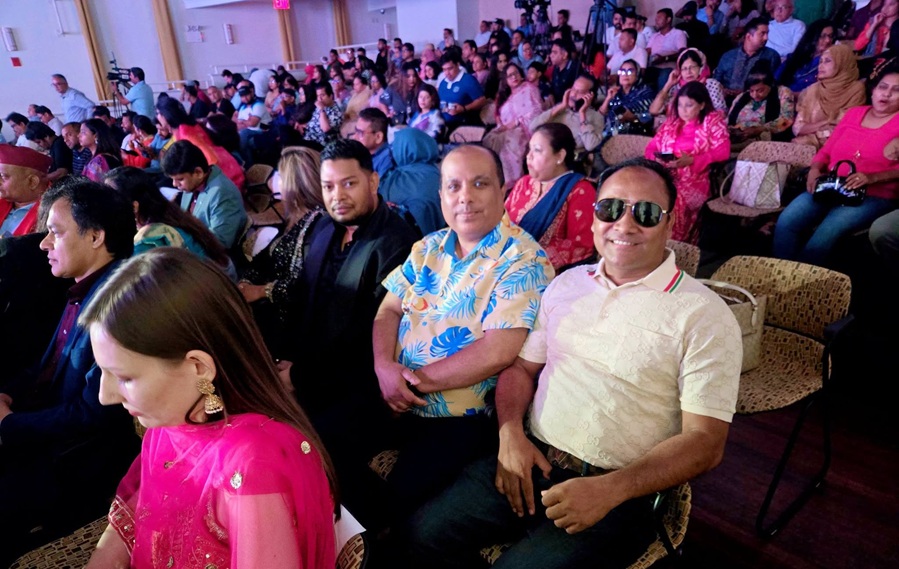
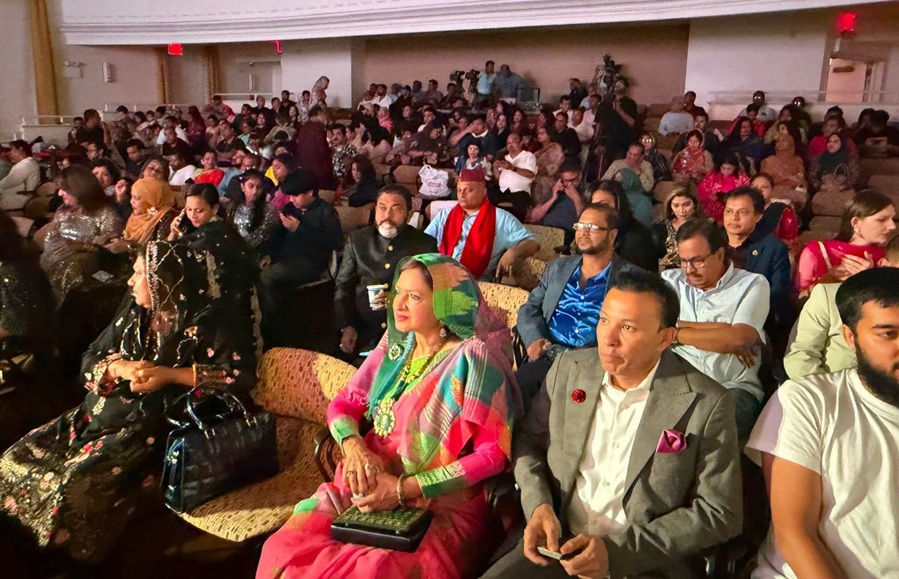
Shibbir Ahmed, UN, New York: Bangladesh called for stronger global cooperation to curb irregular migration, protect migrant rights and ensure fair recruitment, decent work and fair wages for migrant workers.

Speaking at the General Debate of the Second International Migration Review Forum at United Nations Headquarters, Expatriates’ Welfare and Overseas Employment Minister Ariful Haque Choudhury said Bangladesh was strengthening accountability and expanding migrants’ access to justice through a “whole-of-government and whole-of-society” approach.
He said the country had formed a Migration Compact Taskforce and adopted a National Action Plan for 2026–2030 to advance safe, orderly and regular migration under the United Nations Global Compact for Migration (GCM).

The minister said Bangladesh had fulfilled seven of its 10 commitments made at the first review forum, submitted six new pledges and joined two regional initiatives, while presenting its first Voluntary National Review on GCM implementation. Describing climate change as a growing reason of migration, he called for predictable financing and technical support for climate-affected countries. He reaffirmed Bangladesh’s commitment to working with partners to promote safe migration and dignified return and reintegration of migrants.


Security tightened at all airports, including Dhaka Airport

Dhaka: Security has been beefed up at all airports across the country, including Hazrat Shahjalal International Airport, following an intelligence alert over possible extremist attacks on key installations. Airport sources confirmed on Monday that surveillance has been intensified at sensitive points, particularly at Shahjalal International Airport. A warning letter issued by the Bangladesh Police headquarters prompted authorities to take immediate precautionary measures.

Following the alert, the Civil Aviation Authority of Bangladesh issued a high-level warning, instructing all law enforcement units operating at airports to strengthen security arrangements. Officials said additional personnel—both in uniform and plain clothes—have been deployed, while intelligence monitoring has been increased. Security checks at all arrival and departure points have also been tightened, with instructions to report any suspicious activity immediately.

A senior official at the airport said that although no specific threat has been identified, precautionary steps have been taken in advance. “Instructions have been given to strengthen security at all airports. This is part of our routine preparedness as well,” the official said.

He added that airports with limited nighttime operations have also been instructed to enhance security during night hours, and strict monitoring is being ensured at all entry points to prevent any lapse. The alert follows intelligence information suggesting that a banned extremist outfit may be planning coordinated attacks on key state installations.

According to an internal letter issued by police headquarters and signed by DIG (Confidential) Kamrul Ahsan, several individuals linked to the outfit have recently been in regular contact, raising concerns of a potential threat.

The letter also mentioned that two dismissed army personnel were reportedly in communication with a detained extremist suspect, Istiak Ahmed Sami, also known by aliases Abu Bakkar and Abu Mohammad. Potential targets listed in the alert include the Jatiya Sangsad Bhaban, as well as police and military installations, places of worship, entertainment venues and other key infrastructure.

Law enforcement officials said the group may attempt to carry out attacks using various methods, prompting heightened concern over national security. In response, police headquarters has directed all relevant agencies to strengthen security in vulnerable areas, enhance surveillance and improve intelligence coordination to prevent any potential incidents.


Narendra Modi talks to Tarique over phone, reaffirms India’s support

Indian prime minister Narendra Modi on Friday talked to Bangladesh Nationalist Party chairman Tarique Rahman on the phone about his party’s decisive victory in the national polls held on Thursday. ‘Delighted to speak with Mr Tarique Rahman. I congratulated him on the remarkable victory in the Bangladesh elections,’ Modi said in a statement shared on his social media handle ‘X’.

He said that he had conveyed his best wishes and support in his endeavour to fulfil the aspirations of the people of Bangladesh. ‘As two close neighbours with deep-rooted historical and cultural ties, I reaffirmed India’s continued commitment to the peace, progress, and prosperity of both our peoples,’ Modi said in the statement.

Earlier in the day, the Indian prime minister conveyed congratulations to BNP chairman Tarique Rahman on his party’s decisive victory in the 13th Jatiya Sangsad election. ‘I convey my warm congratulations to Mr Tarique Rahman on leading BNP to a decisive victory in the parliamentary elections in Bangladesh. This victory shows the trust of the people of Bangladesh in your leadership,’ said Modi in another statement shared on ‘X’.

He said India would continue to stand in support of a democratic, progressive and inclusive Bangladesh. ‘I look forward to working with you to strengthen our multifaceted relations and advance our common development goals,’ he said.


China congratulates BNP on taking lead in JS polls

China has congratulated Bangladesh Nationalist Party on taking the lead in the 13th Jatiya Sangsad election held on Thursday. In a message, China also congratulated the people of the country for the smooth and successful JS polls.

‘Congratulations to the people of Bangladesh on the smooth and successful 13th National Parliamentary Election and to the Bangladesh Nationalist Party for taking the lead in the election. We look forward to working together with the new government of Bangladesh and writing new chapters of China-Bangladesh relations,’ said the message shared by the Chinese embassy in Dhaka on Friday.


US congratulates Tarique Rahman on historic victory

The United States has congratulated Bangladesh Nationalist Party (BNP) Chairman Tarique Rahman for the party’s historic victory in the 13th National Parliament Election.

“Congratulations to the people of Bangladesh on a successful election and to the Bangladesh Nationalist Party and Tarique Rahman on your historic victory,” US Embassy in Dhaka said in its official Facebook post this morning.

“The United States looks forward to working with you (Tarique Rahman) to realize shared goals of prosperity and security for both our countries,” it added.


Savannah Guthrie’s missing mother is ‘still out there,’ sheriff says, but no suspects

TUCSON, Arizona — Investigators have no proof that the missing mother of “Today” show host Savannah Guthrie is still alive but are holding out hope she’s “still out there,” a sheriff in Arizona said Thursday. Five days into the desperate search for 84-year-old Nancy Guthrie, authorities have not identified any suspects or persons of interest, Pima County Sheriff Chris Nanos said.

DNA tests showed blood found on Guthrie’s front porch was a match to her, the sheriff said. Authorities think she was taken against her will from her home in Tucson over the weekend.

“Right now, we believe Nancy is still out there. We want her home,” Nanos said at a news conference. The sheriff, however, acknowledged that authorities have no evidence she’s OK.

Investigators gave a more detailed timeline from the hours after she was last seen Saturday night, and said they are taking seriously a ransom note sent to a handful of media outlets. The note included a demand for money with a deadline set for Thursday evening and a second one for Monday if the first deadline wasn’t met, said Heith Janke, the FBI chief in Phoenix. The note also had details about a floodlight at Guthrie’s home and an Apple watch.

“To anyone who may be involved, do the right thing. This is an 84-year-old grandma,” Janke said. Authorities say any decision on ransom demands ultimately is up to the family.

A day earlier, Savannah Guthrie and her siblings released a message to her mother’s kidnapper, saying they are ready to talk but want proof their mom is still alive. However, there’s been no response to their plea so far, Janke said. Nancy Guthrie spent Saturday night eating dinner and playing games with family members before one of them dropped her off at her home in a well-to-do Tucson neighborhood that sits on hilly, desert terrain, the sheriff said.

About four hours later, just before 2 a.m. Sunday, the home’s doorbell camera was disconnected, Nanos said. But Guthrie did not have an active subscription so the company was unable to recover any footage. Software data recorded movement at the home minutes later, the sheriff said, acknowledging that the motion could have come from an animal. Then at 2:28 a.m. the app on Guthrie’s pacemaker was disconnected from her phone.

Guthrie was reported missing shortly before noon Sunday after she didn’t show up at a church. While she is able to drive and her mind is sharp, the sheriff said she does have difficulty walking even short distances. She also requires daily medicine that’s vital to her health, he has said.

A sheriff’s dispatcher said during the search Sunday that Guthrie has high blood pressure and heart issues, according to audio from broadcastify.com. Investigators searched in and around Nancy Guthrie’s home again for several hours Wednesday.

Authorities are bringing more resources and people into the investigation, and the FBI announced Thursday it was offering up to $50,000 for information. A day earlier, President Donald Trump posted on social media that he was directing federal authorities to help where they can.

At least three media organizations have reported receiving purported ransom notes, which they handed over to investigators. Authorities made an arrest after a ransom note turned out to be fake, the sheriff said. One note e-mailed Monday to the KOLD-TV newsroom in Tucson included information that only the abductor would know, anchor Mary Coleman told CNN.

“When we saw some of those details, it was clear after a couple of sentences that this might not be a hoax,” she said in an interview aired Wednesday. The sheriff said investigators have believed from the beginning that Guthrie was targeted, but they don’t know whether that was because her daughter is one of television’s most visible anchors.

Savannah Guthrie has hosted “Today” — NBC’s flagship morning show — for more than a decade and had been set to co-anchor the network’s coverage of Friday’s opening ceremony for the Winter Olympics.

Guthrie’s three children say they’re “ready to talk” to whoever sent the notes. “We need to know without a doubt that she is alive and that you have her. We want to hear from you and we are ready to listen. Please reach out to us,” Savannah Guthrie said while fighting off tears.

With her voice cracking, she addressed her mother directly, saying the family was praying for her and that people were looking for her. Guthrie was flanked by her sister Annie and her brother Camron.

“Mamma, If you’re listening, we need you to come home. We miss you,” Annie Guthrie said.


Banning Awami League is not democracy, but ‘authoritarianism’: Hasina to The Print

Sheikh Hasina has launched a stinging political broadside against the interim government, accusing Chief Advisor Muhammad Yunus of replacing constitutional rule with what she calls “authoritarianism dressed up as transition” by sidelining her party Awami League ahead of the Feb 12 general elections.

In a wide-ranging written interview with ThePrint, the former prime minister said the suspension of the Awami League from political activity has hollowed out the electoral process, leaving tens of millions of voters effectively “disenfranchised”.

“You cannot ban the country’s oldest and most popular political party and then claim democratic legitimacy. That is not reform; it is authoritarianism dressed up as transition,” Hasina told ThePrint.

Although Yunus has insisted the Awami League has not been banned but merely “suspended from political activities”, Hasina dismissed the distinction as hollow.

“That is a distinction without meaning,” she said, arguing that a party that “can not campaign, organise or contest elections” is, in effect, barred from political life.

Bangladesh is scheduled to vote on Feb 12, but Hasina said the exclusion of her party has already poisoned the process.

“Elections held under such conditions cannot be considered free, fair or legitimate,” she wrote to ThePrint.

“Voters must be free to elect the party of their choosing and not be excluded from participating or coerced by door-to-door activists into voting for the BNP or [Jamaat-e-Islami] under threats of violence or destruction,” ThePrint quoted her as adding. She accused the interim government of deliberately clearing the field because it feared defeat.

“The interim government knows that if we were allowed to contest these elections, we would command overwhelming support. That is why we have been banned,” Hasina said.

“Let us not forget that Yunus himself has never received a single vote from the people of Bangladesh, and yet he has rewritten our country’s legal framework to legitimise his unlawful actions,” she was quoted in the report. The Awami League governed Bangladesh from 2009 until Hasina’s removal in August 2024, shaping nearly a decade and a half of the country’s political life. Now, as the February vote approaches, Bangladesh is heading into an election without the party that led the 1971 independence struggle and dominated post-independence politics.

Violence engulfed Bangladesh in mid-2024, when student-led protests over public sector job quotas spiralled into a nationwide revolt against her government. According to the interim authorities, roughly 1,400 people were killed as unrest spread across the country. Hasina told ThePrint she “regrets” every life lost but rejected claims that her government had provoked the bloodshed.

“We welcomed the legitimate protests led by the students and allowed them to proceed peacefully. We listened to their demands, and we addressed these, overturning the public sector job quotas that were the source of their frustration,” she wrote. She claimed the turning point came when the demonstrations were overtaken by forces working to bring her down.

“What we could not have foreseen was the turning point when extremist elements hijacked the protests. This was no longer a spontaneous and peaceful student movement, but a violent mob organised and directed by Yunus that sought violence, attacked police stations and destroyed state infrastructure,” Hasina told ThePrint.

“Like any legitimate government, our actions were guided by the instinct to protect our country’s institutions and prevent any loss of life,” she added.

On Aug 5, 2024, as violence intensified in Dhaka, Hasina fled her official residence, Ganabhaban, ending her 15 years in power. She has remained in India since then, a fact that has become a sensitive fault line in India-Bangladesh relations.

ThePrint reported that one of Hasina’s sharpest accusations against Yunus centres on the judicial inquiry she had set up to investigate the deaths during the protests — and which was scrapped almost immediately after the interim government took power.

“My principal frustration is that Yunus dissolved that inquiry immediately upon taking power, no doubt because he knew that it would expose the meticulous plan he orchestrated,” she wrote to ThePrint.

“That decision alone raises serious questions as to the motivations behind the protests and his seizure of power, including the matter of foreign involvement. Those questions deserve impartial investigation.”

Since her removal, the International Crimes Tribunal (ICT) has sentenced Hasina and her home minister Asaduzzaman Khan Kamal to death for crimes against humanity, citing her government’s attempts to suppress the 2024 unrest. Under Yunus, the Awami League’s organisational backbone has also been dismantled. Its student wing, Bangladesh Chhatra League, was banned under anti-terrorism legislation — a law originally enacted under Hasina’s government in 2009 and amended in 2025 before being used against her party.

Hasina told ThePrint that Bangladesh is now sliding into chaos under an unelected administration that lacks the authority or will to control violence.

“Law and order cannot be maintained through fear or selective enforcement,” she wrote, calling for a swift return to “constitutional governance” and elections “held with the participation of all parties”.

Her warning comes after two days of unrest in December, triggered by the killing of Sharif Osman bin Hadi, a prospective candidate for parliament who was shot in Dhaka on Dec 12 and later died on Dec 18 while under treatment in Singapore. Protests spiralled into riots that saw the offices of Prothom Alo and The Daily Star set ablaze.

“The violence we are witnessing is the direct result of an unelected administration that lacks any popular mandate and has allowed our politics to be usurped by extremist factions,” Hasina told ThePrint.

“Instead of delivering ‘reform’, the interim government has elevated radical groups to positions of power, established rule by mob justice, and suppressed legitimate political voices,” she was quoted as saying.

“In Bangladesh today, there is no semblance of law and order,” she added.

“The Yunus government has routinely failed to act decisively against violence. Indeed, it has actively emboldened extremists who seek to spread their hardline ideology through daily acts of brutality, repressing any trace of pluralism in our society and dismissing any diversity of thought by labelling any dissenting voice as a political enemy,” she said according to ThePrint.

The December unrest included the lynching of Dipu Chandra Das, a Hindu man in Mymensingh, sparking protests in India and renewed concern over the safety of Bangladesh’s minorities. Hindus account for about 8 percent of the population. India has repeatedly urged Dhaka to do more to protect minorities since Hasina’s fall.

Yunus has argued the violence is largely political or criminal rather than communal, saying only 71 of 645 incidents against minorities in 2025 had communal elements, according to ThePrint. Hasina, however, sees a deeper ideological shift.

“Bangladesh was founded on secularism, pluralism and democratic values. The rehabilitation of Jamaat-e-Islami and other extremist factions threatens the very fabric of our nation,” she wrote to ThePrint.

“When radical groups are allowed back into mainstream politics, they do not moderate the state. They seek to reshape it in their own image and remove any trace of pluralism,” she added. Jamaat has re-entered mainstream politics since Yunus lifted the ban on its activities, while its student wing Islami Chhatra Shibir has won university elections across several campuses.

Hasina also accused the interim government of tolerating what she called a systematic attempt to rewrite Bangladesh’s past — including the vandalism and demolition of her father Sheikh Mujibur Rahman’s historic home at Dhanmondi 32.

“What we are seeing today is the deliberate erosion of historical truth,” she wrote to ThePrint. “Extremist and revisionist forces have tried hard to dilute the reality of our hard-won independence from Pakistan in 1971, blurring the distinction between victim and aggressor.”

“This truth may be inconvenient to the interim government, which wishes to paint the Awami League as enemies of the state, but it is a truth nonetheless,” she added.

“A nation that forgets the price of its freedom becomes vulnerable to those who once denied it. Preserving the truth of our Liberation War is not about politics. It is about safeguarding our identity and sovereignty.”

As Bangladesh moves towards its most uncertain election in decades, February now looms as a reckoning — not only over who governs, but over what kind of state the country is becoming.


Hasina blasts Yunus as ‘murderous fascist’

Sheikh Hasina has delivered her first public address in India since her overthrow, calling Chief Advisor Muhammad Yunus a “murderous fascist” and accusing his interim government of plunging the country into “terror and lawlessness”. The ousted prime minister spoke via an audio message to a packed hall at the Foreign Correspondents’ Club in New Delhi.

The event titled “Save Democracy in Bangladesh” was attended by former ministers from her Awami League government and members of the diaspora, as per NDTV. Hasina, who was sentenced to death by the International Crimes Tribunal over allegations that she ordered the killing of 1,400 people to suppress protests in Bangladesh, is described by her opponents as a “corrupt, fascist, autocrat”.

She is also accused of trying to perpetrate power by manipulating three general elections and overseeing extrajudicial killings, enforced disappearances, and holding political opponents in secret jails. She accused Yunus of running an “illegal, violent” administration and repeatedly described him as a “usurper”, “money launderer”, and “power-hungry traitor”.

“Bangladesh stands today at the edge of an abyss,” Hasina said at the outset, invoking the Liberation War and the legacy of her father, independence hero Bangabandhu Sheikh Mujibur Rahman.

She said the country had been reduced to “a vast prison, an execution ground, a valley of death”, with human rights trampled, press freedom extinguished, and violence against women and minorities rampant. The Awami League chief said her removal from office on Aug 5, 2024 was the result of a “meticulously engineered conspiracy” that had plunged the nation into what she described as an age of fear.

“From that day, democracy has gone into exile,” Hasina said, warning that life and property no longer enjoyed protection as law and order had collapsed nationwide. She painted a picture of a country gripped by “mob” violence, looting, and extortion, stretching from the capital to rural areas, and blamed extremist groups and foreign interests for what she described as the systematic destruction of the state.

The sharpest criticism was directed at Nobel laureate Yunus personally. The Grameen Bank founder assumed office on Aug 8, 2024 to lead the interim government, shortly after the July Uprising forced the fall of the Awami League administration. Hasina accused him of bleeding the country dry and pushing Bangladesh towards a wider regional conflict by allegedly handing over national resources and strategic interests to foreign powers.

“By betraying the nation, the murderous fascist Yunus is pushing our beloved motherland towards disaster,” she said. Calling the address both a warning and a rallying call, Hasina urged “all democratic, progressive and non-communal forces of the pro-Liberation camp” to unite in restoring the constitution, which she said had been written “in the blood of martyrs”.

She also portrayed the Awami League as the “only legitimate guardian” of Bangladesh’s democratic and pluralist traditions, describing it as the country’s oldest political party and one deeply embedded in its political and cultural foundations. Hasina outlined five demands she said were essential to restoring stability. The first was the removal of what she called the “illegal Yunus administration” to create conditions for free and fair elections. “Bangladesh will never see a credible election while this clique remains in power,” she said.

Her second demand focused on ending daily violence and restoring public order, arguing that economic recovery and basic civic services depended on stability. The third called for firm guarantees to protect religious minorities, women, and vulnerable groups from targeted attacks.

Fourth, she demanded an end to what she described as politically motivated legal action against journalists, Awami League leaders, and opposition figures, calling for the judiciary to be restored as an impartial institution.

Her final demand urged the United Nations to conduct “a fresh and impartial investigation” into events over the past year.

“The international community stands with you,” Hasina told supporters, adding that the interim authorities had failed to listen to the will of the people.

Earlier, in an interview with NDTV, Hasina said Bangladesh was sliding towards authoritarian rule and extremist influence.

Speaking from India, she recounted the events surrounding her ouster, the destruction of her family’s historic residence, and what she described as state-backed attacks on minorities and democratic institutions. She urged Bangladeshis not to lose hope, calling on them to join what she described as a struggle to reclaim democracy and restore constitutional rule.


Is Hasina era over? Joy says ‘possibly, yes’

Sajeeb Wazed Joy, the son of ousted prime minister Sheikh Hasina, says his mother had intended to retire from politics after serving out her term before she was overthrown by the July Uprising. He made the remarks to Al Jazeera English in a video interview published on Thursday. Asked if Hasina had planned to retire from politics or if she meant to re-enter politics if she had the chance to return to Bangladesh, Joy said:

“No, she is old. My mother’s elderly. This was going to be her last term anyway. She wanted to retire.”

The interviewer then asked if this spelled the end of the Hasina era.

Joy answered, “Possibly, yes…”

However, he added that the Awami League still intended to go on.

“Awami League is a political party,” he said. “It’s the oldest party. It’s been around for 70 years. It’s, it will continue with or without her. She… No one lives forever.”

Asked about the Awami League’s brutal response to nationwide protests in July 2024, Joy said:

“If you’ve listened to my statements online, I have said again and again the Awami League mishandled the protests. Our government mishandled the protests.”

When the interviewer pushed back, stating that the word “mishandle” was downplaying the killings of hundreds of protesters by security forces, he responded:

“If my mother had been willing to kill protesters, she would still be in power. You look at what’s happening in Iran right now. Are they able to do anything? No. My mother… my mother stated… my mother’s statement again and again, and to me, our, my conversation that day was: ‘They are marching on the prime minister’s residence, our special security force and uh, the prime minister’s guards are ready to defend her, but if we, if that happens, hundreds will die. I don’t want their blood on my hands.’”

“That is what my mother said. During that time, hundreds of police officers were killed. Hundreds of our activists were killed as well.”

Following the July Uprising, reporting from Al Jazeera and the BBC analysed and verified audio recordings in which Hasina is heard to authorise the use of lethal force against protesters. In the clip, she is heard saying: “I’ve issued an open order, now they will use lethal weapons and shoot wherever they find them.”

Joy claims the clip was taken out of context.

“I have put that full clip on my Facebook page,” he said. “She says she orders the arrests of protesters and lethal force to protect property and life against militants. There were militants involved in [the protests]. There are videos online of civilians with weapons…”

The interviewer then states a search of Joy’s social media pages had not found any such clip and asked him to share it. Joy said he would.

Joy also denied that the order had authorised lethal force broadly. He said Hasina’s orders was intended “for violent protesters, armed protesters, terrorists. Not for unarmed protesters… in any country would the government… what happens if there are armed protesters shooting at people and shooting at police? What would they do?”

Asked about specific deaths, such as those of 25-year-old Abu Sayed, 12-year-old Zobaid Hossain Imon, and 25-year-old Mir Rahman Mugdho, he said:

“It was a very violent situation. There were police officers who used excessive force. Our government term, suspended many police officers during that time. We formed a judicial committee to investigate. Why weren’t those investigations continued?”

He added that Hasina had met Abu Sayed’s family after the killing as well as the families of others killed, promising them full investigations into their deaths and accountability for those responsible.

However, Joy also disputed the findings of multiple investigations and watchdogs that put the death toll of the July Uprising around 1,400. He claimed the UN report that determined the toll had blamed deaths after the fall of the Awami League government on its actions.

Asked whether Hasina and the Awami League are unwilling to take accountability for the killings and abuses of state power, he responded, “No, that is not what I’m saying at all. What I’m saying is this. We did not grant immunity to anyone. We wanted justice for everyone. Anyone who was responsible for any deaths…”

When asked if Hasina would be held accountable if she was responsible, Joy said:

“My mother did not order any killings. My mother did not want any deaths.”

‘IF YOU BACK SOMEONE INTO A CORNER, WHAT WILL THEY DO?’

As the upcoming general election looms closer, the Awami League have come out in opposition to the polls and to their ban from contesting them.

Some of Joy’s own words on the matter have been described as incendiary. In a previous interview, he said: “We will not allow elections without the Awami League to go ahead. We will do whatever it takes. If the governments crack down on our protests, then it’s going to lead to violence.”

Asked about this aggressive stance, Joy said: “When you push someone into a corner, what else… what’s going to happen? We don’t want violence. We’re not even being allowed to protest. So what violence is the Awami League committing right now? … What I’m saying is if you back someone into a corner, you do not leave them any options; what are they going to do?”

The interviewer then asked whether this rhetoric and its violent implications were not the very justification the interim government was using to ban the Awami League as a violent threat.

Joy said, “I did not threaten violence. I said that if you suppress the protests with violence, of course there will be violence. I did not ask my protesters to attack.”

“Look, if we had the ability to conduct killings in Bangladesh right now, do you think this regime would still be standing? No. Right now the Awami League… we do not have the violent, uh, personnel, if you will, that perhaps some other organisations have…”

He also disputed allegations that the Awami League was involved in the killing of Inqilab Moncho convener Sharif Osman Hadi.

“I don’t know who the shooter is,” he said. “There have been many names that have been floated.”

“Again, do you see the Awami League out on the streets in Bangladesh? That’s not even happening. We have tens of thousands behind bars. Every time we’ve tried to protest, they’ve just arrested everybody. So, the Awami League is not involved in any violence whatsoever. Our campaign now is asking people not to vote in these rigged elections. That’s what we’re doing.”