NSU Alumni Reunion in New York Marked by Iftar and Prayer Gathering

An Iftar and prayer gathering held in New York turned into a warm reunion for former students of North South University living abroad. The event was organized by the North South University Alumni Association of USA on Saturday at the elegant Chef Mahal Restaurant in Jackson Heights.

Bangladesh’s Consul General in New York, Mohammad Mozammel Haque, attended the program as the chief guest. In his remarks, he said such initiatives based on education and culture among expatriate Bangladeshis are highly commendable. He noted that these events not only strengthen relationships within the community but also help foster a positive connection with Bangladesh among the younger generation.

Before the Iftar, a special prayer was offered seeking peace, prosperity, and well-being for Bangladesh, the nation, and the global Muslim community.

Former students of North South University who attended the gathering expressed their excitement at having the opportunity to reconnect, exchange views, and reminisce despite the busy schedules of expatriate life.

Renowned journalist and writer Akbar Haider Kiron attended the event as a special invited guest. However, due to sudden health complications, he had to leave the venue shortly after arriving.

The special Iftar and reunion at Chef Mahal created a memorable evening for many attendees. Alumni noted that the event reflected the strong bond among graduates of North South University, one of Bangladesh’s most prestigious higher education institutions.

Organizers said that alumni not only from New York but also from several other states across the United States participated in the event. They also mentioned plans to organize similar Iftar gatherings and reunions in other states in the future.

At the end of the program, participants expressed their commitment to further strengthening connections, collaboration, and social initiatives among North South University alumni living in the United States.


US Awami League Demands Withdrawal of Ban on Awami League

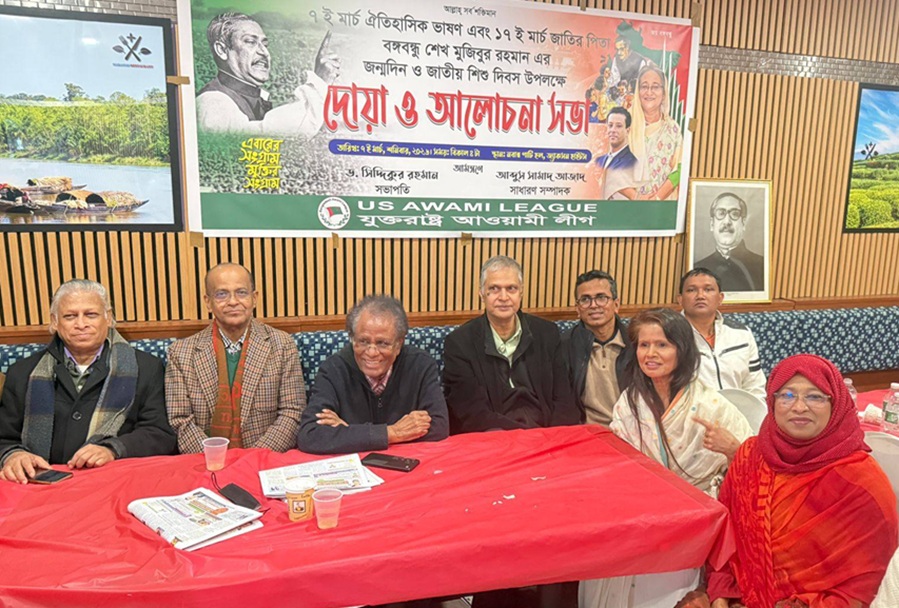
The US Awami League observed the historic March 7, the birth anniversary of Father of the Nation Bangabandhu Sheikh Mujibur Rahman, and National Children’s Day with due respect and dignity. The program was held at Nabanna Party Center in Jackson Heights, New York—often referred to as the capital of the world—with the presence of leaders and activists from all wings and affiliated organizations of the US Awami League. The hall was filled with party members and supporters.

The event was chaired by US Awami League President Dr. Siddiqur Rahman and conducted by General Secretary Abdus Samad Azad. Speakers at the event expressed concern that the newly elected BNP government has prevented the proper observance of the historic March 7 speech of Bangabandhu Sheikh Mujibur Rahman—an address internationally recognized as an epic declaration of independence—thereby pushing the nation toward division.

The speakers also urged the BNP government to immediately withdraw the ban imposed on the Awami League and its affiliated organizations through what they described as an illegal ordinance issued by the “killer-fascist Yunus government.”

Leaders from the US Awami League, New York State and City Awami League, Mahila Awami League, Swechchhasebak League, Jubo League, and the US Chhatra League took part in the discussion.

—Press Release


Dhaka airport descends into chaos

Shahjalal International Airport has turned into a scene of confusion and frustration as multiple flights to Saudi Arabia, Kuwait, and other Gulf destinations were abruptly suspended amid regional tensions. Passengers reported a total lack of information from airlines, with hotlines unreachable and departure boards blank, leaving many stranded in sweltering terminals and walkways.

Md Rubel, a Faridpur resident scheduled to fly to Saudi Arabia on Biman Bangladesh Airlines, described the uncertainty: “They are not telling us when the flight will leave. Even the monitor shows empty times. They don’t say whether it’s cancelled. What are we supposed to do?”

Flights to Dammam, Kuwait, Dubai, Abu Dhabi, Doha, and Bahrain were affected, leaving Umrah pilgrims and expatriates trapped. Government assurances of overnight arrangements were not visible as of 11pm, and police and Ansar personnel struggled to manage crowds arriving from outside Dhaka.


Congressional Briefing Exposes Pogrom Against Hindus in Bangladesh

Washington, DC, February 11, 2026: The Coalition of Hindus of North America (CoHNA) and HinduAction convened a congressional briefing presenting urgent testimony on the escalating persecution of religious minorities in Bangladesh under Chief Advisor Muhammad Yunus, ahead of a deeply contested national election scheduled for February 12. The briefing amplified voices from the ground—journalists, human rights advocates, survivors, and young Bangladeshi Hindus in the diaspora—who described a deepening climate of fear, institutional collapse, and impunity.

“We need to listen to victim voices”, said CoHNA board member Sudha Jagannathan, emphasizing the depth of state failure in Bangladesh. “Silence is not an option and the congressional briefing is one important way to draw attention to the pogrom underway.”
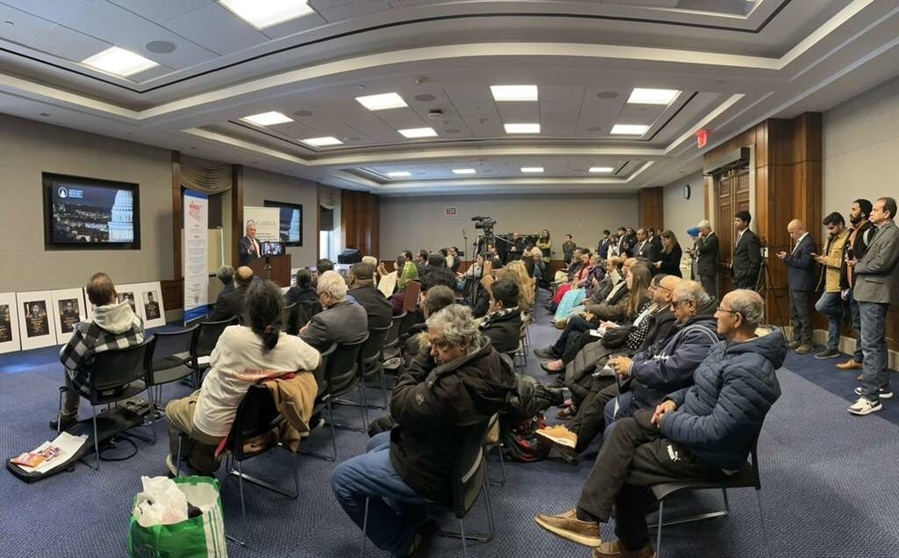
A broad variety of speakers presented data and urged Congress and the State Department to 1) publicly condemn the violence in Bangladesh, and hold congressional hearings, 2) designate Bangladesh as a Country of Particular Concern, 3) designate the Jamaat-e-Islami as a foreign terrorist organization, and 4) apply Magnitsky sanctions on Muhammad Yunus.

Michael Rubin, senior fellow at the American Enterprise Institute, who delivered the keynote address, led the call for sanctions against Yunus under the Global Magnitsky Human Rights Accountability Act—which allows the U.S. to freeze assets and ban entry of foreign human rights violators. He also compared the Islamist crisis in Bangladesh with those in Turkey and Iran, and warned that the U.S. is repeating with Yunus the mistake made with Aung San Suu Kyi in Myanmar—embracing a Nobel laureate whose commitment to liberal principles was “a complete fabrication.”

Congressional Engagement

Rep. Tom Barrett (R-MI), a former U.S. Army officer with 22 years of service, noted that while major battlefronts have wound down, extremist threats have not disappeared. “I know that’s a big reason why you’re here today. I encourage you to continue to advocate, and I appreciate the awareness that you’re raising to bring about a shift in policy,” he said.

Reacting to expert testimony presented at the event, Rep. Suhas Subramanyam (D-VA) wondered if the February 12 elections will be “truly free and fair” as they will proceed without representation from one of the largest mainstream political parties—Sheikh Hasina’s Awami League, which has been banned since May 2025 and its student wing declared a “terrorist organization” since October 2024.

In a recorded message, Samuel Brownback, former U.S. Senator and co-chair of the International Religious Freedom Summit, highlighted the deep impacts of state-sanctioned violence against minorities on population stability and economic prosperity. “If Bangladesh goes in the wrong direction, you’re going to see them drive out most of their religious minorities,” he said.

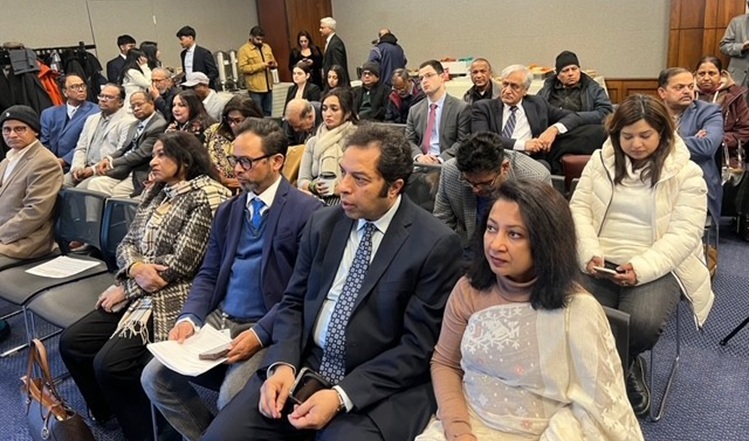
The briefing drew over 70 attendees including staffers from the offices of Sen. Cory Booker (D-NJ), Rep. Mike Levin (D-CA), Rep. Young Kim (R-CA), and Rep. David Min (D-CA), alongside diplomatic officials, underscoring broad legislative and diplomatic concern over the deteriorating human rights situation in Bangladesh.

Witnesses Testify: “Hindus Will Not Survive Another Decade in Bangladesh”

SriRam, speaking under an alias for safety, and human rights advocate Shubho Roy shared harrowing firsthand accounts of being Hindu in Bangladesh—especially during December 2025, when both witnessed the intensifying crisis on the ground.

In a video testimony, SriRam described coordinated violence and institutional takeover by Islamist groups. He recounted his mother being surrounded by neighbors who chanted that Hindus were traitors and should be expelled from the country. His brother, a doctor, saw his family hospital taken over by Islamist groups and now faces constant threat of attack due to his religious identity. He also noted that December 16—Victory Day, commemorating Bangladesh’s independence from Pakistan in 1971—passed without celebrations, unlike previous years.

Roy, who was also in Dhaka during the same period, testified: “I witnessed it, I went through the trauma. From 1971 till today—we are facing the same. They are going after Hindus. They’re targeting minorities.” Both witnesses warned of imminent erasure. “Hindus will not survive another decade in Bangladesh,” SriRam said. “We will be erased from our homeland.”

The atmosphere of terror in Bangladesh now traumatizes even Hindus living in North America. Gita Sikanji, associate professor at the University of California, Irvine, described organizing rallies in 25 American cities to raise awareness. When she invited an ISKCON leader in California to participate, he began crying and declined. “If I come to the rally and my face is seen in the video, in Bangladesh they will increase the violence on my people,” he told her. “Even American Hindus here are traumatized by this series of events,” Sikanji testified.

Diaspora Youth Mobilizes: Documenting Violence, Demanding Action

Some of the most powerful testimony came from young Hindus raised in America yet deeply moved by events in Bangladesh.

Ritvik Hari, policy analyst at CoHNA, urged Congress to publicly condemn the violence, hold hearings, and designate Bangladesh as a Country of Particular Concern. Puja Debi, Stony Brook University student and co-founder of Bengali Hindus of New York City, described how she has been documenting attacks after realizing mainstream coverage was absent. Pramit Acharjee, senior at Bronx High School of Science, warned that, “minority families are being forced to vote a certain way, and they are killed or displaced if they do not comply.” Swastika Biswas, a Queens high school student, spoke about how language enables violence. “When words strip people of their humanity, violence follows.” Sayan Shil, a young engineer from New York, described the collapse of “psychological safety” for minorities in Bangladesh.

Experts Warn: Bangladesh Risks Becoming a Terrorism Hub

Multiple speakers also documented the systematic breakdown of state institutions and the complicity of security forces in violence against minorities.

Priya Saha, from South Asian Minorities Collective, cited the cases of Hindu police officer Santosh Chowdhury, who was handed over by the Bangladesh army to a mob that lynched and burned him, garment worker Deepu Chandra Das, who was similarly killed after being handed over by factory management, and the violent crackdown in Hazari Goli, where police and military beat and arrested over 80 peaceful Hindu protesters—all of which pointed to direct state involvement, she said. Arifa Rahman Ruma, associate professor at Bangladesh Open University, documented how Islamist militants have been released from prison with full indemnity. National Press Club of Dhaka president Farida Yasmin described the systematic dismantling of a free press with mobs torching major newspaper offices in December 2025.
Rana Hassan Mahmud from the Center for U.S.–Bangladesh Relations warned that Bangladesh is heading toward “a sham election with predetermined results.” He cautioned that by allowing Muhammad Yunus to remain in power, “we are enabling the creation of a new hub of terrorism whose repercussions will extend far beyond Bangladesh’s borders.” Utsav Chakrabarti of HinduAction framed the crisis in stark historical terms, warning that “the ongoing pogrom risks escalating into a full-scale repeat of the 1971 genocide—wherein, over the course of 10 months, millions of Hindus were systematically targeted and slaughtered in an orgy of state-backed violence.” He called for the U.S. to hold Jamaat-e-Islami accountable, noting that it is “the very party that collaborated with the Pakistan Army in perpetrating the 1971 genocide, and its return to influence poses a grave threat to regional stability.”

The briefing was part of CoHNA’s sustained grassroots campaign across North America to mobilize attention and defend Hindus in Bangladesh. As the speakers emphasized, the cost of silence extends beyond Bangladesh’s borders—threatening regional stability, emboldening transnational extremism, and undermining American leadership on human rights and religious freedom.



40th FOBANA Conference to be Held in Orlando, USA

Florida, USA: The 40th FOBANA (Federation of Bangladeshi Associations in North America) Conference will be held from September 4-6, 2026, at Holiday Inn Resort, 3011 Maingate Ln, Kissimmee, Florida 34747, Orlando, USA. The event is organized by the Bangladesh Somity of Central Florida.

The conference will be supported by the Bangladesh Society of Central Florida, Association of World Fair and Fest USA Inc, and Central Florida Sports Club Inc. This year’s conference will feature a gathering of the Bangladeshi diaspora, cultural programs, educational and business discussions, as well as various community development activities. The event is open to all expatriates and interested participants, and everyone is warmly invited to attend.


Jackson Heights Beautification Group hosts annual Halloween parade

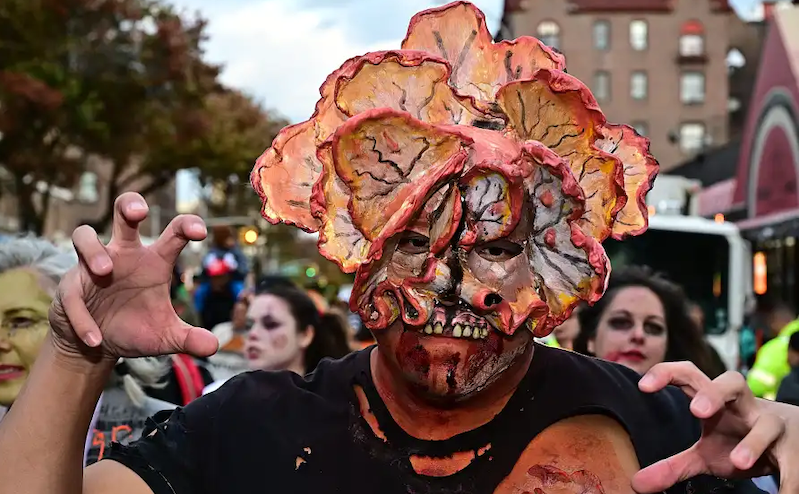
The Jackson Heights Beautification Group (JHBG) hosted its annual Halloween parade on Friday, Oct. 31, along 37th Avenue, from 89th Street to 76th Street in Jackson Heights. This marked the 34th annual Jackson Heights Halloween parade. Attendees of the parade were also given bags of treats as a reward for their participation.

People of all ages took part in the parade. JHBG Co-Chairs John McCaffrey Jr. and Edwin O’Keefe-Westley sponsored this event. O’Keefe-Westley also serves as a member of Queens Community Board 3. Live music was performed during the parade.

Multiple local leaders were also on hand for the parade, including Council Member Shekar Krishnan, State Senator Jessica Ramos and Assemblymembers Jessica González-Rojas, Catalina Cruz and Larinda Hooks.


Early Voting Begins in New York City Mayoral Race, Mamdani Leads

Early in-person voting has begun in New York City for one of this year’s most closely watched mayoral elections. The main contenders are Zohran Mamdani, a Democratic Socialist poised to become the city’s first Muslim mayor; Curtis Sliwa, a Republican candidate; and former Governor Andrew Cuomo, running as an independent. Incumbent Mayor Eric Adams is not running this year and has recently thrown his support behind Cuomo.

Mamdani has gained popularity among progressive voters with proposals such as universal free childcare, free bus services, and a rent freeze for nearly one million rent-regulated apartments. During the campaign, he has faced anti-Muslim rhetoric and has criticized Israel’s military actions in Gaza.

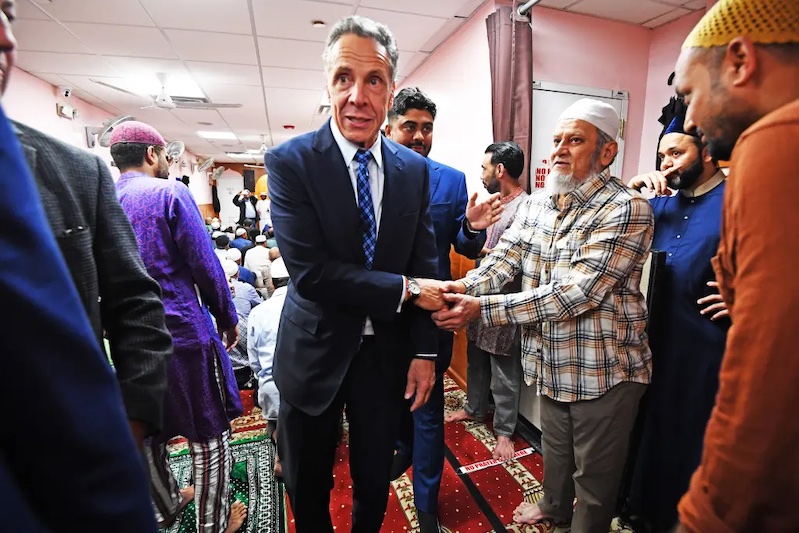
Cuomo, on the other hand, has described Mamdani’s policies as “economically unrealistic” and has emphasized his experience as the state’s governor to appeal to voters.

New York has allowed early voting since 2019, and in the June mayoral primary, roughly 35 percent of ballots were cast early in person.


Zohran Mamdani Says November 4 Election Will Make History: Bangladeshi Diaspora Rally in New York

New York — Democratic candidate for New York City Mayor, Zohran Mamdani, has become one of the most talked-about figures in city politics ahead of the upcoming election. Calling for unity among Bangladeshi expatriates, Mamdani urged everyone to stay focused and resist misinformation campaigns.

“The upcoming November 4 election will make history,” said Mamdani. “We must not be distracted by confusion or propaganda. Only through unity can we win this battle at the ballot box.”

The remarks came on Monday evening at a community gathering jointly organized by the Jackson Heights Bangladeshi Business Association (JBBA) and Bangladeshis for Zohran at the Sanai Party Hall in Jackson Heights.

Mamdani reminded attendees of his earlier electoral success, “We defeated former Governor Andrew Cuomo’s son by a 13-point margin. Yet, he remains in the race as an independent. His goal is to block our progress, but together, we will achieve our mission.”

He further said, “Our vision is to make New York City a livable city for everyone. In this world’s most expensive metropolis, we must ensure fair opportunities for all — especially for hardworking immigrants.”

As the first Muslim candidate in New York City’s history, Mamdani emphasized the importance of collective action, “To turn this city into a city of dreams, we must stay united. Muslim and South Asian voters must come out and vote in large numbers.”

The event began with a welcome address from Abdus Sobhan, member-secretary of Bangladeshis for Zohran. JBBA President Giyas Ahmed presided over the meeting, which also featured speeches from Shahnewaz, Chairman of the Board of Trustees of the Bangladesh Society; Imam Shamsi Ali, Director of Jamaica Muslim Center; Fakrul Islam Delwar, founding president of the Jamaica Bangladesh Friends Society; and Tarek Hasan Khan, General Secretary of JBBA.

In the upcoming election, 33-year-old Zohran Mamdani faces his main rival, 67-year-old independent candidate Andrew Cuomo. Political observers suggest that current Democratic Mayor Eric Adams withdrew from the re-election race following a request from former President Donald Trump. Trump has labeled Mamdani a “socialist Democrat,” warning that if he wins, New York City could lose federal benefits.

Meanwhile, reports indicate that Adams stepped aside amid corruption investigations, allegedly hoping for a presidential pardon from Trump. Republican candidate Curtis Sliwa is also being urged to withdraw from the race, as mounting political pressure from Trump’s camp seeks to prevent Mamdani’s victory by any means.

New York City has nearly 200,000 registered Muslim voters and over 300,000 South Asian voters. Mamdani, who was born in Uganda in 1991, is gaining growing support from African-American, Hispanic, and young voters, according to immigrant community leaders.

In contrast, Andrew Cuomo has been accused of attempting to create divisions between Muslim and Hindu communities, campaigning in mosques and temples while emphasizing his experience.

Zohran Mamdani was born on October 18, 1991, in Uganda to a Muslim father, Mahmood Mamdani, originally from Gujarat, India, and a Punjabi Hindu mother, filmmaker Mira Nair. When he was five, the family moved to South Africa, and two years later, they immigrated to the United States.


NYC Bangladeshi Leader Drops Support for Zohran Mamdani Over Prostitution Policy

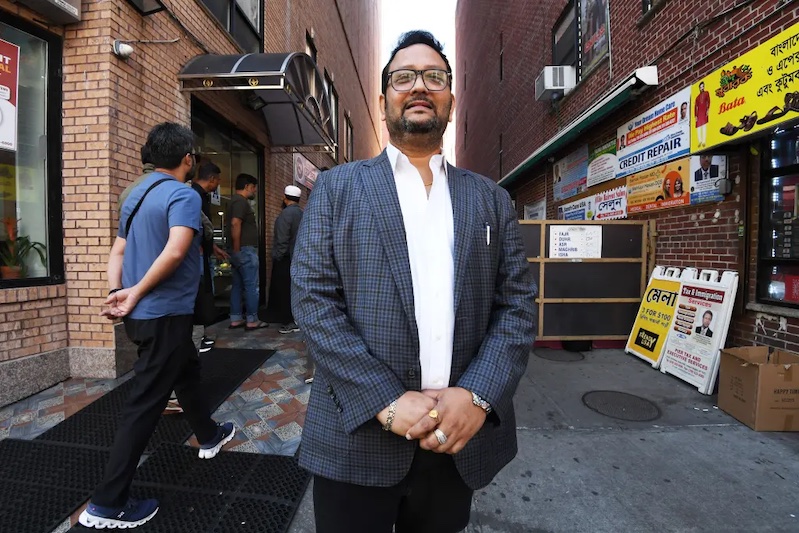
New York: Queens-based Bangladeshi business leader Fahad Solaiman has withdrawn his support for mayoral candidate Zohran Mamdani, citing the lawmaker’s stance on decriminalizing prostitution. Solaiman, a resident near Roosevelt Avenue, told The Post that backing prostitution equates to supporting human trafficking. He urged his mosque community to instead support former Governor Andrew Cuomo, who is running as an independent candidate.

Bangladeshi business leader Fahad Solaiman

“After sunset, you can’t walk down Roosevelt Avenue without seeing prostitutes,” Solaiman said after Friday prayers at Darul Hidaya Mosque.

Once a Mamdani supporter for his views on Palestine, Solaiman said he now sees the assemblyman as “a hypocrite.”

Mamdani, who co-sponsored a state bill to decriminalize sex work among consenting adults, has recently avoided detailed comments on the issue. Local mosque leaders joined Solaiman in endorsing Cuomo, who trails Mamdani by about 20 points in recent polls.

“We’re proud to support Andrew Cuomo to unite our city,” said Imam Qazi Qayyoon.

Mamdani’s campaign did not respond to a request for comment.


Meeting of FOBANA’s Newly Elected Executive Committee Held

Montreal: The first meeting of FOBANA’s newly elected Executive Committee was held virtually via Zoom. With the spontaneous participation of all members, the committee pledged to move forward with the organization’s future activities. The meeting was presided over by the newly elected Chairman Jahid Hossain Pintu and conducted by Executive Secretary Nehal Rahim.

Chairman Jahid Hossain stated that sub-committees will soon be formed to initiate all organizational activities. Executive Secretary Nehal Rahim called upon all newly elected members to play an active role in carrying out FOBANA’s programs.

Details regarding the upcoming 40th FOBANA Convention were presented on behalf of the organizing committee by Anwar Hossain Santu and Nazimul Ullah Liton. They announced that the convention will take place on September 4, 5, and 6, 2026, during the Labor Day weekend, in Orlando, Florida. The convention will be hosted by the Bangladesh Association of Central Florida.

In addition, 27 EC members present at the meeting actively took part in the agenda-based discussions and provided valuable opinions to ensure the success of FOBANA’s future initiatives.