25 Years of 9/11: New Special Exhibition Unveiled at New York Museum

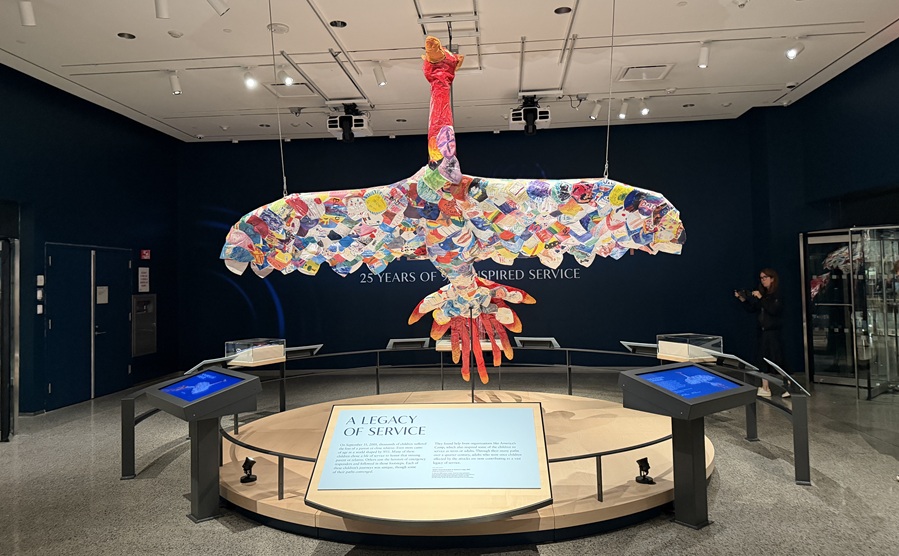
NEW YORK — The 9/11 Memorial & Museum has unveiled a special exhibition in Manhattan to mark the upcoming 25th anniversary of the September 11 terrorist attacks. The new showcase was presented during a press briefing on Monday, August 31, followed by an exclusive media preview.

Titled “In Their Honor: 25 Years of 9/11-Inspired Service,” the exhibition highlights the lasting legacy of public service, volunteerism, and community initiatives that emerged in the wake of the 2001 tragedy. Museum officials confirmed it will officially open to the general public on September 12, 2026.

Speaking at Monday’s media briefing, Beth Hillman, President and CEO of the 9/11 Memorial & Museum, emphasized that while the exhibition honors the memory of the nearly 3,000 victims, it also spotlights the remarkable human resilience and selflessness that followed. Other key speakers included Logan Miller, representing victims’ families, and Noah Rouse, Senior Vice President of Education and Public Programming.

The exhibition captures both the immediate aftermath of the destruction and its long-term social impact, documenting how individuals, families, and organizations rallied to support one another across the nation.

Preparations are currently underway across the United States for the landmark 25th anniversary. A major commemoration ceremony will take place on September 11 at the World Trade Center site, bringing together victims’ families, survivors, first responders, and community leaders.


U.S. National Debt Surpasses $40 Trillion

Shibbir Ahmed, Washington DC: The United States’ national debt has surpassed the $40 trillion mark for the first time, reaching approximately $40.047 trillion on Wednesday, according to the latest data from the U.S. Treasury Department. The historic milestone underscores the scale of the U.S. government’s accumulated debt and is renewing concerns over the country’s long-term fiscal stability.

According to Treasury data, about $32.266 trillion of the total debt is debt held by the public, while approximately $7.782 trillion consists of intragovernmental holdings—amounts owed by one government account or agency to another.

Debt More Than Doubles in Less Than a Decade

The U.S. national debt has increased at an extraordinary pace over the past decade. When Donald Trump first took office as president in 2017, the national debt stood at approximately $19.95 trillion. It has now more than doubled, surpassing $40 trillion.

Economists say no single administration is responsible for the rapid increase. Massive government spending during the COVID-19 pandemic, persistent federal budget deficits, tax cuts and rising spending on major entitlement programs have all contributed to the growth of the national debt. The debt increased substantially during both the Trump and Joe Biden administrations.

Rising Interest Costs Add to Fiscal Pressure

Beyond the size of the debt itself, the cost of servicing it has become a major concern for the U.S. government. According to Reuters analysis, interest payments on the federal debt have become one of the largest components of federal spending and have surpassed spending on Medicare, ranking behind Social Security among the government’s largest expenditures.

Economists warn that interest costs could rise further as older debt is refinanced at higher interest rates. This could limit the government’s ability to allocate resources to areas such as education, infrastructure, defense and other public programs.

Large July Budget Deficit

The latest milestone comes amid continuing large federal budget deficits. According to Reuters, the U.S. government recorded a budget deficit of approximately $432 billion in July alone, one of the largest monthly deficits in the country’s history.

Rising spending on Social Security and Medicare, along with lower-than-expected revenue from tariffs and other sources, contributed to the large shortfall.

Trump Policies Could Add Further to Debt

Concerns are also growing over the potential impact of the Trump administration’s recent tax and spending policies. According to Reuters, President Trump’s widely discussed “One Big Beautiful Bill Act” could add approximately $4.7 trillion to the national debt over the coming years, based on estimates cited in the report.

Economists and budget watchdogs warn that continued growth in federal debt could reduce the government’s fiscal flexibility. It could also make it more difficult for Washington to respond to future economic downturns, inflationary pressures or other national emergencies.

Investor Concerns Grow

The growing national debt is also putting pressure on the U.S. government bond market. Yields on long-term Treasury securities have recently reached multi-year highs as investors demand higher returns to hold long-term U.S. government debt.

On Wednesday, the Treasury Department announced plans to increase its long-term Treasury bond buyback operations. The size of individual operations is expected to increase from about $2 billion to at least $4 billion.

Following the announcement, yields on long-term U.S. government bonds declined somewhat, while global bond markets also reacted positively.

Global Economic Implications

U.S. Treasury securities are widely regarded as among the safest and most important financial assets in the world. As a result, major changes in the U.S. debt and Treasury markets can have consequences far beyond American financial markets.

High government debt, inflation concerns and geopolitical tensions have recently contributed to higher long-term government bond yields in several countries.

Reuters reported that following the latest Treasury action, long-term European bond yields also declined somewhat. At the same time, the U.S. dollar came under pressure while gold prices rose sharply.

A Major Fiscal Challenge Ahead

The crossing of the $40 trillion threshold is more than a statistical milestone for the United States. It reflects decades of federal budget deficits and growing reliance on government borrowing.

Budget analysts warn that if the current pace of debt accumulation continues, Washington could face increasingly limited fiscal flexibility. Borrowing could also become more expensive, particularly during periods of economic stress.

The ultimate impact of the $40 trillion debt level will depend on several factors, including economic growth, interest rates, government spending, tax revenues and the fiscal policies adopted by future administrations.

But the historic milestone has already renewed international debate over the sustainability of U.S. government finances and the future management of the world’s largest sovereign debt.


Emotional Fakhrul Seeks MPs’ Votes Ahead of Presidential Election

DHAKA: BNP presidential candidate and outgoing Secretary General Mirza Fakhrul Islam Alamgir made an emotional appeal to the party’s lawmakers on Wednesday, urging them to vote for him in Thursday’s presidential election. Fakhrul made the appeal at a meeting of the BNP Parliamentary Party held at the government party meeting room of the Jatiya Sangsad Bhaban in Dhaka. The meeting was chaired by BNP Chairman and Prime Minister Tarique Rahman.

The meeting began at 2 p.m. and continued for about one and a half hours. According to lawmakers who attended the meeting, Fakhrul became emotional at the beginning of his speech and broke down in tears several times. His emotional remarks created a somber atmosphere in the meeting, with Prime Minister Tarique Rahman also becoming emotional.

Recalling his long political journey with the BNP, Fakhrul said he had served the party as Senior Joint Secretary General, Acting Secretary General and Secretary General. “If I have made any mistake while carrying out my responsibilities, or if I have unintentionally hurt anyone, I ask for forgiveness,” Fakhrul told his colleagues.

He expressed gratitude to the party for giving him what he described as immense respect and responsibility throughout his political career. He also recalled the contributions of the late BNP Chairperson Begum Khaleda Zia and the party’s founder, former President Ziaur Rahman. Fakhrul thanked Tarique Rahman for continuing to place his trust in him and assigning him important responsibilities over the years.

He pledged that he would preserve throughout his life the honor and trust that the party had placed in him. He also said he would never compromise on the issues of Bangladesh’s independence and sovereignty.

Referring to the possibility of moving to Bangabhaban if elected president, Fakhrul said he would miss his longtime colleagues and asked them to pray for him. He then directly appealed to the BNP lawmakers to vote for him in Thursday’s presidential election. Earlier, Chief Whip Md. Nurul Islam Moni welcomed the participants and briefed the lawmakers about the voting procedure for the presidential election. He also sought their votes for Fakhrul.

Moni informed the meeting that the presidential election would be held on Thursday, August 20, and that Fakhrul himself would also cast his vote. He further explained that if Fakhrul is elected president and assumes office, his parliamentary seat in Thakurgaon-1 would become vacant. After Fakhrul, Prime Minister Tarique Rahman addressed the meeting and also urged BNP lawmakers to vote for Fakhrul in the presidential election.

The meeting was attended by BNP Standing Committee members Khandaker Mosharraf Hossain, Gayeshwar Chandra Roy, Abdul Moyeen Khan, Amir Khasru Mahmud Chowdhury, Salahuddin Ahmed, Iqbal Hasan Mahmud, Selima Rahman and A.Z.M. Zahid Hossain, among others.The pre sidential election is scheduled to take place on Thursday, August 20. If elected, Mirza Fakhrul Islam Alamgir will assume the office of President. As a result, Wednesday’s parliamentary party meeting could be Fakhrul’s final such meeting as a sitting member of parliament, giving the gathering an added emotional significance.


U.S. Sanctions ICC President and Senior Official

Shibbir Ahmed, New York: The United States has imposed sanctions on International Criminal Court (ICC) President Tomoko Akane and senior trial lawyer Abdoulaye Sey. U.S. Secretary of State Marco Rubio announced the sanctions on Tuesday, August 18. On Wednesday, August 19, Japan, the ICC and the Netherlands expressed opposition to the move.

The Trump administration accused Akane and Sey of being directly involved in efforts to investigate, arrest, detain or prosecute government officials and nationals of countries that have not accepted the ICC’s jurisdiction. The dispute between Washington and the court has intensified particularly over the ICC’s arrest warrants for Israeli Prime Minister Benjamin Netanyahu and former Defense Minister Yoav Gallant.

Akane and Sey Added to U.S. Sanctions List

Tomoko Akane, a Japanese national, has served as president of the ICC since 2024. She is the court’s sixth president and the first Japanese national to hold the position. Abdoulaye Sey, a Senegalese national, is a senior trial lawyer at the ICC. He was part of the prosecution team involved in seeking an arrest warrant for Israeli Prime Minister Benjamin Netanyahu. Sey has also been nominated for election as an ICC judge.

According to the U.S. Treasury Department’s sanctions list, Akane and Sey have been designated as Specially Designated Nationals (SDNs). As a result, any property or property interests they hold within U.S. jurisdiction will be blocked, and U.S. citizens and companies will generally be prohibited from conducting transactions with them. The U.S. Treasury Department also issued a general license on August 18, allowing certain transactions involving Akane and Sey to be wound down until September 17.

Why Did the U.S. Impose the Sanctions?

Secretary of State Marco Rubio said Akane and Sey were directly involved in ICC efforts to investigate, arrest, detain or prosecute officials from countries whose governments have not accepted the court’s jurisdiction. Rubio has accused the ICC of exceeding the limits of its authority and said its actions pose a threat to U.S. sovereignty. The Trump administration has repeatedly argued that the ICC has sought to expand its jurisdiction by taking legal action against officials from the United States and its close ally, Israel.

Neither the United States nor Israel is a member of the ICC. Under the Rome Statute, however, the court can exercise jurisdiction over certain international crimes committed on the territory of a member state, including in circumstances involving nationals of non-member countries.

ICC Arrest Warrants for Netanyahu and Gallant

The ICC issued arrest warrants in November 2024 for Israeli Prime Minister Benjamin Netanyahu and then-Defense Minister Yoav Gallant in connection with alleged war crimes related to the Gaza conflict. The decision further intensified tensions between Washington and the ICC. The Trump administration has since imposed several rounds of sanctions against officials associated with the court.

Former ICC Prosecutor Karim Khan, along with several judges and other court officials, had previously been placed under U.S. sanctions. The addition of Akane and Sey further expands the list of ICC officials targeted by Washington.

ICC Condemns U.S. Action

Following the latest sanctions, the ICC strongly condemned the U.S. decision on Wednesday. The court described the move as a serious attack on judicial independence and a threat to the international rule-of-law system. The ICC said that when judicial officials face threats and pressure for carrying out their legal responsibilities, it puts not only the independence of the court but the broader international justice system at risk.

The court also warned that such coercive measures could undermine the ability of victims of war crimes and other serious international crimes to seek justice.

Japan Voices Rare Criticism

Japan has criticized the United States over the sanctions imposed on its citizen and ICC President Tomoko Akane. On Wednesday, Japan’s Foreign Ministry described the U.S. decision as “very unfortunate.” Tokyo said it has long supported the ICC’s efforts to ensure accountability for the most serious crimes of concern to the international community.

Japan also reaffirmed its commitment to strengthening the rule of law within the international community and said it would continue discussions with relevant countries on the issue. The public criticism from Japan, a close U.S. ally, is considered significant amid growing international debate over the future of the ICC.

Netherlands Supports the ICC

The ICC is headquartered in The Hague, Netherlands. Dutch Foreign Minister Tom Berendsen has also opposed the U.S. sanctions. He said international courts and tribunals must be allowed to carry out their responsibilities independently. Berendsen also invited ICC President Tomoko Akane for discussions and reaffirmed the Netherlands’ continued support for the court.

Trump Administration’s Campaign Against the ICC

The Trump administration’s current campaign against the ICC began on February 6, 2025, when President Donald Trump signed an executive order titled “Imposing Sanctions on the International Criminal Court.”

The executive order subsequently became the basis for sanctions against several ICC officials. The addition of Akane and Sey represents another escalation in Washington’s pressure campaign against the court.

In July, Rubio took an even tougher position, saying the Trump administration would intensify its campaign against the ICC. Washington has also encouraged other countries to reconsider their membership in the court.

Growing International Divide Over the ICC

The latest U.S. sanctions have further exposed divisions among Western allies over the ICC and its role in international justice. Japan and the Netherlands have defended the court’s independence, while several European countries have also expressed support for the ICC and the principle of judicial independence.

At the same time, political pressure surrounding the ICC has increased among its member states, with some countries recently discussing or considering whether to withdraw from the court.

The legality of U.S. sanctions against ICC officials is also being challenged in U.S. courts. In June, three ICC judges filed a lawsuit against the Trump administration, while human rights organizations have filed separate legal challenges. The new sanctions against Tomoko Akane and Abdoulaye Sey mark another escalation in the ongoing confrontation between the Trump administration and the ICC.

Washington argues that the court’s actions threaten U.S. sovereignty and the security of its allies. The ICC, meanwhile, maintains that pressure and sanctions against judicial officials threaten the independence of international justice and the rule of law.


No Talks, Closed Strait: U.S.–Iran Crisis Threatens Global Energy Security

Shibbir Ahmed, New York: U.S. President Donald Trump has ruled out any immediate negotiations with Iran, as the standoff over the strategically vital Strait of Hormuz deepens and uncertainty over global energy supplies continues to grow.

Trump said Tuesday, August 18, that no talks were currently taking place with Tehran and that none were scheduled. His comments came as Iran insisted that the Strait of Hormuz remains closed to shipping and said the waterway would stay shut until the United States meets its demands.

The conflicting claims have added to uncertainty surrounding one of the world’s most important energy corridors. The Strait of Hormuz carries roughly one-fifth of global crude oil and liquefied natural gas shipments, making prolonged disruption a major concern for energy markets and the global economy.

No Talks With Tehran

Trump’s statement marked a sharp departure from earlier suggestions that diplomatic contacts might resume. Iran has indicated that it is willing to discuss the conflict, but Tehran has demanded significant concessions, including an end to the U.S. blockade, the release of frozen Iranian assets and other measures before normal shipping through the strait can resume.

Trump, however, has rejected the idea that Washington is currently negotiating with Tehran and has continued to maintain pressure on Iran.

The breakdown follows the expiration of a 60-day U.S.-Iran memorandum that had been intended to provide time for negotiations toward a broader agreement. The arrangement expired without a lasting peace deal, leaving the two sides further apart.

Hormuz Traffic Falls Sharply

Despite Trump’s assertion that the Strait of Hormuz is open, commercial shipping through the waterway remains severely restricted.

According to Kpler data cited by Reuters, only six commodity vessels passed through the strait on Tuesday, down from nine the previous day and below the recent average of about 11 daily transits. Major shipowners continue to avoid the waterway because of security concerns.

The decline in shipping has raised concerns about the continued flow of oil and gas from the Persian Gulf.

China, one of the world’s largest buyers of Middle Eastern energy, is particularly exposed to the disruption. Two major Chinese shipping companies that previously transported a substantial share of China’s Middle Eastern oil imports have stopped operating through the Strait of Hormuz and Bab al-Mandeb.

Oil Prices Under Pressure

The uncertainty has already affected global energy markets. Brent crude was trading around $91.20 a barrel on Wednesday, August 19, while U.S. West Texas Intermediate crude was around $85.10 a barrel. Both benchmarks had reached their highest levels since late July before retreating slightly.

Analysts say the continuing risk surrounding Hormuz is keeping a geopolitical premium in oil prices. If the disruption persists or the conflict escalates, crude prices could move substantially higher again.

The implications extend beyond gasoline and transportation costs. Higher energy prices can increase inflationary pressure, raise production and shipping costs, and complicate economic policy for governments around the world.

Iran Says Strait Will Remain Closed

Iran has maintained that the Strait of Hormuz will remain closed until Washington meets conditions Tehran considers necessary for reopening the waterway. The Iranian position directly contradicts Trump’s assertion that the strait remains open and safe.

The standoff has effectively created two competing realities: Washington says commercial shipping can use the waterway, while Tehran maintains that normal passage will not resume until its demands are addressed. That uncertainty itself has become a major problem for shipping companies, insurers and energy traders.

Regional Tensions Escalate

The crisis is no longer limited to the United States and Iran. The United Arab Emirates announced Wednesday that it had suspended financial and economic transactions with Iran following what it said were Iranian missile launches toward maritime areas. Iran denied the UAE’s allegations.

The UAE’s decision represents another significant escalation because the country has historically been an important commercial and financial channel for Iran despite extensive U.S. sanctions.

The crisis has also affected shipping beyond the Gulf, with security concerns extending to the Red Sea and the Bab al-Mandeb waterway.

Washington and Tehran Remain Far Apart

The collapse of the latest diplomatic effort leaves little indication of an immediate breakthrough. Iran wants sanctions relief, an end to the U.S. blockade, the release of frozen assets and compensation related to the conflict. Trump has rejected Iran’s demands and has continued to apply economic and military pressure.

Both sides have also accused the other of blocking the path to peace. The result is a dangerous stalemate: the United States says it wants Iran to accept an agreement on its nuclear program and broader security concerns, while Tehran insists that Washington must first change its own military and economic policies.

Global Economic Consequences

The Strait of Hormuz crisis is being closely watched far beyond the Middle East. A prolonged disruption could affect energy-importing economies across Asia and Europe, particularly countries heavily dependent on Gulf oil and gas.

Higher crude prices could also increase inflation at a time when central banks are attempting to balance economic growth with price stability. Reuters reported that financial markets have already been reacting to the broader U.S.-Iran confrontation, with concerns over energy disruptions contributing to higher borrowing costs and renewed inflation fears.

A Critical Test for Diplomacy

For now, the immediate question is whether Washington and Tehran can return to negotiations before the Hormuz crisis becomes a longer-term disruption to global trade. Trump has ruled out current or scheduled talks, while Iran continues to link the reopening of the waterway to political and economic concessions.

Meanwhile, commercial vessels are avoiding the strait, oil prices remain elevated and regional tensions continue to spread. The longer the standoff lasts, the greater the risk that the Strait of Hormuz becomes not only a flashpoint in the U.S.-Iran conflict but also a major source of instability for the global economy.

For the international community, the stakes extend well beyond the Middle East: the future of one of the world’s most important shipping routes—and the stability of global energy markets—may depend on whether diplomacy can be restored.


U.S. Business Delegation in Dhaka Signals Growing Investment Interest in Bangladesh

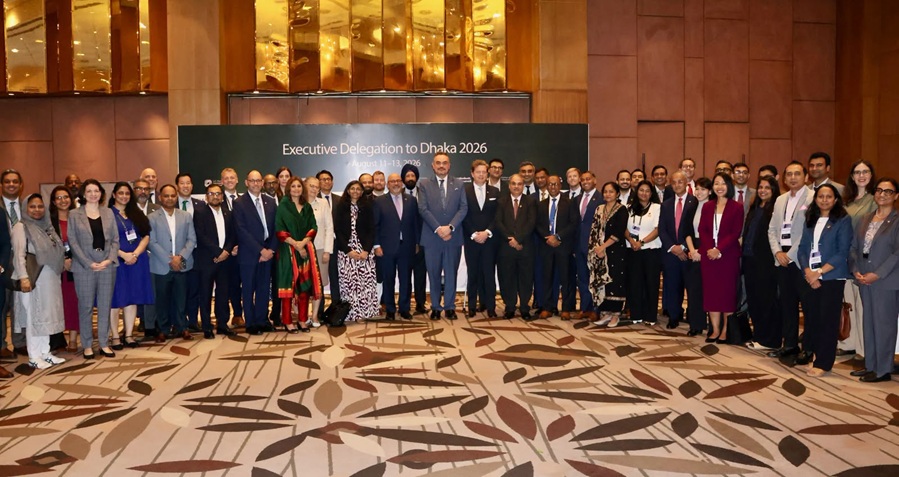
Shibbir Ahmed: A high-level U.S. business delegation representing 25 American companies has arrived in Dhaka to explore new investment opportunities in Bangladesh, highlighting growing interest among leading U.S. businesses in the country’s energy, technology, agriculture, and financial sectors.

The executive delegation of the U.S.-Bangladesh Business Council (USBBC) arrived in Dhaka on August 11 and participated in meetings and business programs through August 13. Representatives of major American companies, including Chevron, Excelerate Energy, Visa, and Mastercard, were among those taking part in the visit.

The delegation’s visit is being viewed as an important initiative to deepen the longstanding economic relationship between Bangladesh and the United States, which spans more than five decades.

U.S. Ambassador to Bangladesh Brent T. Christensen welcomed the delegation to Dhaka, saying that leading American companies from the energy, technology, agriculture, and finance sectors had come to explore opportunities and build on more than 50 years of U.S.-Bangladesh economic ties.

Focus on Trade and Investment

The delegation’s primary objective is to explore new investment opportunities and potential business partnerships in Bangladesh. Energy, infrastructure, technology, digital services, healthcare, agriculture, and financial services are among the sectors attracting particular attention from U.S. businesses.

During meetings with Bangladeshi officials, representatives of the U.S. business community discussed ways to expand bilateral trade and investment and strengthen private-sector cooperation.

The delegation also met with Bangladesh’s Foreign Affairs Adviser Humayun Kabir, with discussions focusing on expanding economic relations and creating greater opportunities for U.S. investment in areas including industry, infrastructure, energy, technology, the digital economy, and healthcare.

Atul Keshap, President of the U.S.-Bangladesh Business Council and a former U.S. ambassador, also emphasized the potential for expanding business cooperation between the two countries.

$5 Billion Investment Goal

The U.S. business delegation’s visit comes as the American Chamber of Commerce in Bangladesh (AmCham) has set an ambitious target for mobilizing additional U.S. investment in Bangladesh.

AmCham has said it aims to help mobilize up to $5 billion in additional U.S. investment over the next five years, involving existing member companies as well as potential new American investors.

The investment target was discussed during an August 11 meeting between Prime Minister Tarique Rahman and an AmCham executive delegation.

The discussions also covered measures to improve Bangladesh’s investment climate, including reforms related to taxation, value-added tax, customs procedures, and other issues affecting businesses.

AmCham has said that its member companies have already invested more than $5 billion in Bangladesh. If the new investment target is achieved, the U.S. corporate presence in Bangladesh could expand significantly.

Energy and Technology Attract Strong Interest

The participation of companies such as Chevron and Excelerate Energy underscores the importance of Bangladesh’s energy sector to American investors.

Bangladesh has growing demand for reliable energy and infrastructure, creating potential opportunities for U.S. companies with expertise in energy production, liquefied natural gas, infrastructure, and related technologies.

The participation of global financial technology companies such as Visa and Mastercard also points to growing interest in Bangladesh’s rapidly developing digital economy and financial-services sector.

With a large population, expanding consumer market, growing digital economy, and increasing demand for infrastructure and energy, Bangladesh offers a range of potential opportunities for international investors.

New Opportunities Following the Trade Agreement

The U.S. business delegation’s visit comes several months after Bangladesh and the United States signed the Agreement on Reciprocal Trade earlier this year.

The agreement created a new framework for expanding bilateral trade and improving market access between the two countries.

Against this backdrop, the business delegation’s visit can be viewed as more than a routine commercial engagement. It represents an effort to translate recent progress in government-to-government economic relations into concrete investment, business partnerships, and private-sector cooperation.

For Bangladesh, increased U.S. investment could bring more than capital. New investments could also contribute to technology transfer, skills development, employment generation, and greater integration into global supply chains.

For American companies, Bangladesh represents a large and evolving South Asian market with opportunities in manufacturing, energy, digital services, financial technology, infrastructure, and consumer-oriented businesses.

A New Chapter in Economic Relations?

For more than five decades, Bangladesh-U.S. economic relations have been strongly associated with trade, particularly Bangladesh’s ready-made garment exports to the American market. Recent developments, however, suggest that the economic relationship could be entering a broader phase.

The visit by U.S. Special Envoy Sergio Gor to Bangladesh earlier this month, followed by the arrival of the high-level U.S. business delegation and AmCham’s $5 billion investment target, indicates growing engagement not only between the two governments but also between the private sectors of both countries.

The challenge now will be turning growing investor interest into actual projects. To attract and retain more U.S. investment, Bangladesh will need to maintain policy stability, improve transparency, streamline regulatory procedures, strengthen infrastructure, and ensure a more predictable business environment.

The latest U.S. business delegation’s visit therefore represents both an opportunity and a test for Bangladesh. Whether the growing interest of American companies can be converted into long-term investment, new jobs, technology partnerships, and expanded trade will be an important measure of the next phase of Bangladesh-U.S. economic relations.


Bangladesh-U.S. Relations Gain New Momentum as Washington Deepens Economic and Strategic Engagement

Shibbir Ahmed, Washington, D.C.: Bangladesh-U.S. bilateral relations appear to be entering a new phase, with growing engagement on trade and investment alongside broader discussions on strategic cooperation, regional security, and the Rohingya crisis. The two countries’ trade agreement earlier this year and the recent visit to Bangladesh by U.S. Special Envoy for South and Central Asia Sergio Gor have brought renewed attention to the economic and strategic dimensions of the relationship.

Gor visited Bangladesh from July 30 to August 1. Following the visit, the U.S. Embassy in Dhaka said the trip underscored the breadth and depth of the Bangladesh-U.S. relationship and reaffirmed Washington’s commitment to strengthening bilateral strategic and economic ties.

Renewed Interest in Investment

During a meeting with Sergio Gor, Bangladesh Prime Minister Tarique Rahman called for greater U.S. investment and stronger economic engagement between the two countries. The discussions covered trade, investment, the Rohingya crisis, and a range of issues of mutual interest.

Gor expressed a positive assessment of Bangladesh’s political and economic stability. He pointed to recent positive developments in the country and suggested that changes in the U.S. travel advisory could send a favorable message to American investors about Bangladesh as an investment destination.

The two sides also discussed potential U.S. investment in Bangladesh and opportunities for financing through the U.S. International Development Finance Corporation (DFC). The possibility of a future visit to Bangladesh by a delegation from the U.S.-Bangladesh Business Council was also discussed.

If these initiatives translate into concrete projects, they could expand opportunities for U.S. companies in areas such as infrastructure, energy, technology, manufacturing, and other emerging sectors.

A New Framework for Trade Relations

One of the most significant recent developments in Bangladesh-U.S. economic relations has been the signing of the Agreement on Reciprocal Trade (ART) earlier this year. Signed on February 9, 2026, the agreement seeks to expand market access and provide a new framework for bilateral trade. According to information from the Office of the U.S. Trade Representative, Bangladesh has committed to providing various market-access benefits for U.S. industrial and agricultural products, including machinery, medical equipment, information and communications technology products, energy-related products, and agricultural goods.

For Bangladesh, access to the U.S. market, export opportunities, and increased American investment remain important economic priorities. Against this backdrop, Gor’s visit can also be viewed as part of the broader effort to translate the commitments of the February trade agreement into deeper commercial and investment ties.

Strategic Importance Beyond Economics

Bangladesh’s geographic position also adds a strategic dimension to its relationship with the United States. Located along the Bay of Bengal and within the broader Indo-Pacific region, Bangladesh has increasing economic and geopolitical significance.

During Gor’s visit, discussions extended beyond trade and investment to issues related to regional cooperation and security. There are also opportunities for expanding bilateral cooperation in areas such as technology, investment, and security.

Recent international analyses have highlighted the growing strategic engagement between Washington and Dhaka. Bangladesh’s expanding economic relationship with China, changing dynamics with India, and the broader competition among major powers in the Bay of Bengal have all contributed to increased international attention toward Bangladesh.

However, viewing Bangladesh-U.S. relations solely through the lens of competition with China or India would overlook the broader interests shaping the bilateral relationship. Trade, investment, security, technology, and humanitarian cooperation all have their own significance in the relationship.

Rohingya Crisis Remains a Major Area of Cooperation

The Rohingya crisis remains another important pillar of Bangladesh-U.S. relations. During his Bangladesh visit, Sergio Gor visited a Rohingya refugee camp in Ukhia, Cox’s Bazar. Rohingya representatives called for continued international support for a safe, voluntary, sustainable, and dignified repatriation process.

Bangladesh has hosted a large Rohingya refugee population since hundreds of thousands fled violence in Myanmar. The country has repeatedly sought stronger international support for humanitarian assistance and a sustainable solution to the crisis. The United States remains an important humanitarian partner for Bangladesh on the Rohingya issue. As a result, humanitarian cooperation continues to complement the broader economic and strategic relationship between the two countries.

Why Bangladesh Matters More to Washington

Bangladesh is one of South Asia’s major economies, with a large consumer market and a substantial workforce. Its manufacturing base, particularly the ready-made garment sector, along with its growing services and technology sectors, offers opportunities for foreign investors.

For the United States, Bangladesh is an important trading partner and a potentially significant market for American companies. For Bangladesh, the United States remains one of its most important export destinations.

This creates a degree of economic interdependence between the two countries. Washington has an interest in expanding trade and investment opportunities in Bangladesh, while Dhaka is seeking greater access to the U.S. market, more American investment, technology cooperation, and stronger economic partnerships. Bangladesh’s location along the Bay of Bengal and its role in the wider Indo-Pacific further enhance its importance.

Implementation Will Be the Real Test

Despite the recent diplomatic momentum, the key question is whether political engagement and economic agreements will translate into measurable long-term results. The implementation of commitments under the Reciprocal Trade Agreement, the level of interest shown by U.S. companies in new investments in Bangladesh, and the future trajectory of bilateral trade will help determine the next phase of the relationship.

At the same time, Bangladesh will need to maintain a balanced foreign policy while protecting its economic interests and managing relations with major powers, including the United States, China, and India.

Recent developments suggest that Bangladesh-U.S. relations are no longer limited to traditional trade or garment exports. Trade, investment, technology, humanitarian cooperation, regional security, and Indo-Pacific geopolitics are increasingly shaping a broader and more multidimensional partnership.

Sergio Gor’s visit and the Reciprocal Trade Agreement signed earlier this year are two significant indicators of this evolving relationship. The next challenge will be turning the current diplomatic and economic momentum into sustained, mutually beneficial partnership.


Presidential Election: EC validates nominations of Mirza Fakhrul, Oli Ahmed

DHAKA- The Election Commission (EC) has declared valid the nomination papers of Mirza Fakhrul Islam Alamgir, the nominee of the Bangladesh Nationalist Party (BNP), and Dr Oli Ahmed, Bir Bikram, candidate from the Jamaat-e-Islami-led 11-party alliance, in the presidential polls. At Nirbachan Bhaban in the capital today, Chief Election Commissioner (CEC) AMM Nasir Uddin declared their nomination papers valid after verification.

He informed a BNP delegation, led by its standing committee member Dr Abdul Moyeen Khan, that the nomination papers of Mirza Fakhrul Islam Alamgir have been accepted as valid. Earlier, the CEC accepted the nomination papers of 11-party alliance Oli Ahmed Bir Bikram as valid. The presidential election will be held on August 20. The scrutiny of nomination papers began at 11:00 am today (Sunday).

The two candidates submitted their nomination papers on the last day of the presidential election on August 13. On Thursday last, BNP submitted the nomination papers of Mirza Fakhrul Islam Alamgir to the CEC at Nirbachan Bhaban. On the other hand, the 11-party alliance submitted its nomination papers in favour of Liberal Democratic Party (LDP) Chairman Colonel (retd) Oli Ahmed.

EC Secretariat Senior Secretary Akhtar Ahmed said the last date for withdrawal of candidacy is 4:00 pm on August 18 (Tuesday). Voting will be held in the session hall of Jatiya Sangsad from 2:00 pm to 5:00 pm on August 20 (Thursday), he said.


Govt wants to build Bangladesh as a welfare state: PM

KISHOREGANJ (Pakundia) – Prime Minister Tarique Rahman today said the government wants to build Bangladesh as a welfare state through people-oriented initiatives to improve people’s living standards. In this connection, he urged all to remain patient and vigilant against attempts to create disorder and impede the country’s development.

“Our goal is to build a welfare state. That is why we are taking various measures for the welfare of the people. We have already started implementing different programmes, including the Family Card,” he said.

The Prime Minister made the remarks while addressing a public gathering after releasing fish fry into the Brahmaputra River at Mirzapur Chairman Bari Ghat in Pakundia this afternoon. Referring to the support extended by thousands of people to his government’s development plans, he said the people would benefit if the plans are implemented properly.

“So, I want to tell you to maintain the trust you placed in the party in the February 12 election,” he said. The Prime Minister urged the people to keep their trust in the BNP and assured them that the party would remain committed to their welfare and the country’s development.

“The government was formed with the support of the people. You placed your trust in the BNP through that support. I want to make it clear: InshaAllah, maintain that trust. The BNP was with you, is with the people of Bangladesh and will remain with the people of Bangladesh,” he added. Prime Minister Tarique Rahman said the BNP would work for the people of Bangladesh and, as long as the party exists, would not undertake any action contrary to the interests of the country and its people.

Criticising various unplanned measures taken by the previous government in the power and energy sector, Tarique Rahman said those measures had contributed to the current crisis. Referring to the next session of parliament, scheduled to begin on August 27, he said the government would present its plan there to address the country’s power-related problems over the next 10 years.

The Prime Minister also urged all to remain alert against those trying to create disorder on the streets. He said, “A small number of people are trying to create disorder on the streets. If disorder is created on the streets, ordinary people suffer the most. Their businesses are affected, their jobs are affected and their livelihoods are disrupted. But those who create disorder benefit from it.”

“Today, let us take an oath and pledge that those who work against the interests of the country, create disorder or obstruct various programmes taken in the public interest will be resisted by the people with all their collective strength,” he added.

Tarique Rahman said the people of the country now want peace, the rule of law, employment, education for their children and healthcare for their families. “If we are to accomplish these tasks, we must remain patient. At the same time, we must remain vigilant about those who are creating disorder,” he said.

After arriving in Pakundia, the Prime Minister first released fish fry into the Brahmaputra River at Mirzapur Chairman Bari Ghat. He later took the stage at the gathering, where thousands of party leaders and activists greeted him with applauses. Lawmaker Fazlur Rahman and other leaders were present at the programme.


Jackson Heights Elakabashi Observe National Mourning Day

Shibbir Ahmed, Jackson Heights, New York: A commemorative program marking the 51st death anniversary of Father of the Nation Bangabandhu Sheikh Mujibur Rahman and National Mourning Day was held in Jackson Heights, New York, with due respect and solemnity. The daylong program included a memorial gathering, prayer session, blood donation drive, and distribution of food and prayer mats.

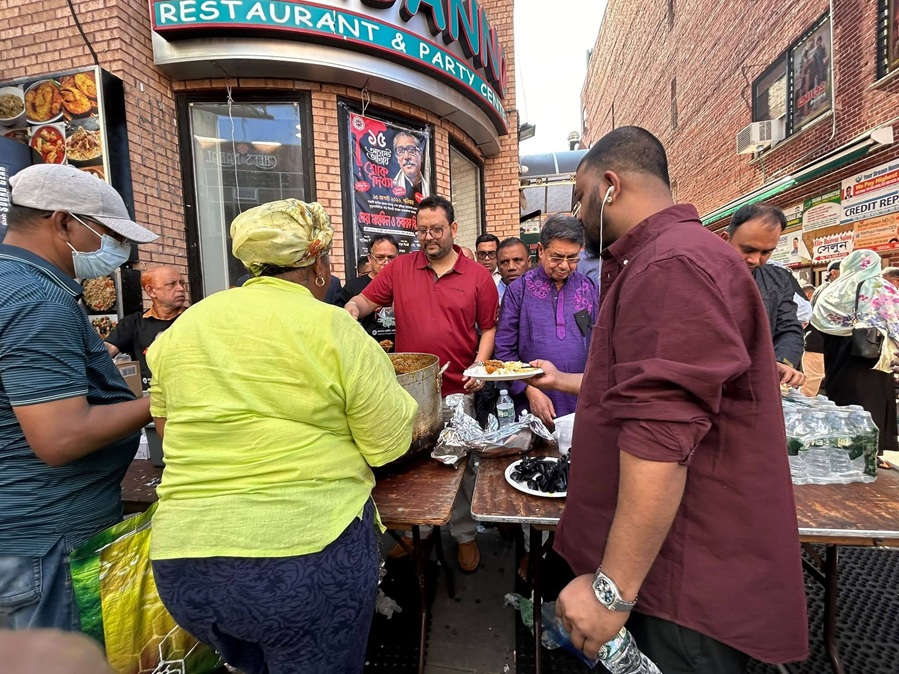
The program was organized by the Jackson Heights Elakabashi on Saturday, August 15, in front of Nabanna Restaurant at 37-22, 73rd Street, Jackson Heights. The blood donation drive began at 1:00 p.m., followed by the distribution of food and prayer mats from 3:00 p.m.

At the beginning of the program, prayers were offered for the eternal peace and forgiveness of those who lost their lives during the month of August. Imam Kazi Qayum led the prayers and supplication. Following the prayer session, food and prayer mats were distributed among those attending the program.

According to the organizers, five cows were slaughtered for the event, and food and tabarruk were distributed among approximately 1,500 people. Fresh mango juice was also prepared and distributed among members of the general public. Prayer mats were also distributed. Chief Coordinator Shah J. Chowdhury said approximately 40 people voluntarily donated blood during the blood donation program.

President of Jackson Heights Elakabashi Sakil Mia, General Secretary Mohammad Alam Nomi, Convener Mir Nizamul Haque, Member Secretary Mamun Miaji, Chairman Redwanul Haque, Chief Coordinator Shah J. Chowdhury, and other leaders and representatives of the organization were present at the event.

Speakers at the program recalled the August 15, 1975 assassination of Bangabandhu Sheikh Mujibur Rahman and members of his family. They prayed for the eternal peace and forgiveness of all those who were killed during August and remembered the events of August 15 as one of the darkest and most tragic chapters in the history of Bangladesh.

On August 15, 1975, Bangabandhu Sheikh Mujibur Rahman was assassinated along with members of his family. Several family members and close relatives were also killed in the massacre. His two daughters, Sheikh Hasina and Sheikh Rehana, survived because they were abroad at the time. Bangabandhu’s nephew Sheikh Fazlul Haque Moni, his pregnant wife Arzu Moni, and members of the family of Abdus Rab Sernabat were also killed during the attacks.

Following the fall of the Awami League government on August 5, 2024, the National Mourning Day designation and public holiday associated with August 15 were abolished in Bangladesh. Despite this, Bangladeshi expatriates in Jackson Heights organized the program to remember Bangabandhu and those who lost their lives on August 15.

President of Jackson Heights Elakabashi Shakil Mia said, “Although we live abroad, expatriate Bangladeshis have a deep connection with the history and heritage of Bangladesh. This type of program is organized with the aim of introducing the younger generation to the history of the country and the spirit of the Liberation War, while also bringing everyone together in social and humanitarian activities.”

General Secretary Mohammad Alam Nomi said, “A large number of people participated in the program organized by the Jackson Heights Elakabashi. Through distributing food and prayer mats among approximately 1,500 people and preparing tabarruk from five slaughtered cows, we tried to strengthen our connection with the community. We will continue such social and humanitarian activities in the future.”

Chairman Redwanul Haque said, “It is our responsibility to remember Bangabandhu Sheikh Mujibur Rahman and those who were killed on August 15, even while living abroad. At the same time, we must work together for the welfare of our community.”

Chief Coordinator Shah J. Chowdhury said, “This year’s program included a memorial gathering, prayer session, distribution of food and prayer mats, as well as a blood donation drive. Approximately 40 people voluntarily donated blood. We will continue organizing similar programs in the future as part of our commitment to serving people and fulfilling our social responsibilities.”

Children’s author and a prominent voice for the Liberation War, Humayun Kabir Dhali, said that remembering the history of Bangladesh’s Liberation War, Bangabandhu Sheikh Mujibur Rahman, and those who were killed on August 15 is a moral responsibility even for Bangladeshis living abroad. He emphasized the importance of presenting the younger generation with an accurate account of the Liberation War and the sacrifices made during that period. He also called on expatriate Bangladeshis to remain united and participate in social and humanitarian activities while preserving the history and heritage of the nation.

Also present at the program were Joint Conveners Mia Md. Dulal, Alamgir Hossain, Abdul Malek, and Abdul Hamid. The program was conducted by Shah Newaz. Joint Member Secretaries were Duke Khan and Md. Mahbub Rahman. Bipul Saha and Moinuzzaman Chowdhury were responsible for supervision. The principal patrons were M. A. Aziz and Asef Bari Tutul.
Co-Chairmen present at the event included Sakhawat Biswas, Z. R. Chowdhury (Litu), and Mofizur Rahman. Patrons included Moinul Islam, Attorney Moin Chowdhury, Ashraf Chowdhury Khokon, Sohel Gazi, Fahad Solaiman, Nurul Azim, and Tarek Hasan Khan.

The chief adviser to the program was Shah Newaz. Other advisers included Harun Bhuiyan, Md. Mohiuddin Dewan, Rashed Ahmed, Ishtiaq Rumi, Sirajul Haque Kamal, Kamruzzaman Kamrul, Mansur Chowdhury, Md. Piar, Rafiq Ahmed, Iqtaruzzaman Ratan, Md. Kabir Ratan, Shafiuddin Mia, and Shahadat Hossain.

The program received support from Golden Age Home Care, NY Home Care, All County Home Care, Bari Home Care, NY Senior Adult Day Care, Caring Friend Direct, Eternal Care Service, Dera Restaurant, Ruposhi Chandpur Foundation, Premium Sweets, Reliable Home Care, First Home Care, SS Brokerage, JBBA, Patel Brothers, and various individuals, organizations, and business owners.

Additional supporters included Md. Manik Babu, Zahid Alam, Kamruzzaman Bakul, Humayun Kabir Dhali, Anwar Milon, Abu Nasr, Shams Jony, Shaheen Chowdhury, Aftab Jony, Akram Hossain Biplob, Md. Sayem Ullah, Mukta Mia, Gopal Sanyal, Z. A. Joy, Jahangir H. Mia, Nuruzzaman Sardar, Golam Kibria, Kamal Hossain Rakib, H. M. Iqbal, Zafar Ahmed, Wasim, Ganesh Kirtaniya, Md. Radbi, Shahriar Hossain, Shovon, Anwar Uddin, Mohiuddin Rahul, Redwanur Rahman Jewel, Jahanara Akter (Lucky), Farhana Chowdhury, Monir Hossain, Shyamal Nath, Matiur Rahman, Matin, Manzur Chowdhury, Md. Zahid Mia, Anisuzzaman Sobuj, Abdul Hadi Rana, Bidyut Hossain, and Hasanuzzaman Sabu, among others.

Also present at the event were Rashed Ahmed, Faruk Hossain, Golam Mostafa Khan Meraj, Mukit Chowdhury, Lavlu Ansar, Abul Bashar Chunnu, Khurshed Alam Bablu, Mizanur Rahman, Md. Chana Ullah, and Saikat Akbar (Ritchie).

The organizers said that Bangladeshi expatriates in Jackson Heights intend to continue organizing such programs to remember the history of Bangladesh, the spirit of the Liberation War, Bangabandhu Sheikh Mujibur Rahman, and those who lost their lives on August 15. They also expressed their commitment to standing beside members of the Bangladeshi community in New York through continued social and humanitarian initiatives.