Times Square Durga Utsav 2026 Concludes in New York
New York Correspondent — The two-day Times Square Durga Utsav 2026 concluded successfully in the heart of New York City, bringing together members of the Bengali diaspora for a vibrant celebration of religious tradition, culture, music, and dance. The festival, held on October 10 and 11, drew enthusiastic participation from the Bengali community despite challenging weather conditions on the second day.
Following the conclusion of the event, the Times Square Durga Utsav Association expressed its heartfelt gratitude to everyone who attended, volunteered, contributed, and supported the celebration.
On Saturday, October 10, thousands of Bengalis gathered at Times Square under bright, sunny skies to celebrate the spirit of Durga Puja. The event transformed the iconic Manhattan destination into a lively gathering place for Bengali culture, devotion, and community spirit. Participants from New York and surrounding areas came together to pay their respects to Goddess Durga and celebrate their cultural heritage far from their ancestral homeland.
The festival provided an opportunity for members of the Bengali diaspora to reconnect with their traditions while sharing their rich cultural identity with the wider public. Weather conditions changed on Sunday, October 11, as rain swept through the area. Despite the unfavorable weather, hundreds of people continued to visit the festival venue to offer their prayers and pay homage to Goddess Durga.
Their presence reflected the deep devotion, enthusiasm, and cultural bonds that unite Bengalis across geographical boundaries. The turnout demonstrated that adverse weather could not dampen the community’s spirit or its connection to one of its most cherished festivals.
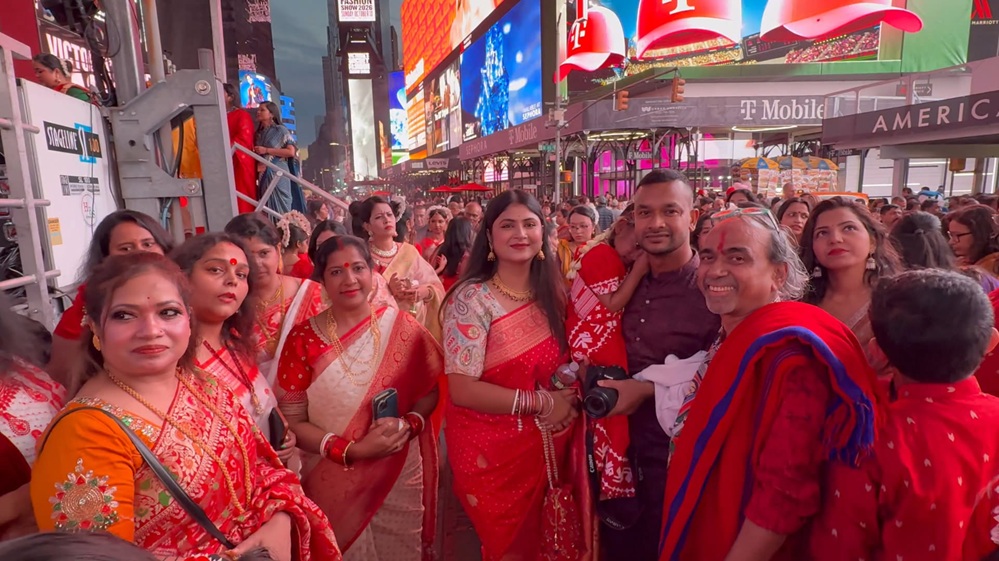
The two-day celebration featured religious rituals, prayers, floral offerings, the distribution of prasad, music, dance, and other cultural activities. Through these programs, the organizers sought to showcase Bengali heritage and the traditions of Durga Puja on an international platform. The celebration also served as an opportunity for younger generations of Bengali Americans to connect with their cultural roots.
For many members of the diaspora, the gathering represented more than a religious celebration. It was a moment to strengthen community ties, preserve traditions, and share Bengali culture with people from different backgrounds.
One of the notable highlights of this year’s festival was the recognition of six organizations for their contributions to preserving Bengali culture and the tradition of Durga Puja in the United States. The organizations honored were Bay Area Probashi Incorporated, Bengali Association of Greater Chicago, Bengali Cultural Society, East Coast Durga Puja Association, Kallol, and Pragati.
Their work in maintaining Bengali cultural traditions, promoting community engagement, and passing heritage on to younger generations was recognized as an important contribution to the Bengali diaspora.
In a message following the conclusion of the festival, the Times Square Durga Utsav Association thanked everyone who contributed their time, effort, and support to make the event possible.
The organizers highlighted the enthusiastic participation on the first day and the determination of devotees who attended despite the rain on the second day. They said the community’s love, devotion, and cooperation would remain a source of inspiration for future events.
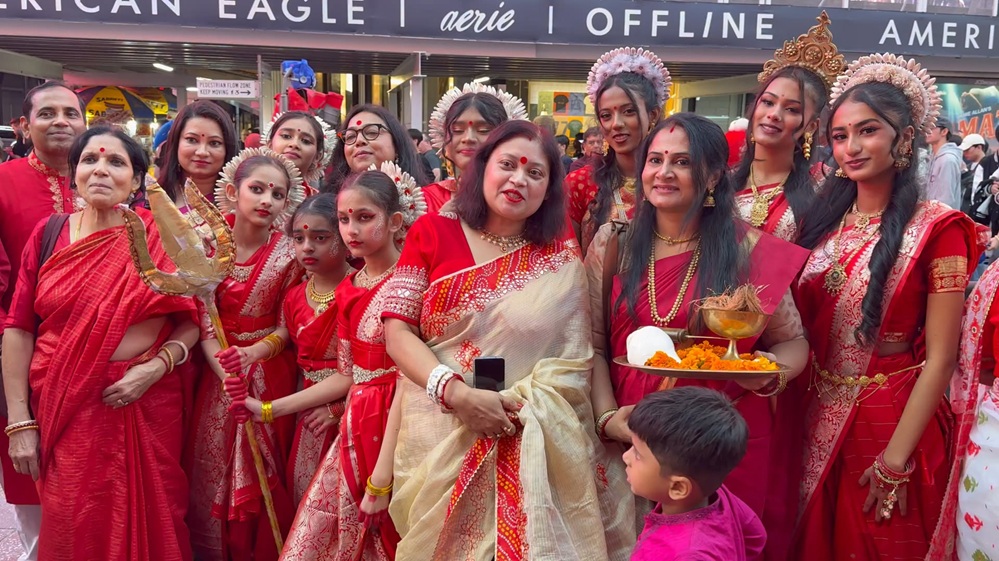
The association also emphasized that although this year’s celebration had come to an end, the spirit of unity, friendship, and cultural harmony would continue. Organizers expressed their hope of welcoming Goddess Durga again next year with renewed enthusiasm and fresh aspirations.
The Times Square Durga Utsav has become an important occasion for the Bengali community to celebrate its religious traditions and showcase its cultural identity in one of the world’s most recognizable public spaces.
Beyond the religious ceremonies, the event highlighted the importance of preserving Bengali language, heritage, and traditions among communities living abroad. As the 2026 celebration concludes, organizers and participants look forward to returning next year for another gathering centered on devotion, cultural pride, and community solidarity. The Times Square Durga Utsav Association concluded its message by wishing peace, prosperity, and well-being for all and thanking everyone who helped make the festival memorable.