Fuel loading begins at unit-1 of Rooppur nuclear power plant

ISHWARDI, Pabna – Fuel loading has begun at the first unit of the Rooppur Nuclear Power Plant (RNPP) that paves the way for the start of experimental production at the country’s first nuclear power plant in Pabna’s Ishurdi Upazila. The uranium loading began at the first unit of the plant after 3:30pm today and the authorities said they need 21-30 days to complete the process through which the country enters the nuclear era.

“Authorities have begun loading of uranium (fuel) into the reactor of the first unit of Rooppur Nuclear Power Plant (RNPP) for generating electricity,” said former project director Dr Shuwkat Akbor. “Fuel loading process will require around 21-34 days to complete. With this, production process of power plant has begun,” he said.

Initially, one percent of electricity will be generated, and later it will be two percent to 30 percent with an expected initial production of 300 MW of electricity, said a technical expert engaged in the plant said. The electricity is expected to be added to the national grid between late July and early August this year. Fakir Mahbub Anan, Minister of Posts and Telecommunications, Information Technology and Science and Technology, said all activities are being carried out according to the international standards.

“Safety is the first priority of Bangladesh. This nuclear power plant will further advance the historic relations between Dhaka and Moscow,” he while inaugurating the fuel loading ‘Physical Start-Up of Unit-1’ of the Rooppur Nuclear Power Plant at the project site. He said that after completion of fuel loading and others technical processes 300 MW of electricity will be commercially generated from the first unit by end July or first August.

“It will be possible to complete the whole process in stages and go into full-scale production by December this year or early next year (2027), he said. Prime Minister’s Advisor on Posts and Telecommunications Division, ICT Division and Ministry of Science and Technology Rehan Asif Asad said, “Today is a significant day for Bangladesh. Bangladesh has taken a step forward in terms of technology.”

Alexey Likhachev, Director General of the Russian State Atomic Energy Corporation Rosatom, Rehan Asif Asad, Adviser, Posts and Telecommunications Division, ICT Division and Ministry of Science and Technology and Md Anwar Hossain, Secretary of Ministry to Science and Technology spoke on the occasion. Rafael Mariano Grossi, Director General of International Atomic Energy Agency (IAEA) sent a video message.

“Today, Bangladesh has joined the group of nations that use peaceful nuclear energy as a reliable source of sustainable development. Undoubtedly, the Rooppur Nuclear Power Plant will become a key element of the country’s energy system. For Rosatom, this project marks another important step in the development of the global nuclear industry and in strengthening friendly relations with our international partners. We are pleased to work together with our Bangladeshi friends in building a modern and reliable nuclear power plant and see strong prospects for further cooperation,” said Alexey Likhachev.

According to the agreement, Russia provided uranium as main fuel of the unit of the plant. Russia will also supply fuel for the entire plant. According to project details, once the Rooppur project is completed, the plant will be operated by the Nuclear Power Plant Company of Bangladesh or NPCBL. It said that manpower structure and training have been provided by Russia. Initially, the power reactor will be commissioned under Russian operators while Bangladeshis will be as collaborators and gradually take over the leadership after three years.

Russian State Atomic Energy Corporation – Rosatom’s Engineering Department constructed the RNPP with Russian Economic and Technical Assistance. The construction work is being carried out through a general agreement with the Russian Federation. Earlier, a survey agreement was signed in 2013 and a construction agreement was signed in 2015. The construction cost of the project has been estimated at $12.65 billion, with two units having a total of 2400 MW generation capacity.

The project is being implemented by Russia’s latest technology III+ VVER 1200, among the most advanced reactor designs. The key safety systems including active safety systems, passive safety systems, five layers systems and core catcher. Each unit has a generating capacity of 1200 MW. The lifespan (production time) of this power plant is 60 years. After that, this capacity will be extended for 20 years and 20 years so electricity can be generated from this project for 100 years, according to project experts.

The construction work of the first unit of this project has been completed, in which the production process has started through fuel loading. The construction work of the second unit is still ongoing and is expected to be completed by the end of next year.


Where does garment industry stand now in Bangladesh!

Shaikh Shahrukh: Thirteen years after the Rana Plaza collapse reshaped Bangladesh’s ready-made garment sector, the industry has undergone sweeping changes — safer factories, stricter compliance and global recognition for green manufacturing. Yet beneath these gains lies a more complex reality: workers still face pressure on the factory floor, survivors continue to struggle with long-term hardship, and manufacturers are grappling with rising costs and financial strain. Workers across major industrial hubs say workplace safety has improved significantly since the 2013 disaster.

“Now there are fire exits, and we have regular drills,” said a female worker in Narayanganj. But concerns remain. “The production pressure is still very high. If we fail to meet targets, wages can be deducted,” she added. A worker in Gazipur said union activities remain sensitive in some factories. “There is always fear of losing jobs,” he said. Others noted that while safety awareness has increased, preparedness during real emergencies still needs improvement.

“Before Rana Plaza, we didn’t even know what a fire exit was. Now we get training, but in a real situation, not everyone can respond properly,” another worker said. For factory owners, the transformation has required heavy financial investment. “After Rana Plaza, entrepreneurs had to invest heavily to ensure safety,” said Faiz Ahmed Khan, managing director of Haseen Kayaba Group.

While necessary, he said, these investments have not been matched by higher prices from international buyers. “Many factories took bank loans to upgrade compliance. Those liabilities still remain,” he said.

Ahsanul Russel, managing director of Tua Ha Textile Mills Ltd, echoed the concern. “We carried out extensive renovations to meet compliance standards. But order prices did not increase accordingly,” he said, adding that many factories are still repaying loans taken during that period. Industry insiders say smaller factories were particularly vulnerable, with many unable to survive the financial shock.

One of the most visible outcomes of post-Rana Plaza reforms has been the growth of environmentally sustainable factories. Bangladesh now has more than 210 LEED-certified green garment factories, many with top-tier Platinum and Gold ratings—the highest number in the world. These facilities incorporate energy-efficient systems, water recycling and environmentally friendly designs, marking a shift toward sustainable production. Before 2013, only a handful of factories met such standards.

However, industry leaders say green transformation has also increased production costs without ensuring better returns. “Compliance and sustainability have improved our global reputation,” said Fazlul Hoque, managing director of Plummy Fashions Ltd and former BKMEA president. “But production costs have risen sharply, while buyers continue to negotiate lower prices,” he added.

In the aftermath of the collapse, international initiatives such as the Accord and the Alliance carried out extensive inspections, focusing on structural, electrical and fire safety. Factories were required to reinforce buildings, upgrade electrical systems and introduce modern fire safety measures, including sprinkler systems and emergency drills. These reforms significantly improved safety standards across the sector. But they also raised the cost of doing business.

Industry estimates suggest that between 2,000 and 2,500 garment factories have closed over the past decade. Key factors include high compliance costs, shrinking profit margins, rising utility expenses and intense global competition. A factory owner in Gazipur said compliance upgrades alone cost between $700,000 and $800,000.

“Buyers did not increase prices. Loans went up, profits declined, and many factories could not survive,” he said, requesting anonymity. Manufacturers say pricing pressure from international buyers remains a major challenge, with some buyers continuing to negotiate aggressively despite demanding higher compliance standards.

Compared to the pre-2013 period, the industry now operates under stricter regulations, higher costs and tighter margins. Safety investment has increased, but so have operational challenges—from energy shortages to persistent loan burdens. Thirteen years on, Bangladesh’s garment sector stands as both a success story of reform and a reminder of unresolved pressures. While factories are safer and more sustainable, workers, survivors and business owners alike say the journey toward a fully balanced and resilient industry is still far from complete.


PM orders to reopen sick, closed industries

DHAKA – Prime Minister Tarique Rahman has directed the authorities concerned to take initiatives, involving private entrepreneurs, to reopen sick and closed industrial establishments in the country. “The Prime Minister has directed the ministries concerned to take steps to reopen the sick and closed industrial institutions,” Prime Minister’s Additional Press Secretary Atikur Rahman Ruman said today.

However, he said, how private entrepreneurs will be involved in the initiative and what the nature of ownership or partnership will be have not yet been finalized. Reopening sick and closed industrial establishments to create employment was one of the BNP’s election pledges.

According to the Prime Minister’s directive, sick and closed jute mills and sugar mills will be reopened, retaining former workers in their jobs and creating new employment opportunities there. As per the information placed before the parliament in June 2024 during the previous Awami League government, the number of closed industrial institutions under the Ministry of Industries was 397 at that time.

Of these, 382 sick/closed industries were under Bangladesh Small and Cottage Industries Corporation (BSCIC), five under BCIC, six sugar mills under BSFIC and four factories under BSEC. Over the past two years, the number has increased further. However, no updated statistics have been published by the government.

Bangladesh Investment Development Authority (BIDA) Executive Chairman Chowdhury Ashik Mahmud Bin Harun said, “Prime Minister Tarique Rahman has instructed to create new jobs”.

He also asked to take initiatives to reopen closed and sick industrial factories, the BIDA chief said, adding, in this regard, a committee led by the Ministry of Industries has already started working.


High Court Orders Suspension of All Activities at Neomuring Container Terminal

The High Court has directed that all activities under the contract related to the Neomuring Container Terminal at Chittagong Port remain suspended until the pending case is resolved. The order was given verbally on Thursday (November 20) by a High Court bench led by Justice Fatema Nazib.

During the hearing, the government assured the court that all activities under the contract would remain halted until the verdict is delivered.

Earlier, on July 30, the High Court issued a rule in response to a writ challenging the validity of the contract between Chittagong Port Authority and a foreign company regarding the management of the Neomuring Container Terminal.

The writ was filed by Mirza Walid Hossain, President of the Bangladesh Young Economists Forum, questioning the legality of handing over the terminal to the foreign company.


Govt orders mandatory income tax deduction from employees’ salaries

The Office of the Controller General of Accounts (CGA) has issued a directive making it mandatory to deduct income tax at source from the monthly salaries of government officers and employees whose basic pay exceeds the specified threshold. The circular was released on Monday.

According to the letter from the CGA’s Additional Accounts and Procedures Division, under the Income Tax Act, 2023, male government officials and employees with a monthly basic salary of Tk26,785 or more, and female officials and employees earning Tk30,357 or more, have crossed the tax-free income limit. As a result, income tax must be deducted at source when preparing their salary bills.

The circular also stated that, under Treasury Rules S R 125, the responsibility for deducting income tax and other applicable charges from salary bills rests with the respective drawing and disbursing officers (DDOs).

All Chief Accounts and Finance Officers, Divisional and District Accounts Controllers, Upazila Accounts Officers, and other relevant offices nationwide have been instructed to take the necessary steps to implement this directive.

The instruction was sent to the Finance Division through the secretary, with specific attention to the joint secretary (budget-1).

The directive refers to a semi-official letter issued by the Internal Resources Division and the National Board of Revenue (NBR) on October 7, which provided clear guidelines on deducting income tax at source from government salaries.


BB board decides to merge 5 Islamic banks

Bangladesh Bank has finalized the decision to merge five Islamic banks. The decision was finalized at the central bank’s board of directors meeting on Tuesday. The meeting was held under the chairmanship of Bangladesh Bank governor Dr Ahsan H Mansur.

Bangladesh Bank spokesperson Arif Hossain Khan confirmed the matter to the media. He also said that the final decision was taken in the meeting to merge five Islamic banks. In light of the Bank Resolution Ordinance, a temporary administrator team consisting of multiple members will be appointed in each bank. He also stated that the boards of directors of the five banks will technically remain in place.

The banks are: First Security Islami Bank, Union Bank, Global Islami Bank, Exim Bank, and Social Islami Bank.

At the meeting, the board also decided to forward the draft amendment of Bangladesh Bank Order, 1972 to the Advisory Council for final approval. It is not yet clear which provisions have been added or omitted in the draft, but since the final approval rests with the Advisory Council, the draft has been sent there, the spokesperson further said.

As per previous reports, due to various irregularities during the previous government’s tenure, 48%-98% of loans in these five banks have become non-performing. According to Bangladesh Bank data, the combined default loans of the five banks stand at around Tk147,000 crore — about 77% of their total outstanding loans. Of the Tk35,200 crore required for the merger process, the government will provide Tk20,200 crore.


Bangladesh Bank again calls for applications for digital bank

Bangladesh Bank has once again invited applications from investors to establish the country’s first digital banks, with an aim of ensuring faster and more accessible financial services through a fully branchless model. In a notice issued on Tuesday, the central bank said it will accept applications between September 1 and September 30, 2025, under section 31 of the Bank Company Act, 1991.

Applicants must submit proposals with a non-refundable processing fee of Tk 5 lakh. Failure to provide the required documents will lead to automatic cancellation, it said. The central bank framed its digital bank guidelines on June 14, 2023, and recently revised them to strengthen capital and operational requirements. The minimum paid-up capital has been raised to Tk 300 crore from Tk 125 crore earlier.

Digital banks must also launch an initial public offering (IPO) within five years of licensing, with the IPO size not less than the sponsors’ initial capital. According to the guidelines, a digital bank will operate entirely online with only a head office, requiring no physical branches, sub-branches, ATMs, or cash-deposit machines.

All services will be app-based and delivered through mobile phones and other digital devices. While structurally different from traditional banks, digital banks must comply with the same business, governance, and operational standards.

Bangladesh Bank said the move reflects global shifts toward technology-driven finance and aims to widen access to credit, particularly for cottage, micro, and small enterprises (CMSEs) and underserved groups, according to the notice.

Promoting innovation-led growth and financial inclusion is also seen as crucial to achieving the Sustainable Development Goals (SDGs) and adapting to the Fourth Industrial Revolution, it said.

This is not the first attempt to introduce digital banks.

The central bank previously invited applications in 2023 and approved Nagad as a digital bank, though the licence was later cancelled following the fall of the Awami League government in August 2024.

Currently, 61 scheduled commercial banks and 35 non-bank financial institutions (NBFIs) operate in Bangladesh, with many already offering digital banking services. However, about 20 banks and 25 NBFIs have faced near collapse in recent years due to loan irregularities, mismanagement, and corruption. Critics have questioned the necessity of licensing new banks in such a troubled sector, arguing that strengthening existing institutions should take priority. Still, the central bank insists that dedicated digital banks could drive efficiency, expand outreach, and reduce costs in delivering financial products across the country.


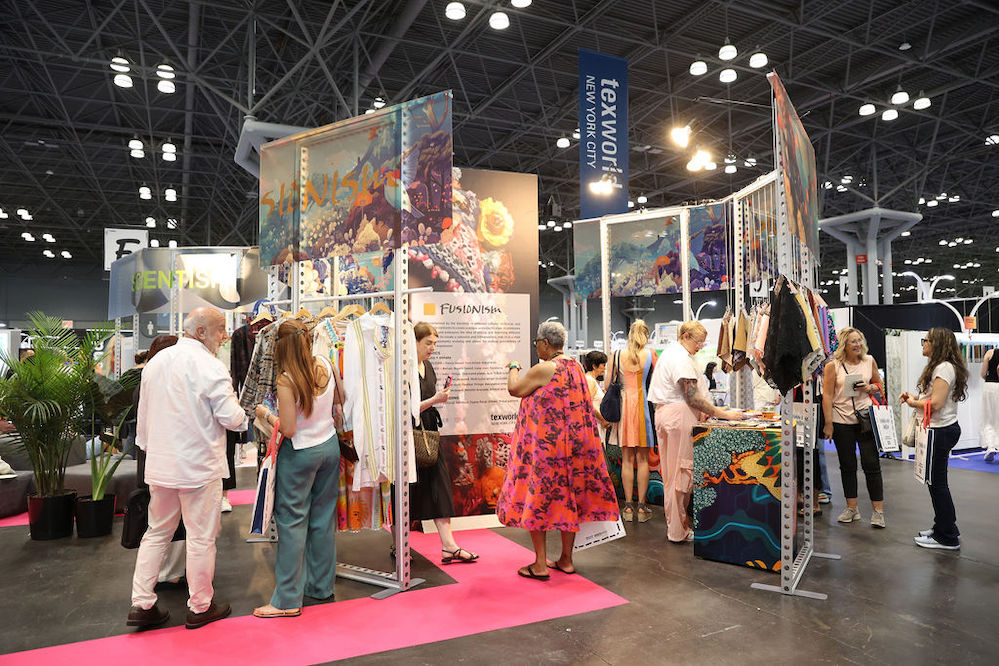
Bangladeshi makers get huge response at Texworld NYC

Bangladeshi companies witnessed huge responses from buyers at the ‘Texworld NYC 2025’, and the representatives of the companies were busy during the show with trade inquiries from USA and other countries. Texworld NYC, Apparel Sourcing, and Home Textiles Sourcing – the largest textile and apparel sourcing shows on the East Coast – concluded successfully at the Javits Centre in New York City, USA, from July 23 to 25, said a press release on Friday.

The event hosted over 424 international exhibitors from 26 countries and emphasized ethical sourcing, sustainable fabrics, and innovation across the textile, apparel and home textile industries. This summer’s exhibition featured a wide array of global exhibitors from major sourcing regions, offering attendees direct access to premium apparel and textiles.

From cutting-edge materials to sustainable sourcing solutions, the show floor was designed to empower industry professionals with the resources and connections needed to succeed in today’s fast-evolving global market.

Three Bangladeshi companies – 24/7 Sourcing Private Limited, GenXt International and Just James BD Ltd – took part in the exhibition, showcasing the country’s strengths in fashion apparel and denim. Their participation underscored Bangladesh’s expanding footprint in the global textile industry, driven by a strong focus on innovation, quality and cost-effective manufacturing.

Bangladeshi exhibitors presented a diverse range of fashion products and joined leading manufacturing nations such as Pakistan, China, India, South Korea, Taiwan, Uzbekistan, Turkey, Vietnam and Sri Lanka on the global stage.

Bangladesh’s presence at Texworld NYC Summer 2025 reaffirmed its potential as a competitive and reliable sourcing destination, with a strong focus on sustainability, innovation, and high production standards.

Rakib, CEO of 24/7 Sourcing Pvt Ltd, said he was happy with the fair and glad to meet many buyers. Rizvana Hredita, CEO of GenXt International, also shared that the fair went well and they were pleased with the buyer response.


Google hires Windsurf execs in $2.4 billion deal to advance AI coding ambitions

Alphabet’s Google has hired several key staff members from AI code generation startup Windsurf, the companies announced on Friday, in a surprise move following an attempt by its rival OpenAI to acquire the startup. Google is paying $2.4 billion in license fees as part of the deal to use some of Windsurf’s technology under non-exclusive terms, according to a person familiar with the arrangement. Google will not take a stake or any controlling interest in Windsurf, the person added.

Windsurf CEO Varun Mohan, co-founder Douglas Chen, and some members of the coding tool’s research and development team will join Google’s DeepMind AI division. The deal followed months of discussions Windsurf was having with OpenAI to sell itself in a deal that could value it at $3 billion, highlighting the interest in the code-generation space which has emerged as one of the fastest-growing AI applications, sources familiar with the matter told Reuters in June.

OpenAI could not be immediately reached for a comment. The former Windsurf team will focus on agentic coding initiatives at Google DeepMind, primarily working on the Gemini project.

“We’re excited to welcome some top AI coding talent from Windsurf’s team to Google DeepMind to advance our work in agentic coding,” Google said in a statement.

The unusual deal structure marks a win for backers for Windsurf, which has raised $243 million from investors including Kleiner Perkins, Greenoaks and General Catalyst, and was last valued at $1.25 billion one year ago, according to PitchBook.

Windsurf investors will receive liquidity through the license fee and retain their stakes in the company, sources told Reuters. Google’s surprise swoop mirrors its deal in August 2024 to hire key employees from chatbot startup Character.AI.

Big Tech peers, including Microsoft, Amazon and Meta, have similarly taken to these so-called acquihire deals, which some have criticized as an attempt to evade regulatory scrutiny. Microsoft struck a $650 million deal with Inflection AI in March 2024, to use the AI startup’s models and hire its staff, while Amazon hired AI firm Adept’s co-founders and some of its team last June. Meta took a 49% stake in Scale AI in June in the biggest test yet of this increasing form of business partnerships.

Unlike acquisitions that would give the buyer a controlling stake, these deals do not require a review by US antitrust regulators. However, they could probe the deal if they believe it was structured to avoid those requirements or harm competition. Many of the deals have since become the subject of regulatory probes.

The development comes as tech giants, including Alphabet and Meta, aggressively chase high-profile acquisitions and offer multi-million-dollar pay packages to attract top talent in the race to lead the next wave of AI.

Windsurf’s head of business, Jeff Wang, has been appointed its interim CEO, and Graham Moreno, vice president of global sales, will be president, effective immediately. The majority of Windsurf’s roughly 250 employees will remain with the company, which has announced plans to prioritize innovation for its enterprise clients.


Some Walmart garment orders from Bangladesh on hold due to US tariff threat

Suppliers to Walmart (WMT) have delayed or put on hold some orders from garment manufacturers in Bangladesh, according to three factory owners and correspondence from a supplier seen by Reuters, as U.S. President Donald Trump’s threat of a 35% tariff on the textile hub disrupts business.

Bangladesh is the third-largest exporter of apparel to the United States, and it relies on the garment sector for 80% of its export earnings and 10% of its GDP. The factory owners all said they expected orders to fall if the August 1 tariffs go into effect, as they are unable to absorb that 35% rate.

Iqbal Hossain, managing director of garment manufacturer Patriot Eco Apparel Ltd, told Reuters an order for nearly 1 million swim shorts for Walmart was put on hold on Thursday due to the tariff threat. “As we discussed please hold all below Spring season orders we are discussing here due to heavy Tariff % imposed for USA imports,” Faruk Saikat, assistant merchandising manager at Classic Fashion, wrote in an email to Hossain and others seen by Reuters. Classic Fashion is a supplier and buying agent that places orders for retailers.

“As per our management instruction we are holding Bangladesh production for time being and IN case Tariff issues settled then we will continue as we planned here.”

The hold was not decided by Walmart, Saikat told Reuters, but by Classic Fashion itself.

Walmart did not respond to a request for comment.

Bangladesh is currently in talks with the United States in Washington to try to negotiate a lower tariff. Trump in recent days has revived threats of higher levies on numerous nations.

“If the 35% tariff remains for Bangladesh, that will be very tough to sustain, honestly speaking, and there will not be as many orders as we have now,” said Mohiuddin Rubel, managing director at jeans manufacturer Denim Expert Ltd in Dhaka.

Rubel, whose company produces jeans for H&M and other retailers, said he expects clients will ask him to absorb part of the tariff, but added this would not be possible financially. Manufacturers have already absorbed part of the blanket 10% tariff imposed by the U.S. on April 2.

“Only probably the big, big companies can a little bit sustain (tariffs) but not the small and medium companies,” he said.

Retailers have front-loaded orders since Trump returned to the White House, anticipating higher tariffs. Jeans maker Levi’s, which imports from Bangladesh, said on Thursday it has 60% of the inventory it needs for the rest of 2025.