Awami League hold flash processions in Dhaka despite ban

Awami League leaders and activists, whose political activities are currently banned, held flash processions in Dhaka on Friday, five days after their previous gathering. Around 2pm, the flash procession took place in the Nabisco area under the banner of Dhaka Metropolitan North Awami League, reports Bdnews24.com. More than a thousand participants marched from Nabisco towards the Tibet area, chanting slogans such as “Sheikh Hasina, Sheikh Hasina,” “Joy Bangla, Joy Bangabandhu,” and “Remove Yunus, Save the Country.”

OC of Tejgaon Industrial Area police station Md Aslam Hossain said, “In the morning, some people came out from GM corner, but we did not allow them to march. At that time, Niyamul Hasan from Tejgaon College Chhatra League was detained. In the afternoon, Awami League members came out from Nabisco again, and we are trying to detain them.”

An Awami League leader at the procession told Bdnews24.com, “Even if we stay at home, there is no chance of survival. This illegal government is harassing Awami League leaders and activists, including our party chief Sheikh Hasina, through false cases. That is why we took part in the rally today.”

In addition to the Tejgaon procession, several hundred Awami League activists were reportedly holding a flash protest at Dhanmondi. Dhanmondi police OC Keshainyu Marma said authorities were gathering information about the .procession

Similar marches were reported in Dhanmondi and Gulistan earlier this month, including near Rapa Plaza and the south gate of Baitul Mokarram Mosque.


30 Bangladeshis arrive in handcuffs, shackles from US

Thirty Bangladeshi nationals were sent back from the United States in handcuffs and shackles on Thursday night when a special chartered flight carrying them landed at Hazrat Shahjalal International Airport. The deportees were brought to the runway still bound in chains. The shackles were removed only before they were taken to the arrival gate. During this time, no one was allowed to approach them or take photographs.

Officials at the airport said the flight landed just after 11 pm but remained on the runway for three hours while the handcuffs and shackles were removed. Around 2 am, the deportees were brought under tight security to the airport’s arrival area. A special team from the Ministry of Home Affairs, several intelligence units, and officials from the US embassy were present.

According to reports, the NGO Brac provided financial assistance to help the deportees reach their homes. Eyewitnesses described the deportees as “devastated” after the long journey. Abdullah, a 22-year-old from Noakhali, said: “Throughout the journey, I was shackled like a marked criminal. Being sent back is already heartbreaking, but arriving chained like a terrorist made it even worse.”

Since US President Donald Trump began his second term, deportations of illegal immigrants have intensified. Over the past months, at least 180 Bangladeshis have been deported in several phases. Initially, deportees were not handcuffed or shackled, but on August 2, a military transport aircraft carried 39 Bangladeshis—including one woman—bound in chains to Dhaka.

The deportees described enduring nearly 60 hours in chains, sitting in extreme pain and surviving on only bread and water. Even trips to the toilet required escorting and re-shackling.

According to sources from the police Special Branch and the Immigration Department of Homeland Security Investigations (HSI), 42 Bangladeshis were deported on a chartered flight on June 8 this year, and from March 6 to April 21, another 34 were sent back.

Most migrants had entered the US through Mexico, Latin America, or other routes, often paying Tk30 lakh to Tk75 lakh. Many of those returned on Thursday reported being held captive in Mexico by human trafficking networks. At least six said they were tortured and their families forced to pay ransoms of Tk40 lakh to Tk50 lakh. Tanzil Hasan of Munshiganj said some were extorted up to Tk75 lakh, forcing them to sell all assets to pay traffickers. He added that countless Bangladeshis remain in captivity under national and international trafficking networks.

A similar deportation in 2016, where 27 Bangladeshis were sent back in handcuffs, sparked strong reactions in Bangladesh, raising human rights concerns and prompting discussions between Dhaka and US authorities.

Migration experts argue that deportees should not be shackled during repatriation, citing violations of international human rights standards. Shariful Hasan, associate director of Brac’s Migration and Youth Platform, said: “People go abroad with the dream of a better life, often paying traffickers large sums. Deporting them in handcuffs is extremely regrettable and causes lifelong trauma. We hope future repatriations will be more humane and that US authorities take this issue seriously.”


Bangladesh situation has triggered debate in the British Parliament

The ongoing political and human rights situation in Bangladesh has triggered debate in the British Parliament, with MPs highlighting bans on political parties, corruption allegations against a UK lawmaker, and actions taken by the interim government.

Concerns over democratic norms and human rights

Over the past year, MPs have repeatedly raised concerns about human rights in Bangladesh. In a December 2024 House of Commons session, Labor MP Barry Gardiner and former home secretary Priti Patel warned about rising violence against the Hindu community. Catherine West, minister for the Indo-Pacific, said the UK government is closely monitoring the situation and remains in contact with the administration of Chief Adviser Dr Muhammad Yunus to ensure minority protection.

On July 15, MP Bob Blackman and the Bangladesh Unity Forum hosted a parliamentary event highlighting Bangladesh’s constitutional crisis. Speakers denounced the use of anti-terror laws against political opponents and described the May 2025 ban on Awami League activities as an unprecedented assault on democracy. A message was also sent to the International Criminal Court (ICC), detailing allegations of arbitrary arrests and extrajudicial killings.

UK’s stance on upcoming election

The Foreign, Commonwealth and Development Office (FCDO) has stressed the need for elections within a set timeframe to restore stability. It said free, fair and participatory polls are vital for a functioning democracy. British MPs have urged the interim government to publish a roadmap and call early elections, while also demanding guarantees of freedom of expression and protection for political dissent.

Corruption allegations and MP’s resignation

Another issue drawing attention was the corruption allegation raised by Bangladesh against British MP Tulip Siddiq, niece of former prime minister Sheikh Hasina. Following Hasina’s ouster, Siddiq was accused of corruption and resigned from the post of economic secretary to the treasury and city minister in January 2025, following allegations of misconduct. She has denied the allegations, calling them politically motivated propaganda.

Withdrawal of controversial report

The All-Party Parliamentary Group (APPG) on the Commonwealth faced criticism over a November 2024 report accused of being biased in favors of Hasina’s ousted government. The report was withdrawn in January 2025. Labor MP Rupa Huq dismissed it as irrelevant and described it as a vicious attack on Bangladesh’s interim government.


Jatiya Party central office set on fire again at Bijoynagar

Earlier on August 30, Gono Odhikar Parishad activists set the Jatiya Party central office on fire

The Jatiya Party (JaPa) central office in Dhaka’s Bijoynagar was once again targeted on Friday evening, as miscreants vandalized and set fire to the office. Around 7:15pm, stones were thrown at the office. Earlier, at about 6:30pm, leaders and activists of the Gono Odhikar Parishad held a demonstration at Shahbagh intersection, burning tires to demand a ban on JaPa, before marching towards the office at Bijoynagar.

Ramna police station duty officer, Sub-Inspector (SI) Sajjad Hossain, told Bangla Tribune: “Suddenly, a few miscreants launched an attack on the Jatiya Party office. They vandalized some furniture inside and set fire. On receiving the report, police quickly arrived, extinguished the fire, and brought the situation under control.”

Eyewitnesses said that around 5:45pm, a group of people gathered in front of the office, carried out several rounds of attacks, and later attempted arson. A local shopkeeper said: “Suddenly, a few youths came shouting slogans, entered the office, and began vandalizing. I saw smoke rising soon after. They dispersed when police arrived.”

The area remains tense, and this is not the first time the office has faced such attacks. Earlier on August 30, activists of Gono Odhikar Parishad set the Jatiya Party central office on fire.


Bangladesh Bank again calls for applications for digital bank

Bangladesh Bank has once again invited applications from investors to establish the country’s first digital banks, with an aim of ensuring faster and more accessible financial services through a fully branchless model. In a notice issued on Tuesday, the central bank said it will accept applications between September 1 and September 30, 2025, under section 31 of the Bank Company Act, 1991.

Applicants must submit proposals with a non-refundable processing fee of Tk 5 lakh. Failure to provide the required documents will lead to automatic cancellation, it said. The central bank framed its digital bank guidelines on June 14, 2023, and recently revised them to strengthen capital and operational requirements. The minimum paid-up capital has been raised to Tk 300 crore from Tk 125 crore earlier.

Digital banks must also launch an initial public offering (IPO) within five years of licensing, with the IPO size not less than the sponsors’ initial capital. According to the guidelines, a digital bank will operate entirely online with only a head office, requiring no physical branches, sub-branches, ATMs, or cash-deposit machines.

All services will be app-based and delivered through mobile phones and other digital devices. While structurally different from traditional banks, digital banks must comply with the same business, governance, and operational standards.

Bangladesh Bank said the move reflects global shifts toward technology-driven finance and aims to widen access to credit, particularly for cottage, micro, and small enterprises (CMSEs) and underserved groups, according to the notice.

Promoting innovation-led growth and financial inclusion is also seen as crucial to achieving the Sustainable Development Goals (SDGs) and adapting to the Fourth Industrial Revolution, it said.

This is not the first attempt to introduce digital banks.

The central bank previously invited applications in 2023 and approved Nagad as a digital bank, though the licence was later cancelled following the fall of the Awami League government in August 2024.

Currently, 61 scheduled commercial banks and 35 non-bank financial institutions (NBFIs) operate in Bangladesh, with many already offering digital banking services. However, about 20 banks and 25 NBFIs have faced near collapse in recent years due to loan irregularities, mismanagement, and corruption. Critics have questioned the necessity of licensing new banks in such a troubled sector, arguing that strengthening existing institutions should take priority. Still, the central bank insists that dedicated digital banks could drive efficiency, expand outreach, and reduce costs in delivering financial products across the country.


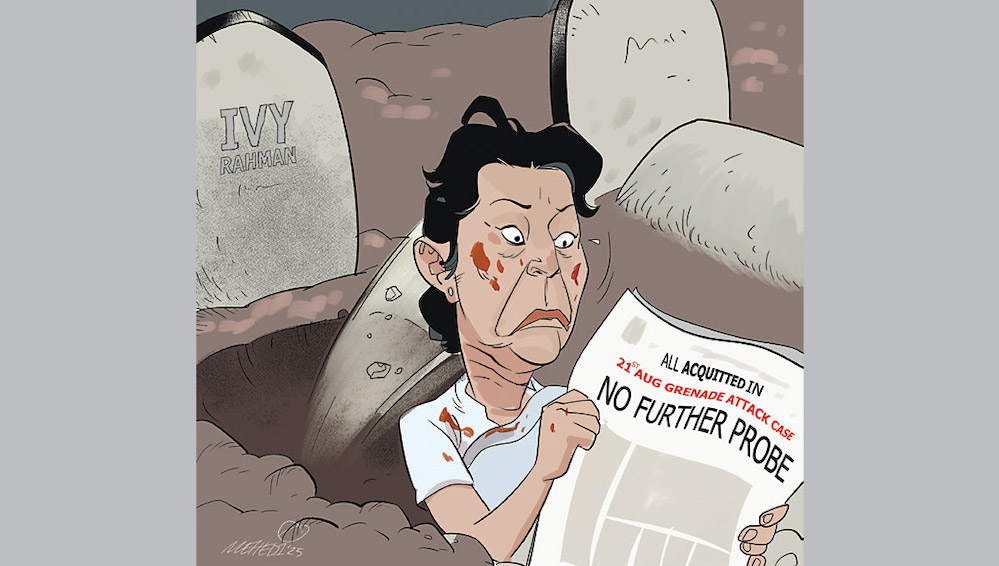
SC upholds acquittal of Tarique, all others in Aug 21 grenade attack case

The Appellate Division of the Supreme Court on Thursday upheld the High Court’s acquittal of BNP acting chair Tarique Rahman and 48 others in the August 21, 2004 grenade attack cases, effectively nullifying the lower court’s conviction of all 49 accused. At least 24 people, including senior Awami League leader Ivy Rahman, were killed and scores, including the then opposition leader and AL president Sheikh Hasina, were injured when grenades were hurled at the AL rally in front of the party central office at Paltan in the capital.

Meanwhile, any activities of the Awami League have been banned until the competition of trials of those involved in the crimes against humanity committed during the July 2024 mass uprising that ousted prime minister Sheikh Hasina and she fled to India on August 5, 2024.

On October 10, 2018, Dhaka’s Speedy Trial Tribunal-1 sentenced 19 people, including former state minister for home Lutfozzaman Babar, to death, Tarique Rahman and 18 others to life term imprisonment, and 11 more to various prison terms.

Tarique, along with 15 other accused, was tried in absentia, as he has been living in London since 2008. The Appellate Division also struck down the High Court directive for a further investigation into the attack, in the verdict that such an instruction to the executive branch violated the constitutional principle of separation of powers.

The apex court emphasised that courts should not interfere in matters of government policy, citing the constitutional principle of separation of powers. It also ruled that the HC observation amounted to judicial overreach by stepping into the domain of policymaking. As a result, the apex court ordered that part of the HC judgment to be expunged.

The chief justice, Syed Refaat Ahmed, pronounced the unanimous decision of the six-judge bench in 12 minutes in a crowded courtroom while dismissing the state’s appeal that challenged the High Court verdict delivered on December 1, 2024, acquitting Tarique, Babar, and 47 others of murder and charges related to explosives, citing legal and procedural flaws in the 2018 trial-court judgment.

Five other Appellate Division judges were Justice Md Ashfaqul Islam, Justice Zubayer Rahman Chowdhury, Justice Md Rezaul Haque, Justice SM Emdadul Hoque, and Justice Farah Mahbub. The Appellate Division issued an order in advance asking the jail authorities to immediately release all the acquitted individuals unless they were wanted in other cases.

It also cited serious doubts over the voluntariness of second confessional statements made in 2007 by three accused — Harkat-ul Jihad leader Mufti Hannan, his brother Mohibullah, and Moulana Sharif Shahidul Alam — all within five and a half hours in a single day.

The Appellate Division observed that the prosecution’s case was significantly weakened by the execution of accused Mufti Abdul Hannan before he could be examined under Section 342 of the Code of Criminal Procedure.

Mufti Hannan was executed on April 12, 2017 in connection with the grenade attack on then British high commissioner Anwar Choudhury in Sylhet on May 21, 2004. The attack injured Anwar Choudhury and killed two bystanders and a police officer. The apex court stated that the second-occasion confessions were either extracted under coercion or made under oppressive and unlawful conditions.

As a result, the apex court ruled, the confessions failed to meet the legal standard of reliability and could not be used as credible evidence. This finding played a key role in upholding the HC decision to acquit the accused.

The Appellate Division said that several accused, including Mufti Abdul Hannan, were in a prolonged custody — some in death-row cells — before being presented to magistrates in 2007 for recording the confessional statement. Others were held in police custody for extended periods without proper judicial oversight.

The court highlighted that the 2007 confessional statements by Hannan and three other convicts had been recorded on the same day by a single magistrate in what it called an ‘unusual haste,’ violating procedural safeguards.

It further pointed out that the accused had later retracted their confessions, alleging they were made under duress, including torture and illegal detention by law enforcement agencies. On October 10, 2018, Dhaka’s Speedy Trial Tribunal-1 sentenced the 19 people to death, Tarique and 18 others to life-term imprisonment, and 11 more to varying prison terms.

The High Court acquitted all the convicts and asked the home ministry to initiate a proper investigation by expert and impartial agencies to ensure justice for the victims. The verdict read, ‘This heinous and tragic incident requires a thorough and independent investigation to bring justice to the victims, including Ivy Rahman, the then AL leader, and others who lost their lives. The earlier proceedings failed to deliver fair justice.’

Earlier in 2011, a supplementary charge sheet added 30 new accused, including Tarique Rahman and Lutfozzaman Babar, based on Hannan’s second confession in 2007. This followed a fresh investigation launched in 2009 during the Awami League regime. Sixty-one witnesses testified during the trial. The original charge sheet, submitted in 2007, named 22 accused, including Mufti Hannan, former BNP state minister Abdus Salam Pintu, and Moulana Tajuddin. Altogether, 49 people were tried and convicted.

Two cases — one for the murders and another under the Explosive Substances Act — were filed by the police against unidentified people in connection with the grenade attack.

The HC verdict observed that 30 additional individuals, including Tarique, Babar, former prime minister Khaleda Zia’s political secretary Harris Chowdhury, Jamaat-e-Islami leader Ali Ahsan Muhammad Mujahid, who was executed in a war crime case, and former National Security Intelligence director general Rezzakul Haider Chowdhury, were named in a supplementary charge sheet.

Chief defence counsel SM Shajahan told New Age that it was true that many people were killed in the grenade attack but the trial targeted the wrong individuals to harass them politically as the real perpetrators were not properly identified due to a flawed investigation.

Md Jalal, branded as ‘Joj Miah,’ spent four years in jail after being falsely implicated in the August 21, 2004 grenade attack case. His wrongful detention highlighted flaws in the investigation during the BNP regime. Jalal, hailing from Senbagh, Noakhali, was imprisoned from June 10, 2005 to June 27, 2009. He was exonerated of the murder charges after CID superintendent Fazlul Kabir submitted the first charge sheet on June 9, 2008.


Passport service launched in Gulshan

A National API Connectivity Hub is being developed through Citizen Service to bring all services from government offices into one platform

Chief Adviser’s Special Envoy on International Affairs Lutfey Siddiqi, inaugurated passport services at the Citizen Service Centre in Gulshan, Dhaka. For the first time in the country, services related to passport application and renewal have been introduced at an entrepreneur-driven citizen service centre outside of a passport office.

The announcement was made on Thursday, in a Facebook post by the Chief Adviser’s Special Assistant, Faiz Ahmad Taiyeb. At present, Citizen Service is running pilot and learning programs with a total of 400 services, including those related to passports, driving licences, birth and death registration, national identity cards (NIDs), and land record services from various government offices, upazila parishads, and zila parishads.

Ten Citizen Service pilots will be launched simultaneously at the end of this month in six locations: Gulshan 1, Uttara Sector 6, Nilkhet, Ramna, Mohammadpur, and Banasree. Among them, the centres in Gulshan 1, Uttara, and Nilkhet are already fully operational.

The post stated that among the six centres in Dhaka (ten in total under the pilot program), citizens are encouraged to visit their nearest Citizen Service Centre, inform the centre about their service needs, and provide suggestions for improving the quality of services.

A National API Connectivity Hub is being developed through Citizen Service to bring all services from government offices into one platform, ensuring citizens receive hassle-free service.

As a result, it will no longer be necessary to apply separately through hundreds of different websites of various offices. Instead, all services will be available in one place through the National Connectivity Hub. Services of different ministries, online platforms, and digital centres created in the past as digital islands will also be interconnected and interoperable through Citizen Service.

This is the first Citizen Service Connectivity Hub in Bangladesh aimed at providing all essential services for citizens in one place.


EC finalizes boundaries of 300 parliamentary constituencies

The Election Commission (EC) has finalized the boundaries of 300 constituencies for the upcoming 13th National Parliamentary Election and issued a gazette notification. Senior Secretary of the EC Secretariat, Akhtar Ahmed, announced the move on Thursday evening, saying, “The boundary notification for the 300 parliamentary constituencies has been issued and will be published in the gazette.”

According to the final list, Gazipur has gained one additional seat, increasing its constituencies from five to six, while Bagerhat has lost one, reducing its constituencies from four to three. In Brahmanbaria-3, the constituency now covers Brahmanbaria Sadar Upazila and the unions of Ichapura, Champaknagar, Pattan, Dakhin Singerbil, Paharpur, and Harashpur in Bijoynagar Upazila.

Ahead of the election, a specialized committee reviewed constituency boundaries. On July 30, the EC published a draft that kept 261 constituencies unchanged from the 13th Parliament, with minor changes to 39 constituencies. Citizens had until August 10 to submit objections or suggestions.

The EC received 1,893 responses, including 1,185 objections concerning 84 constituencies across 33 districts, and 708 recommendations. Both supporters and opponents voiced opinions, which the EC first reviewed. From August 24–27, hearings were held over four consecutive days to examine the objections. Following the review, the secretary had said the final list would be published as soon as possible. Click Here to see the 300 seat distribution list.


Touhid: Govt to assist Tarique if he wants to return

Foreign Affairs Adviser Md Touhid Hossain has said BNP acting chairman Tarique Rahman’s desire to return to the country is entirely his own. If there was any problem regarding his travel documents, it will be resolved, he said on Thursday evening at the Ministry of Foreign Affairs while responding to journalists’ questions on contemporary issues.

The adviser said he was not aware whether Tarique Rahman has applied for a passport. “Whenever he comes, whatever passport or travel document is required, we will be able to provide it,” he added. Asked whether the government would take the initiative on its own, he said: “I think that is not necessary. When he wants to return to the country, we will definitely provide as much assistance as we can.”

On a question regarding whether there had been any contact with India after sending the most recent letter to bring back ousted prime minister Sheikh Hasina, he said: “After that, we did not send any more letters on this. It was sent once; if it is sent again, you will know.”


Bangladesh’s Crisis Deepens in 2025: A Nation in Decline

Bangladesh is in its deepest crisis in over a decade. The military-backed interim government that replaced Sheikh Hasina in 2024 has failed to stabilize the country, leaving the economy, security, and democracy in free fall.

Economic Collapse

  • GDP growth has plunged from 6.1% in 2023 to barely 2.3% in 2025.
  • Inflation is running above 12%, with food inflation at 16%, hitting the poor the hardest.
  • Foreign reserves have fallen from $33 billion (2022) to $14.5 billion (July 2025), raising fears of a balance-of-payments crisis.

Unemployment & Social Fallout

    • Youth unemployment has surged past 28%, the highest in South Asia.
    • Remittances, a lifeline for millions, dropped 11% year-on-year.
    • Over 2 million workers in the garment sector face layoffs due to declining exports.

Law & Order Breakdown

  • Homicide rates have risen by 27% in Dhaka and 22% nationwide.
  • Mob violence cases increased by 40% in 2025 compared to last year.
  • Extrajudicial killings by security forces have exceeded 650 cases since mid-2024.

Islamist Militancy & Extremism

  • At least 15 Islamist attacks have been reported since October 2024.
    Recruitment of youth into extremist groups is on the rise, with intelligence reports suggesting thousands are being radicalized online.

Erosion of Rights & Freedoms

  • Over 20,000 arbitrary arrests since the interim government assumed power.
  • Journalists face daily repression: 135 journalists attacked or arrested in the last 12 months.
  • Freedom of assembly and political activity remains completely banned.

Targeted Violence

  • Violence against women has increased by 30% since 2024, including widespread sexual assaults in conflict-prone areas.
  • Attacks on minorities have doubled, with Hindu temples and Christian institutions frequently vandalized.

Bangladesh today is in a state of economic ruin, political paralysis, and social unrest. Without an inclusive national election that brings all parties, including the Awami League and BNP, to the table, the cycle of instability will only deepen.

A Year of Turmoil in Bangladesh

Over the past year, Bangladesh has experienced an unprecedented deterioration in governance, law and order, and economic stability. Following the military-backed removal of Sheikh Hasina in August 2024, the interim government led by Muhammad Yunus has failed to restore basic security, protect human rights, or uphold democratic norms.

The country faces a convergence of crises: a collapsing economy, rising unemployment, escalating violence against women and minorities, rampant mob lynchings, arbitrary detentions, and attacks on journalists. Political freedoms are virtually nonexistent, and judicial independence has been undermined.

Bangladesh Turned Into The Land of Anarchy

This report examines the multifaceted crisis gripping Bangladesh, highlighting the urgent need for systemic reform and inclusive elections to restore stability and democratic governance.

From Growth to Collapse: Bangladesh’s Economic Freefall

Bangladesh’s economic engine, once a regional success story, is now faltering under the mismanagement of the Yunus-led interim government. GDP growth has fallen below 3%, compared to over 7% in 2023 under the previous administration, while inflation has surged past 12%, up from 5.6% the previous year, sharply eroding citizens’ purchasing power. The Ready-Made Garments (RMG) industry, which fueled the nation’s export-led growth, has laid off over 150,000 workers, whereas it had been adding tens of thousands of jobs annually in 2023. Construction projects are largely stalled, leaving tens of thousands unemployed, and SMEs are shrinking or closing due to bureaucratic interference, a stark contrast to 2023 when small businesses were expanding steadily. Even remittances, a vital lifeline for millions, have slowed after consistent growth in previous years.

Economy slows, investment drops 10-year low

Youth unemployment has reached alarming heights, exceeding 30% among educated graduates, compared with around 18% in 2023, fueling frustration and social instability. Thousands of skilled workers are now seeking migration to Malaysia, the Middle East, and Europe, creating a dangerous brain drain that threatens long-term national growth. The societal consequences are dire: rising crime, growing radicalization, and social unrest have become common as young citizens face diminishing legitimate opportunities.

PPRC Survey Report: Poverty and Inequality on the Rise in Bangladesh

Under Yunus, economic deterioration is not just a slowdown; it is a systemic collapse, with cascading effects on livelihoods, social stability, and the very foundations of Bangladesh’s future. Compared with the relative stability and growth of the previous administration, the country is now sliding toward economic and social chaos.

(make an infographic that shows the difference between the last 1 years economic condition with the previous years)

Lawlessness Rules: Murder, Mob Violence, and Vigilantism

Under the Yunus-led interim government, Bangladesh’s law and order situation has plunged into unprecedented chaos, exposing ordinary citizens to a relentless wave of crime, violence, and arbitrary killings.

Bangladesh sees 11 murders per day as law and order worsens

In just the first six months of 2025, police recorded 1,930 murders, a sharp 25.9% increase from the 1,533 cases during the same period in 2024. Each month shows a worsening trend, with June alone reporting 343 killings, reflecting the government’s complete inability to maintain even the most basic security. Political interference has systematically weakened the police force, with loyalists appointed over experienced officers, top positions left vacant for months, and senior personnel purged for political reasons. The result is a law enforcement apparatus that is incapable of controlling crime or protecting citizens.

The collapse of formal justice has fueled a parallel surge in mob violence and vigilantism. Between August 2024 and July 2025, at least 637 people were lynched by mobs, compared to just 51 deaths under mob violence in 2023, a shocking 1,250% increase. These lynchings often target individuals over suspicions of theft, blasphemy, or even political identity, demonstrating how mob justice has become a substitute for the state’s failed institutions. The brutal public lynching of two Hindu devotees, Ruplal Das and Pradeep Das, in Rangpur over a suspected theft has gone viral, revealing the terrifying normalization of such violence.

637 killed in mob violence, lynching since Sheikh Hasina’s ouster

The situation is further aggravated by the discovery of corpses in rivers, with an average of 43 bodies recovered monthly in 2025, 30% of which remain unidentified. Authorities cite resource constraints and delayed recovery, but analysts warn that criminals are increasingly using rivers as dumping grounds, confident that their victims will go unrecognized and unpunished.

Average of 43 Bodies Found in Rivers Each Month

The combination of rising criminal activity, extrajudicial killings, and unchecked mob violence paints a grim picture of a state in freefall. Citizens have lost faith in courts, police, and the justice system, increasingly resorting to taking matters into their own hands. The Yunus government’s failure to reform law enforcement, hold perpetrators accountable, and restore the rule of law has left Bangladesh teetering on the brink of anarchy, where fear and violence dictate everyday life, and the very fabric of society is at risk of unraveling.

Minorities Targeted, Militancy Thrives: A Year of Lawlessness Under Interim Govt

Under the Yunus-led interim government, Bangladesh is facing an alarming surge of Islamist militancy alongside systematic targeting of religious and ethnic minorities, signaling a deep breakdown of governance and public safety. Over the past year, radical Islamist groups have gained momentum, often operating with political tolerance, while minority communities have become increasingly vulnerable to attacks, intimidation, and social exclusion.

Deaths in mob violence on rise

Since August 2024, at least 111 people have been killed in mob violence, including incidents targeting minority groups. In Rangpur’s Taraganj Upazila, two Hindu devotees, Ruplal Das (40) and Pradeep Das (35), were lynched in public over alleged theft, with videos circulating widely. In the same period, 14 Hindu homes in Rangpur were vandalized, and attacks against minority-owned businesses and temples have been reported repeatedly in Dhaka, Chittagong, and the northern districts. The Chittagong Hill Tracts remain a hotspot for harassment against indigenous groups, including displacement and property destruction.

Begged for life, yet the mob did not spare Ruplal and Pradip

Meanwhile, Islamist militancy has grown under the shadow of government inaction. Extremist networks have carried out threats, attacks, and radicalization campaigns, including targeting secular citizens, activists, and minorities. Reports indicate that at least 40 incidents of extremist-led violence against minorities occurred in the first half of 2025 alone, many involving physical assaults or intimidation. Police frequently fail to intervene, investigations are slow or absent, and prosecutions are rare, leaving extremists to act with near impunity.

The combination of rising militant activity and deliberate targeting of minorities paints a grim picture. Bangladesh is becoming a country where fear, sectarianism, and radicalization flourish, and the interim government’s inaction has allowed this crisis to escalate unchecked. The protection of minorities and the prevention of extremist violence remain urgently unaddressed, highlighting the failure of the Yunus administration to uphold law, order, and constitutional rights.

Escalating Violence Against Women; No One Is Safe Anywhere

Under the Yunus-led interim government, Bangladesh has witnessed a disturbing escalation in violence against women, exposing the systemic collapse of law enforcement and social safeguards. In just the first six months of 2025, official records indicate over 4,200 cases of rape and sexual assault, including at least 650 incidents of gang rape, a stark rise from 3,100 cases during the same period in 2024. These figures likely understate the crisis, as countless survivors refrain from reporting due to fear of retaliation or skepticism toward the authorities.

Child rape cases rise nearly 75% in 7 months

Women now face mounting risks in both public and private spaces. Domestic violence has surged, often exacerbated by economic insecurity and social unrest, while public assaults, sometimes carried out by mobs or politically connected perpetrators, have grown increasingly brazen. The viral circulation of assault videos on social media further deepens trauma, amplifies humiliation, and creates a chilling culture of impunity, emboldening criminals while discouraging survivors from seeking justice.

Epidemic of Sexual Violence in Bangladesh

The government’s inaction is glaring. Investigations are frequently delayed or abandoned, police accountability is near nonexistent, and protective measures are almost entirely absent. High-profile cases in Dhaka, Chittagong, and Rangpur reveal that political connections or social status often shield perpetrators from prosecution, sending a clear signal that violence against women is tolerated, if not indirectly encouraged, under Yunus.

This surge in gender-based violence reflects more than just individual criminality; it underscores a state-level failure. By allowing such crimes to proliferate unchecked, the interim government has not only endangered women but also eroded public trust in institutions meant to uphold justice and safety. The result is a society where women are living in constant fear, and Bangladesh’s international reputation as a safe and rights-respecting country is rapidly deteriorating.

Judiciary Turned Into a Political Weapon

Bangladesh’s judicial system has collapsed into a tool for political repression under the Yunus-led interim government. Courts, once meant to uphold justice and protect citizens’ rights, now serve the interests of a military-backed regime, issuing politically motivated verdicts while denying bail to opposition activists and dissenters. Arbitrary detentions have become routine, with thousands held without trial, often for months or even years, under the pretext of maintaining law and order.

Anti-National Forces Staged Mock Trial Against Sheikh Hasina

The scale of repression is staggering. According to the Manabadhikar Shongskriti Foundation, as of July 2025, over 516,000 people have been implicated in 1,567 wholesale criminal cases, yet only 79,491 have been named, leaving 436,836 “unnamed”. This mechanism allows authorities to arrest anyone at whim, effectively criminalizing political dissent and stifling free expression. Protest movements, student activism, labor union actions, and opposition party activities have all been targeted, with mass arrests used as a primary tool of control.

Wholesale criminal cases filed across Bangladesh

High-profile cases highlight the politicization of the judiciary. Nearly 400 former ministers, MPs, and other Awami League officials have been named in over 1,170 politically motivated cases, many involving fabricated charges. Individuals like former mayors remain in detention for events that occurred while they were outside the country, demonstrating the arbitrary nature of arrests. Meanwhile, judicial independence has eroded to the point that courts routinely deny bail to opposition members, enforce preventive detention under draconian laws, and rubber-stamp the regime’s crackdown on dissent.

This systematic collapse of judicial independence, coupled with mass arbitrary detentions, has created a climate of fear, repression, and lawlessness, where the legal system no longer serves justice but acts as a weapon against political opponents and citizens seeking accountability. Under Yunus, Bangladesh has effectively become a state where fear replaces freedom, and repression replaces justice.

Surge In Extra-Judicial Killings

Since taking power in August 2024, the Yunus-led Interim Government has presided over a sharp rise in extra-judicial killings, transforming Bangladesh into a climate of fear. Official and independent reports indicate that security forces have frequently resorted to so-called “crossfire” operations, which have become a euphemism for targeted killings of opposition activists, dissidents, and alleged criminals. In the first year of Yunus’s rule, at least 44 police officers were given legal indemnity for killings in such operations, while hundreds of honest, competent officers were removed from key positions purely for political loyalty reasons, further eroding institutional accountability.

Bangladesh Sees Surge in Extrajudicial Killings, Custodial Deaths Under Interim Government

Disappearances of activists have also skyrocketed. High-profile detentions have often ended with the victims vanishing without a trace, leaving families in despair and society in terror. Reports suggest that hundreds of individuals remain unaccounted for, while those responsible within the security apparatus face no prosecution or even investigation. This lack of accountability has emboldened security agencies to operate with impunity, undermining the rule of law and contributing to the perception that the state itself is complicit in systematic repression.

Extrajudicial killings persist despite decline

Under Yunus, extra-judicial killings have become a tool of political control, a direct message to anyone opposing the regime: dissent will be silenced, and justice abandoned. This unchecked use of lethal force not only violates fundamental human rights but has also normalized violence as a method of governance, driving Bangladesh further into chaos.

Human Rights in Freefall

Bangladesh’s human rights situation has deteriorated sharply under the Yunus-led Interim Government. Civil liberties are under siege, with freedom of speech, assembly, and association increasingly curtailed. Independent watchdogs such as Human Rights Watch, Amnesty International, and the UN Office of the High Commissioner for Human Rights have repeatedly flagged the country for arbitrary arrests, torture, and mass surveillance.

Are human rights eroding under Muhammad Yunus?

Since August 2024, over 516,000 individuals have been implicated in politically motivated criminal cases, many unnamed, enabling the authorities to detain anyone at whim. Journalists and activists are routinely threatened, harassed, or jailed, creating a climate of fear that suppresses dissent. Enforced disappearances remain rampant, with dozens of opposition leaders and human rights defenders disappearing, their whereabouts unknown.

Mass surveillance and intimidation campaigns have intensified. Reports indicate that social media activity is monitored, and critics of the government face reprisals ranging from public harassment to arbitrary detention. Citizens have begun to self-censor out of fear, reflecting the collapse of basic freedoms that are fundamental to any democratic society.

Bangladesh: Review Laws and Protect Human Rights Standards

International observers note that the Yunus administration’s failures have eroded the rule of law, undermined judicial independence, and empowered security agencies to operate with impunity, leaving Bangladesh in a state of systemic human rights crisis. The country now faces a pervasive climate of fear, where ordinary citizens, journalists, and minority communities are left vulnerable to abuse, with no institutional safeguards to protect them.

The trajectory under Yunus is clear: Bangladesh’s civil society and democratic institutions are being hollowed out, leaving the population exposed to repression and lawlessness on an unprecedented scale.

The Only Way to Recovery

Bangladesh is at a crossroads. After a year under the Yunus-led interim government, the country faces a deepening economic crisis, rising unemployment, widespread violence, and severe human rights abuses. Everyday life has become increasingly unsafe, with ordinary citizens bearing the brunt of lawlessness, arbitrary arrests, and social instability. The data is stark: rising murder rates, mass detentions of opposition activists, attacks on journalists, and continued mob violence all point to a state in serious distress.

Bangladesh Is a South Asian Time Bomb

The only realistic way forward is free, fair, and inclusive national elections that involve all major political parties under a neutral caretaker arrangement. The current interim government, closely tied to the National Citizens’ Party (NCP), has already shown clear favoritism and political bias, making it incapable of conducting impartial elections. Without a truly neutral framework, any electoral process would risk cementing the current climate of repression, lawlessness, and injustice.

A free and inclusive election is all we want

International support and oversight are essential to ensure transparency and fairness. At the same time, domestic institutions must be strengthened: judicial independence restored, press freedom guaranteed, and human rights protections fully enforced. These steps are vital not just for immediate stability, but to rebuild public trust, curb radicalization, and create a foundation for long-term democracy.

Bangladesh can recover, but it requires decisive action. Inclusive elections, accountability, and the restoration of rights are the only way to reverse the decline and give citizens hope for a safe, just, and democratic future.