UN Security Council to Debate Middle East and Palestinian Question

Shibbir Ahmed, New York — The United Nations Security Council is scheduled to hold a quarterly open debate on Thursday on the situation in the Middle East, including the Palestinian question, amid continuing regional tensions and concerns over the future of peace efforts.

The meeting is expected to focus on developments affecting Palestinians, the broader Middle East situation and international efforts to advance peace. The debate comes shortly after the third anniversary of the October 7, 2023, attacks on Israel and the subsequent Israeli military campaign in Gaza.

Ramiz Alakbarov, the Acting Special Coordinator for the Middle East Peace Process and UN Resident Coordinator, is expected to brief the Council, according to Security Council meeting previews. The debate also comes approximately one year after Israel and Hamas agreed to a US-brokered framework to end the Gaza conflict in October 2025. The UN Security Council subsequently endorsed the framework through Resolution 2803 in November 2025.

Council members are expected to discuss the implementation of peace efforts, the situation affecting Palestinians and the prospects for a lasting political settlement. The meeting is taking place under Greece’s presidency of the Security Council for October. The outcome of Thursday’s debate, including any new commitments or formal Council action, had not been confirmed in the available information at the time of writing.


Bangladesh delegation walks out during Israeli president’s speech

DHAKA – Bangladesh today staged a walkout during the Israeli president’s address at the seventh summit of the Conference on Interaction and Confidence Building Measures in Asia (CICA) in Baku, Azerbaijan. The Bangladesh delegation, led by State Minister for Foreign Affairs Humaiun Kobir, walked out of the conference hall as the Israeli president began delivering his speech at the summit, said a foreign ministry’s press release here.

Representatives of several other countries also joined the walkout, boycotting the Israeli president’s address, according to information received from Baku. The delegations left the conference hall in protest during the Israeli president’s speech.

The seventh CICA summit is being held in the Azerbaijani capital, bringing together leaders and senior representatives of participating countries to discuss regional cooperation, security and confidence-building measures across Asia.


UN Warns of Security Risks as Lebanon Mission Nears End

Shibbir Ahmed, New York — The United Nations has warned of continuing security challenges along the Israel-Lebanon border as the future of its peacekeeping mission in southern Lebanon remains uncertain ahead of the expiration of its current mandate at the end of 2026.

Jean-Pierre Lacroix, the UN under-secretary-general for peace operations, has highlighted the importance of maintaining stability and ensuring that arrangements are in place to prevent renewed hostilities as the UN Interim Force in Lebanon (UNIFIL) approaches the end of its mandate.

Established in 1978, UNIFIL monitors the situation along the Blue Line, the UN-designated boundary separating Lebanon from Israel. The mission also supports efforts to reduce tensions, facilitate humanitarian access and help maintain stability in southern Lebanon.

The future of the peacekeeping operation has become a significant concern amid continuing tensions in the region and questions about how security monitoring will be maintained after the mission’s mandate expires.

The Israel-Lebanon border has experienced repeated periods of violence, including exchanges of fire and military operations that have threatened civilians and damaged infrastructure. UN peacekeepers play an important role in monitoring developments, reporting violations and maintaining communication between the parties to reduce the risk of escalation.

The possible withdrawal or restructuring of the mission raises questions about how these responsibilities would be handled in the future. Any transition would require careful coordination to avoid creating a security vacuum along the sensitive border.

The United Nations has emphasized the importance of respecting the Blue Line and implementing Security Council Resolution 1701, which was adopted in 2006 to help end that year’s Israel-Hezbollah conflict and establish arrangements for lasting security in southern Lebanon.

Lebanon continues to confront significant political, economic and security pressures. Instability along its southern border has contributed to displacement, damaged communities and complicated efforts to restore normal life in affected areas. Civilians remain particularly vulnerable to renewed fighting, while damage to homes, roads and essential services can make recovery difficult.

International diplomatic efforts have focused on preventing further escalation and strengthening the Lebanese state’s authority in the south. The role of UNIFIL remains part of wider discussions about implementing existing security arrangements and supporting long-term stability.

The future of UNIFIL will depend on decisions by the UN Security Council and consultations with relevant parties. Any changes to the mission will require consideration of the security environment, the needs of local communities and the arrangements necessary to preserve stability. The United Nations continues to stress that a lasting solution requires full implementation of relevant Security Council resolutions, respect for the Blue Line and sustained diplomatic engagement.

As discussions over the mission’s future continue, international attention remains focused on whether effective security arrangements can be maintained and the risk of renewed conflict reduced. The decisions taken in the coming months could have significant implications for peacekeeping, civilian protection and stability along the Israel-Lebanon border.


UN Warns of Worsening Crisis in Yemen

Shibbir Ahmed, New York — The United Nations has warned that escalating violence, restricted humanitarian access and worsening living conditions are deepening the humanitarian crisis in Yemen, leaving vulnerable families struggling to obtain food, clean water and essential medical care.

UN humanitarian officials have raised concerns about insecurity and access restrictions, particularly in areas around Taiz, where fighting and blocked roads are disrupting the delivery of lifesaving assistance. The situation is placing additional pressure on communities already affected by years of conflict, displacement and economic hardship.

Humanitarian organizations face significant challenges reaching people in need as insecurity limits movement and interrupts aid operations. Restrictions on access can prevent emergency supplies from reaching displaced families and other vulnerable populations, increasing the risk of hunger, disease and further displacement.

Yemen remains one of the world’s most serious humanitarian emergencies. Years of conflict have damaged essential infrastructure, weakened public services and disrupted the country’s economy. Many families face severe food insecurity as rising prices and declining purchasing power make basic necessities increasingly difficult to afford. Hospitals and health facilities continue to face shortages of medical supplies, while access to clean water and sanitation remains a major concern in many communities.

Children, displaced people and households headed by women are among those particularly vulnerable to the crisis. Aid agencies have repeatedly warned that interruptions in food assistance and healthcare can have devastating consequences for people who have few alternatives.

The United Nations is urging all parties to the conflict to protect civilians, respect international humanitarian law and allow humanitarian organizations to deliver assistance safely and without unnecessary restrictions. UN officials have also stressed the importance of protecting humanitarian personnel and ensuring that aid workers can carry out their duties without intimidation or violence.

Continued access restrictions threaten to undermine relief operations at a time when humanitarian needs remain substantial. The UN has called for cooperation to ensure that food, medicine and other essential supplies reach affected communities. Humanitarian agencies depend on international funding to provide emergency food assistance, healthcare, clean water and shelter to vulnerable populations in Yemen. However, the scale of the crisis continues to place considerable demands on available resources.

The UN has emphasized that emergency assistance must be accompanied by sustained diplomatic efforts to reduce violence and support a lasting political settlement. Without improved humanitarian access, adequate funding and progress toward peace, millions of Yemenis risk facing further hardship. The situation highlights the urgent need for international cooperation to protect civilians, support humanitarian operations and address the underlying causes of Yemen’s prolonged crisis.


UN Warns Libya Political Divisions Threaten Path to Elections

Shibbir Ahmed, New York — The United Nations has reported encouraging progress toward ending Libya’s prolonged political deadlock but warned that continued divisions among rival political institutions, economic difficulties and fragile security conditions threaten the country’s path toward national elections. Hanna Serwaa Tetteh, the UN secretary-general’s special representative for Libya and head of the United Nations Support Mission in Libya (UNSMIL), delivered the warning during a briefing to the UN Security Council on Wednesday, October 14.

Tetteh said an agreement signed in Tripoli on August 30 by participants in a smaller political dialogue marked an important step toward overcoming the country’s prolonged institutional stalemate. The agreement outlines a path toward parliamentary and presidential elections under a unified executive authority within two years.

However, she cautioned that the progress remains fragile, with disagreements among political stakeholders threatening to undermine efforts to establish stable and unified national institutions. The agreement has received support from several Libyan and international actors, but the High Council of State rejected it on October 5. The disagreement has raised concerns about whether the parties can reach the consensus needed to advance the political process.

Tetteh warned that inflammatory rhetoric and disinformation could further harden political positions, weaken the willingness to compromise and encourage unilateral actions that could undermine the agreement or trigger renewed violence. She called on Libyan political leaders to engage constructively, overcome their differences and support a credible, peaceful electoral process. She also urged the international community to continue supporting diplomatic efforts and hold those obstructing progress accountable.

The UN envoy also highlighted the country’s deteriorating economic conditions, warning that political divisions are contributing to declining living standards and growing public frustration. Despite Libya’s substantial oil resources, many citizens continue to face rising prices and declining purchasing power. Tetteh cited inflation of approximately 14%, alongside concerns about fuel subsidies, widespread fuel smuggling and disruptions to oil production.

She warned that the closure of oilfields and pipelines was causing significant financial losses and threatening energy supplies and electricity generation. Libya’s dependence on oil revenues makes the economy particularly vulnerable to disruptions in production and exports. Political disagreements over state institutions and public resources have further complicated efforts to improve economic management and ensure that oil wealth benefits the wider population.

The envoy also drew attention to protests and strikes in the education and healthcare sectors over delayed salary increases and unpaid allowances, underscoring the pressure on public services.

Despite continuing instability, Tetteh welcomed recent efforts by military leaders from eastern and western Libya to strengthen cooperation. She highlighted initiatives to establish joint information-sharing and border-security coordination centers in Tripoli and Benghazi. Such measures could help improve coordination between security institutions that have operated under competing authorities.

However, she stressed that the overall security environment remains fragile and that sustained cooperation will be necessary to prevent renewed confrontations and support broader political reconciliation. The UN also expressed concern about inflammatory rhetoric and disinformation targeting migrants, refugees, humanitarian workers and UN personnel. Tetteh called for a halt to executions and a review of judicial procedures to ensure compliance with fair-trial standards.

Libya has struggled to restore unified political authority since the 2011 uprising that ended Muammar Gaddafi’s rule. Rival power centers, competing institutions and disputes over the legal framework for elections have repeatedly obstructed efforts to establish a stable political system. The country’s national elections, originally scheduled for December 2021, were postponed indefinitely amid disagreements over electoral rules and the eligibility of candidates.

The latest agreement offers a possible route out of the stalemate, but its success will depend on whether the principal political actors accept the process and implement the necessary institutional reforms. Tetteh emphasized that progress toward elections cannot be separated from the need to strengthen the judiciary, unify state institutions and address broader security and economic challenges.

The UN is continuing consultations with Libyan stakeholders to build on the agreement and explore ways to make the political process more inclusive. The latest Security Council briefing underscored both the opportunity and the risks facing Libya: diplomatic progress has created renewed hope for a political settlement, but lasting stability will require compromise, institutional unity and sustained international support.


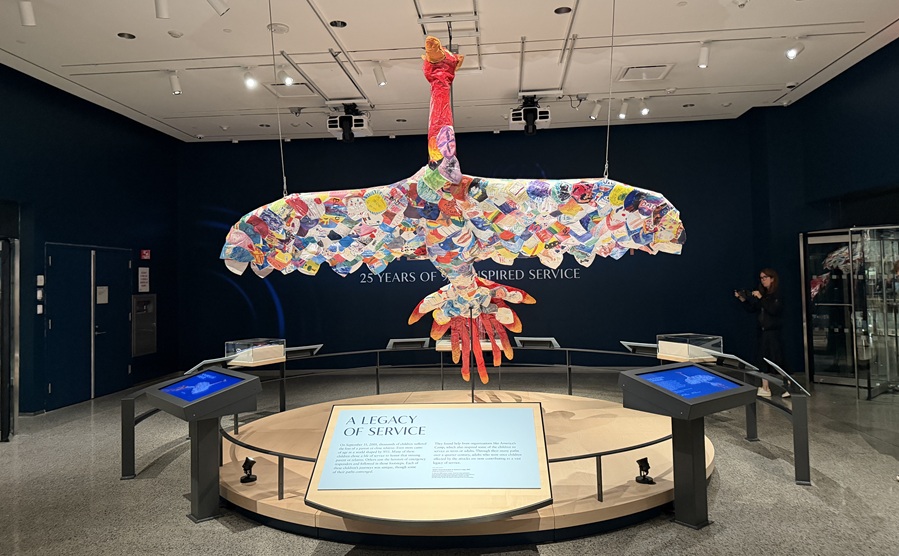
25 Years of 9/11: New Special Exhibition Unveiled at New York Museum

NEW YORK — The 9/11 Memorial & Museum has unveiled a special exhibition in Manhattan to mark the upcoming 25th anniversary of the September 11 terrorist attacks. The new showcase was presented during a press briefing on Monday, August 31, followed by an exclusive media preview.

Titled “In Their Honor: 25 Years of 9/11-Inspired Service,” the exhibition highlights the lasting legacy of public service, volunteerism, and community initiatives that emerged in the wake of the 2001 tragedy. Museum officials confirmed it will officially open to the general public on September 12, 2026.

Speaking at Monday’s media briefing, Beth Hillman, President and CEO of the 9/11 Memorial & Museum, emphasized that while the exhibition honors the memory of the nearly 3,000 victims, it also spotlights the remarkable human resilience and selflessness that followed. Other key speakers included Logan Miller, representing victims’ families, and Noah Rouse, Senior Vice President of Education and Public Programming.

The exhibition captures both the immediate aftermath of the destruction and its long-term social impact, documenting how individuals, families, and organizations rallied to support one another across the nation.

Preparations are currently underway across the United States for the landmark 25th anniversary. A major commemoration ceremony will take place on September 11 at the World Trade Center site, bringing together victims’ families, survivors, first responders, and community leaders.


U.S. National Debt Surpasses $40 Trillion

Shibbir Ahmed, Washington DC: The United States’ national debt has surpassed the $40 trillion mark for the first time, reaching approximately $40.047 trillion on Wednesday, according to the latest data from the U.S. Treasury Department. The historic milestone underscores the scale of the U.S. government’s accumulated debt and is renewing concerns over the country’s long-term fiscal stability.

According to Treasury data, about $32.266 trillion of the total debt is debt held by the public, while approximately $7.782 trillion consists of intragovernmental holdings—amounts owed by one government account or agency to another.

Debt More Than Doubles in Less Than a Decade

The U.S. national debt has increased at an extraordinary pace over the past decade. When Donald Trump first took office as president in 2017, the national debt stood at approximately $19.95 trillion. It has now more than doubled, surpassing $40 trillion.

Economists say no single administration is responsible for the rapid increase. Massive government spending during the COVID-19 pandemic, persistent federal budget deficits, tax cuts and rising spending on major entitlement programs have all contributed to the growth of the national debt. The debt increased substantially during both the Trump and Joe Biden administrations.

Rising Interest Costs Add to Fiscal Pressure

Beyond the size of the debt itself, the cost of servicing it has become a major concern for the U.S. government. According to Reuters analysis, interest payments on the federal debt have become one of the largest components of federal spending and have surpassed spending on Medicare, ranking behind Social Security among the government’s largest expenditures.

Economists warn that interest costs could rise further as older debt is refinanced at higher interest rates. This could limit the government’s ability to allocate resources to areas such as education, infrastructure, defense and other public programs.

Large July Budget Deficit

The latest milestone comes amid continuing large federal budget deficits. According to Reuters, the U.S. government recorded a budget deficit of approximately $432 billion in July alone, one of the largest monthly deficits in the country’s history.

Rising spending on Social Security and Medicare, along with lower-than-expected revenue from tariffs and other sources, contributed to the large shortfall.

Trump Policies Could Add Further to Debt

Concerns are also growing over the potential impact of the Trump administration’s recent tax and spending policies. According to Reuters, President Trump’s widely discussed “One Big Beautiful Bill Act” could add approximately $4.7 trillion to the national debt over the coming years, based on estimates cited in the report.

Economists and budget watchdogs warn that continued growth in federal debt could reduce the government’s fiscal flexibility. It could also make it more difficult for Washington to respond to future economic downturns, inflationary pressures or other national emergencies.

Investor Concerns Grow

The growing national debt is also putting pressure on the U.S. government bond market. Yields on long-term Treasury securities have recently reached multi-year highs as investors demand higher returns to hold long-term U.S. government debt.

On Wednesday, the Treasury Department announced plans to increase its long-term Treasury bond buyback operations. The size of individual operations is expected to increase from about $2 billion to at least $4 billion.

Following the announcement, yields on long-term U.S. government bonds declined somewhat, while global bond markets also reacted positively.

Global Economic Implications

U.S. Treasury securities are widely regarded as among the safest and most important financial assets in the world. As a result, major changes in the U.S. debt and Treasury markets can have consequences far beyond American financial markets.

High government debt, inflation concerns and geopolitical tensions have recently contributed to higher long-term government bond yields in several countries.

Reuters reported that following the latest Treasury action, long-term European bond yields also declined somewhat. At the same time, the U.S. dollar came under pressure while gold prices rose sharply.

A Major Fiscal Challenge Ahead

The crossing of the $40 trillion threshold is more than a statistical milestone for the United States. It reflects decades of federal budget deficits and growing reliance on government borrowing.

Budget analysts warn that if the current pace of debt accumulation continues, Washington could face increasingly limited fiscal flexibility. Borrowing could also become more expensive, particularly during periods of economic stress.

The ultimate impact of the $40 trillion debt level will depend on several factors, including economic growth, interest rates, government spending, tax revenues and the fiscal policies adopted by future administrations.

But the historic milestone has already renewed international debate over the sustainability of U.S. government finances and the future management of the world’s largest sovereign debt.


Trump Labels Strait of Hormuz ‘New U.S. Territory’ as Iran Rejects Claim

Shibbir Ahmed, New York: U.S. President Donald Trump has posted a map on social media labeling the strategically important Strait of Hormuz as “New U.S. Territory,” escalating an already tense confrontation with Iran over the vital shipping route.

Trump shared the map on his Truth Social account on Tuesday, August 18, without providing additional explanation. The post came days after he said he intended to declare the Strait of Hormuz a U.S. territory.

The move immediately drew a sharp response from Tehran. Iranian Deputy Foreign Minister Kazem Gharibabadi dismissed Trump’s claim as a “delusion” and warned that it would either be corrected or challenged by Iran.

The dispute comes as the United States and Iran remain locked in a confrontation over the future of the waterway, which is one of the world’s most important energy and shipping corridors.

Trump Doubles Down on Hormuz Claim

Trump had first suggested last week that the United States could take control of the Strait of Hormuz. On Monday, he told reporters at the White House that making the waterway part of the United States was, in his words, a “great idea.”

His latest social media post went a step further by displaying a map with the strait marked as “New U.S. Territory.”

The Strait of Hormuz lies between Iran and Oman and connects the Persian Gulf with the Gulf of Oman and the Arabian Sea. It is a critical passage for global energy shipments.

Trump’s move has raised questions about the legal and diplomatic implications of any attempt by Washington to claim sovereignty over the waterway.

International law recognizes territorial waters in the Strait as belonging to the coastal states, principally Iran and Oman. A U.S. declaration alone would not establish American sovereignty over the waterway.

Iran Rejects Trump’s Claim

Iran has strongly rejected Trump’s statements about the strait. Iranian Deputy Foreign Minister Kazem Gharibabadi responded directly to Trump’s map, calling the U.S. president’s claim a “delusion.”

He said the claim would either be corrected or that Iran would take steps to correct what he described as Trump’s mistaken view. Iranian officials have repeatedly insisted that the Strait of Hormuz remains under the control and sovereignty of the countries bordering it.

Iranian Parliament Speaker Mohammad Bagher Ghalibaf said Tuesday that the strait would remain closed until the United States accepts Tehran’s demands. Those demands include lifting the U.S. blockade, releasing frozen Iranian assets, ending the oil embargo and stopping military operations against Iran.

Trump Says No Talks Are Underway

Trump’s territorial claim came at the same time as he said there were no negotiations currently taking place with Iran. In a Truth Social post Tuesday, Trump said there were “no talks or conversations” underway or scheduled with Tehran and declared that the U.S. naval blockade remained in force.

The statement appeared to contradict reports from the previous day suggesting that back-channel contacts between U.S. and Iranian officials had taken place. The breakdown in diplomacy comes after a 60-day negotiating period failed to produce a comprehensive agreement between Washington and Tehran.

A Strategic Global Waterway

The Strait of Hormuz is one of the most strategically important waterways in the world. Approximately one-fifth of global oil shipments pass through the strait, making any prolonged disruption a major threat to international energy markets and global economic stability.

Shipping through the waterway has already fallen sharply because of the conflict and security concerns. Major shipping companies have avoided the route, while insurers and energy traders face growing uncertainty over whether commercial vessels can safely transit the area.

A vessel was also reportedly struck by an unknown projectile while transiting the Strait of Hormuz on Tuesday, according to an alert from the United Kingdom Maritime Trade Operations center. The incident caused damage to the vessel’s engine room and resulted in a crew casualty.

Iran Strikes Back With California Map

Iran responded to Trump’s provocative map with a provocative image of its own. An official Iranian social media account associated with Iran’s consulate in Hyderabad posted a map of the United States highlighting California and labeling it “NEW TERRITORY OF ISLAMIC REPUBLIC OF IRAN.”

The post appeared to be a direct satirical response to Trump’s depiction of the Strait of Hormuz as U.S. territory. California is also home to a large Iranian-American community. The exchange of maps underscores the increasingly confrontational rhetoric between Washington and Tehran.

What Would a U.S. Territorial Claim Mean?

Trump’s post does not itself change the legal status of the Strait of Hormuz. The waterway passes through territorial waters associated with Iran and Oman, and its international navigation regime is governed by international maritime law.

Any attempt by the United States to formally claim sovereignty over the strait would therefore have major legal and diplomatic consequences and could trigger opposition from Iran, Oman and other regional states. The dispute also risks complicating efforts to keep one of the world’s most important shipping routes open to international commerce.

Regional Tensions Continue to Rise

The confrontation is also placing pressure on U.S. relations with other Gulf countries. The United Arab Emirates announced Wednesday that it had suspended financial and economic transactions with Iran following what it said were Iranian missile launches toward maritime areas. Iran denied the allegation.

Iranian military officials have separately warned Gulf states against assisting U.S. military operations. The developments indicate that the dispute over Hormuz is increasingly affecting countries beyond the United States and Iran.

Global Energy Security at Risk

The latest escalation has significant implications for the global economy. If shipping through the Strait of Hormuz remains severely restricted, oil and gas supplies from the Persian Gulf could be disrupted, putting upward pressure on energy prices.

Higher energy prices could increase inflation, raise transportation and manufacturing costs and put additional pressure on economies across Asia, Europe and other energy-importing regions. For China, India, Japan, South Korea and European economies that rely heavily on Gulf energy supplies, prolonged disruption could have particularly serious consequences.

A New Flashpoint in the U.S.-Iran Conflict

Trump’s “New U.S. Territory” map represents another escalation in the increasingly bitter confrontation between Washington and Tehran. While the post does not establish any change in sovereignty, it has added a new territorial dimension to an already dangerous dispute over the future of the Strait of Hormuz.

Iran has rejected the claim, while commercial shipping remains severely disrupted and diplomatic efforts remain stalled. The coming days could determine whether the dispute remains primarily a war of rhetoric or develops into a broader confrontation over control of one of the world’s most important strategic waterways.

For the international community, the stakes are enormous. The Strait of Hormuz is not only a regional waterway—it is a critical artery for global energy supplies, international trade and economic stability.


U.S. Sanctions ICC President and Senior Official

Shibbir Ahmed, New York: The United States has imposed sanctions on International Criminal Court (ICC) President Tomoko Akane and senior trial lawyer Abdoulaye Sey. U.S. Secretary of State Marco Rubio announced the sanctions on Tuesday, August 18. On Wednesday, August 19, Japan, the ICC and the Netherlands expressed opposition to the move.

The Trump administration accused Akane and Sey of being directly involved in efforts to investigate, arrest, detain or prosecute government officials and nationals of countries that have not accepted the ICC’s jurisdiction. The dispute between Washington and the court has intensified particularly over the ICC’s arrest warrants for Israeli Prime Minister Benjamin Netanyahu and former Defense Minister Yoav Gallant.

Akane and Sey Added to U.S. Sanctions List

Tomoko Akane, a Japanese national, has served as president of the ICC since 2024. She is the court’s sixth president and the first Japanese national to hold the position. Abdoulaye Sey, a Senegalese national, is a senior trial lawyer at the ICC. He was part of the prosecution team involved in seeking an arrest warrant for Israeli Prime Minister Benjamin Netanyahu. Sey has also been nominated for election as an ICC judge.

According to the U.S. Treasury Department’s sanctions list, Akane and Sey have been designated as Specially Designated Nationals (SDNs). As a result, any property or property interests they hold within U.S. jurisdiction will be blocked, and U.S. citizens and companies will generally be prohibited from conducting transactions with them. The U.S. Treasury Department also issued a general license on August 18, allowing certain transactions involving Akane and Sey to be wound down until September 17.

Why Did the U.S. Impose the Sanctions?

Secretary of State Marco Rubio said Akane and Sey were directly involved in ICC efforts to investigate, arrest, detain or prosecute officials from countries whose governments have not accepted the court’s jurisdiction. Rubio has accused the ICC of exceeding the limits of its authority and said its actions pose a threat to U.S. sovereignty. The Trump administration has repeatedly argued that the ICC has sought to expand its jurisdiction by taking legal action against officials from the United States and its close ally, Israel.

Neither the United States nor Israel is a member of the ICC. Under the Rome Statute, however, the court can exercise jurisdiction over certain international crimes committed on the territory of a member state, including in circumstances involving nationals of non-member countries.

ICC Arrest Warrants for Netanyahu and Gallant

The ICC issued arrest warrants in November 2024 for Israeli Prime Minister Benjamin Netanyahu and then-Defense Minister Yoav Gallant in connection with alleged war crimes related to the Gaza conflict. The decision further intensified tensions between Washington and the ICC. The Trump administration has since imposed several rounds of sanctions against officials associated with the court.

Former ICC Prosecutor Karim Khan, along with several judges and other court officials, had previously been placed under U.S. sanctions. The addition of Akane and Sey further expands the list of ICC officials targeted by Washington.

ICC Condemns U.S. Action

Following the latest sanctions, the ICC strongly condemned the U.S. decision on Wednesday. The court described the move as a serious attack on judicial independence and a threat to the international rule-of-law system. The ICC said that when judicial officials face threats and pressure for carrying out their legal responsibilities, it puts not only the independence of the court but the broader international justice system at risk.

The court also warned that such coercive measures could undermine the ability of victims of war crimes and other serious international crimes to seek justice.

Japan Voices Rare Criticism

Japan has criticized the United States over the sanctions imposed on its citizen and ICC President Tomoko Akane. On Wednesday, Japan’s Foreign Ministry described the U.S. decision as “very unfortunate.” Tokyo said it has long supported the ICC’s efforts to ensure accountability for the most serious crimes of concern to the international community.

Japan also reaffirmed its commitment to strengthening the rule of law within the international community and said it would continue discussions with relevant countries on the issue. The public criticism from Japan, a close U.S. ally, is considered significant amid growing international debate over the future of the ICC.

Netherlands Supports the ICC

The ICC is headquartered in The Hague, Netherlands. Dutch Foreign Minister Tom Berendsen has also opposed the U.S. sanctions. He said international courts and tribunals must be allowed to carry out their responsibilities independently. Berendsen also invited ICC President Tomoko Akane for discussions and reaffirmed the Netherlands’ continued support for the court.

Trump Administration’s Campaign Against the ICC

The Trump administration’s current campaign against the ICC began on February 6, 2025, when President Donald Trump signed an executive order titled “Imposing Sanctions on the International Criminal Court.”

The executive order subsequently became the basis for sanctions against several ICC officials. The addition of Akane and Sey represents another escalation in Washington’s pressure campaign against the court.

In July, Rubio took an even tougher position, saying the Trump administration would intensify its campaign against the ICC. Washington has also encouraged other countries to reconsider their membership in the court.

Growing International Divide Over the ICC

The latest U.S. sanctions have further exposed divisions among Western allies over the ICC and its role in international justice. Japan and the Netherlands have defended the court’s independence, while several European countries have also expressed support for the ICC and the principle of judicial independence.

At the same time, political pressure surrounding the ICC has increased among its member states, with some countries recently discussing or considering whether to withdraw from the court.

The legality of U.S. sanctions against ICC officials is also being challenged in U.S. courts. In June, three ICC judges filed a lawsuit against the Trump administration, while human rights organizations have filed separate legal challenges. The new sanctions against Tomoko Akane and Abdoulaye Sey mark another escalation in the ongoing confrontation between the Trump administration and the ICC.

Washington argues that the court’s actions threaten U.S. sovereignty and the security of its allies. The ICC, meanwhile, maintains that pressure and sanctions against judicial officials threaten the independence of international justice and the rule of law.


No Talks, Closed Strait: U.S.–Iran Crisis Threatens Global Energy Security

Shibbir Ahmed, New York: U.S. President Donald Trump has ruled out any immediate negotiations with Iran, as the standoff over the strategically vital Strait of Hormuz deepens and uncertainty over global energy supplies continues to grow.

Trump said Tuesday, August 18, that no talks were currently taking place with Tehran and that none were scheduled. His comments came as Iran insisted that the Strait of Hormuz remains closed to shipping and said the waterway would stay shut until the United States meets its demands.

The conflicting claims have added to uncertainty surrounding one of the world’s most important energy corridors. The Strait of Hormuz carries roughly one-fifth of global crude oil and liquefied natural gas shipments, making prolonged disruption a major concern for energy markets and the global economy.

No Talks With Tehran

Trump’s statement marked a sharp departure from earlier suggestions that diplomatic contacts might resume. Iran has indicated that it is willing to discuss the conflict, but Tehran has demanded significant concessions, including an end to the U.S. blockade, the release of frozen Iranian assets and other measures before normal shipping through the strait can resume.

Trump, however, has rejected the idea that Washington is currently negotiating with Tehran and has continued to maintain pressure on Iran.

The breakdown follows the expiration of a 60-day U.S.-Iran memorandum that had been intended to provide time for negotiations toward a broader agreement. The arrangement expired without a lasting peace deal, leaving the two sides further apart.

Hormuz Traffic Falls Sharply

Despite Trump’s assertion that the Strait of Hormuz is open, commercial shipping through the waterway remains severely restricted.

According to Kpler data cited by Reuters, only six commodity vessels passed through the strait on Tuesday, down from nine the previous day and below the recent average of about 11 daily transits. Major shipowners continue to avoid the waterway because of security concerns.

The decline in shipping has raised concerns about the continued flow of oil and gas from the Persian Gulf.

China, one of the world’s largest buyers of Middle Eastern energy, is particularly exposed to the disruption. Two major Chinese shipping companies that previously transported a substantial share of China’s Middle Eastern oil imports have stopped operating through the Strait of Hormuz and Bab al-Mandeb.

Oil Prices Under Pressure

The uncertainty has already affected global energy markets. Brent crude was trading around $91.20 a barrel on Wednesday, August 19, while U.S. West Texas Intermediate crude was around $85.10 a barrel. Both benchmarks had reached their highest levels since late July before retreating slightly.

Analysts say the continuing risk surrounding Hormuz is keeping a geopolitical premium in oil prices. If the disruption persists or the conflict escalates, crude prices could move substantially higher again.

The implications extend beyond gasoline and transportation costs. Higher energy prices can increase inflationary pressure, raise production and shipping costs, and complicate economic policy for governments around the world.

Iran Says Strait Will Remain Closed

Iran has maintained that the Strait of Hormuz will remain closed until Washington meets conditions Tehran considers necessary for reopening the waterway. The Iranian position directly contradicts Trump’s assertion that the strait remains open and safe.

The standoff has effectively created two competing realities: Washington says commercial shipping can use the waterway, while Tehran maintains that normal passage will not resume until its demands are addressed. That uncertainty itself has become a major problem for shipping companies, insurers and energy traders.

Regional Tensions Escalate

The crisis is no longer limited to the United States and Iran. The United Arab Emirates announced Wednesday that it had suspended financial and economic transactions with Iran following what it said were Iranian missile launches toward maritime areas. Iran denied the UAE’s allegations.

The UAE’s decision represents another significant escalation because the country has historically been an important commercial and financial channel for Iran despite extensive U.S. sanctions.

The crisis has also affected shipping beyond the Gulf, with security concerns extending to the Red Sea and the Bab al-Mandeb waterway.

Washington and Tehran Remain Far Apart

The collapse of the latest diplomatic effort leaves little indication of an immediate breakthrough. Iran wants sanctions relief, an end to the U.S. blockade, the release of frozen assets and compensation related to the conflict. Trump has rejected Iran’s demands and has continued to apply economic and military pressure.

Both sides have also accused the other of blocking the path to peace. The result is a dangerous stalemate: the United States says it wants Iran to accept an agreement on its nuclear program and broader security concerns, while Tehran insists that Washington must first change its own military and economic policies.

Global Economic Consequences

The Strait of Hormuz crisis is being closely watched far beyond the Middle East. A prolonged disruption could affect energy-importing economies across Asia and Europe, particularly countries heavily dependent on Gulf oil and gas.

Higher crude prices could also increase inflation at a time when central banks are attempting to balance economic growth with price stability. Reuters reported that financial markets have already been reacting to the broader U.S.-Iran confrontation, with concerns over energy disruptions contributing to higher borrowing costs and renewed inflation fears.

A Critical Test for Diplomacy

For now, the immediate question is whether Washington and Tehran can return to negotiations before the Hormuz crisis becomes a longer-term disruption to global trade. Trump has ruled out current or scheduled talks, while Iran continues to link the reopening of the waterway to political and economic concessions.

Meanwhile, commercial vessels are avoiding the strait, oil prices remain elevated and regional tensions continue to spread. The longer the standoff lasts, the greater the risk that the Strait of Hormuz becomes not only a flashpoint in the U.S.-Iran conflict but also a major source of instability for the global economy.

For the international community, the stakes extend well beyond the Middle East: the future of one of the world’s most important shipping routes—and the stability of global energy markets—may depend on whether diplomacy can be restored.